
Three Piece Pajama Set Manufacturer: Coordinated Set Approval
Table of Contents
- Define the Role of Every Piece
- Coordinate Fit Across the Set
- Control Lace Placement and Visual Balance
- Approve Fabric as a Set
- Plan Color and Component Matching
- Compare Development Checkpoints
- Build a Consistent Size Range
- Pack Complete Sets Correctly
- Questions Before Sample Approval
- Frequently Asked Questions
- Send a Complete Set Brief
A three-piece sleepwear set gives a brand more styling value than a single garment, but it also creates more ways for the product to become inconsistent. A camisole, shorts, and robe or outer layer must coordinate in fit, fabric, lace, color, labels, and packing. If one piece is developed separately, the customer may receive a set that looks related but does not wear as one product.
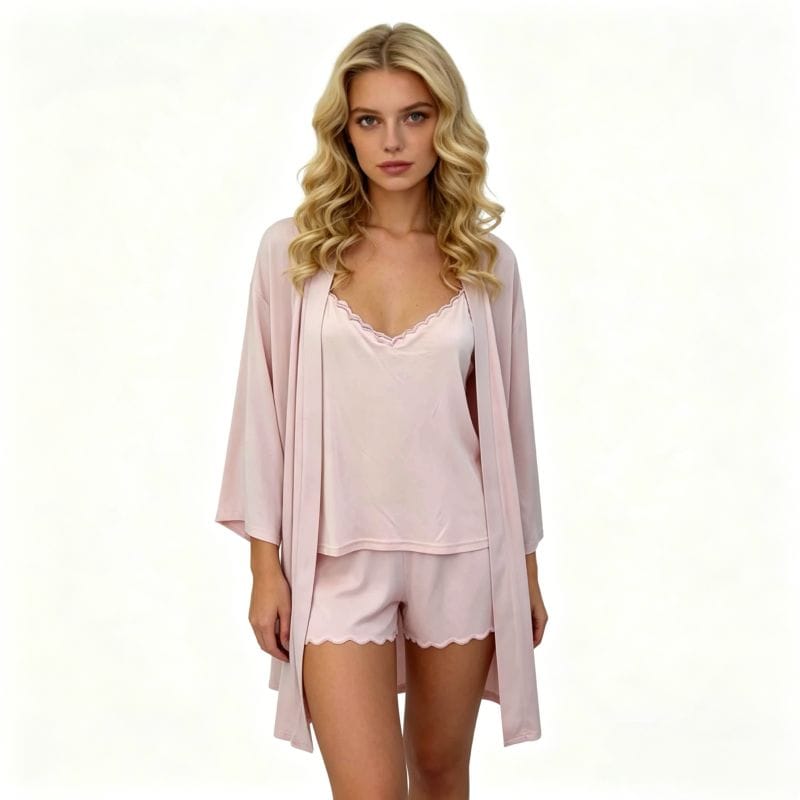
This guide explains how to work with a three piece pajama set manufacturer using the lace-trimmed three-piece style shown in the XXY Apparel catalog as the product reference. The goal is a practical approval system for brands that need every component to remain coordinated from sample through packed bulk units.
Define the Role of Every Piece
Name each component and explain how it should be worn. A camisole may need to work alone for sleep and under a robe for presentation. Shorts must remain comfortable when the robe belt is tied. An outer layer should provide coverage without overwhelming the proportions of the inner set.
Create one product-level specification and separate component pages. The master page should list all pieces, selling unit, colorway, size range, labeling market, and packaging format. Each component page should contain its own measurements, construction, trim placement, and artwork. Link the brief to the exact three-piece catalog product so the development team sees the intended arrangement.
Coordinate Fit Across the Set
Fit decisions should be reviewed together. Camisole length affects how much of the shorts waistband is visible. Robe sleeve and body length influence whether the set looks balanced in photography. A wide robe overlap can add bulk over a relaxed top, while a narrow overlap may reduce coverage.
Ask the three piece pajama set manufacturer to measure the complete look on the same fit model. Review standing, sitting, walking, tying the belt, and lifting the arms. Comments should identify the affected component and the relationship to the other pieces, such as “shorten camisole without exposing the waist when seated” rather than simply “shorten top.”
Control Lace Placement and Visual Balance
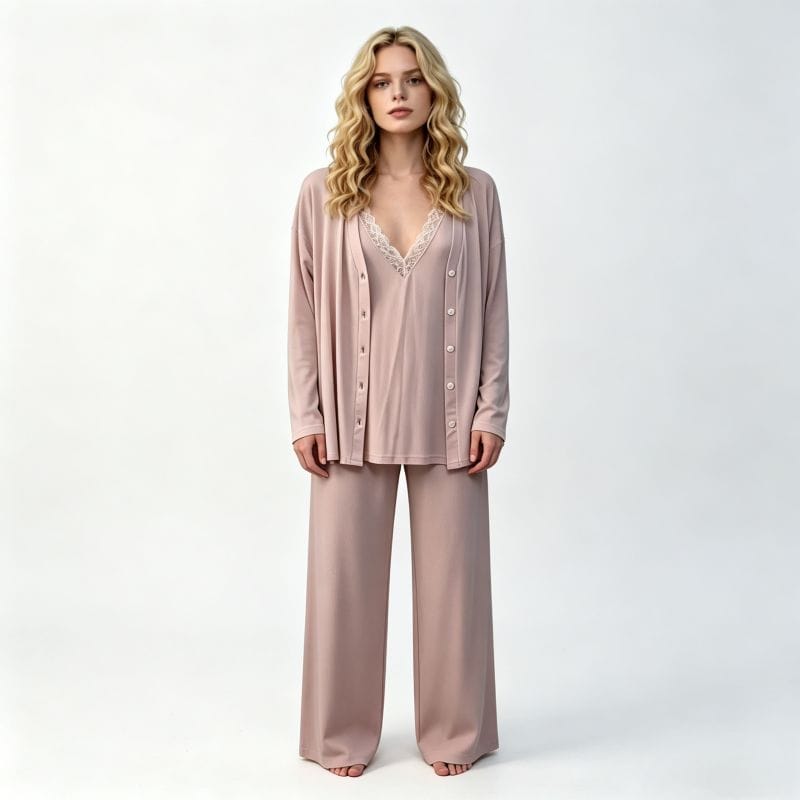
Lace can connect the set visually, but repeating it everywhere may add stiffness, cost, or discomfort. Decide which placements define the design: neckline, short hem, robe cuff, sleeve edge, or front opening. Establish a consistent trim direction and specify where motifs should begin and end when the lace has a visible repeat.
Measure lace placement from stable garment points and record finished width after sewing. Review seam joins and corners closely. If the trim is stretch lace, compare its extension and recovery with the base fabric at every opening. The goal is coordination without forcing three different pattern shapes to behave identically.
Approve Fabric as a Set
The three pieces may use one fabric or a controlled combination. A robe can be slightly heavier, more opaque, or less fitted than the inner set, but any difference should be intentional. Compare hand feel, weight, opacity, drape, stretch, recovery, shrinkage, and color under the same conditions.
A three piece pajama set manufacturer should identify every approved fabric and lining code in the bill of materials. If one component changes, reassess the set. A replacement robe fabric with a different shade or drape can alter the entire product even when the camisole and shorts remain unchanged.

For U.S. sales, fiber and identity information should follow the FTC textile-labeling guidance. Confirm whether each component needs its own sewn label and ensure packaging does not obscure required information.
Plan Color and Component Matching
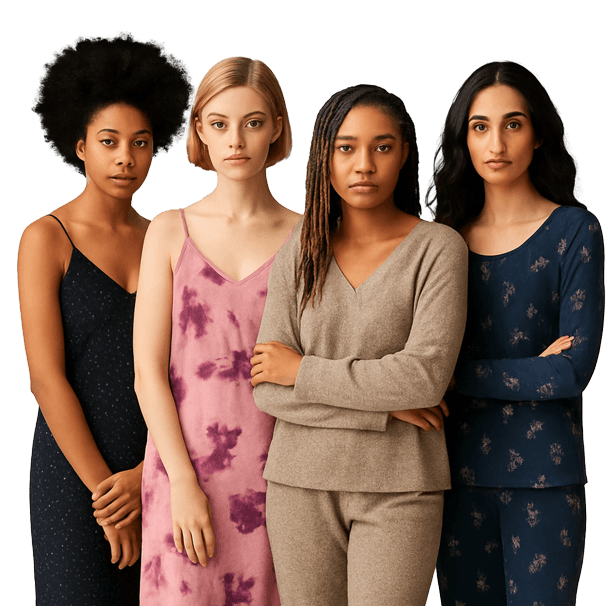
Approve the complete colorway, not three separate swatches. Differences in fabric structure, surface, or dye process can make nominally identical colors appear different. Place all components together under daylight-equivalent and retail lighting, and photograph the signed combination for the production file.
When lace, elastic, thread, hardware, and fabric are sourced separately, create a color-component board. State which component is the visual standard and what degree of variation requires review. Repeat the comparison when a supplier, dye lot, or material code changes.
Compare Development Checkpoints
| Checkpoint | Review as Individual Pieces | Review as a Complete Set |
|---|---|---|
| Fit | Measurements and comfort of each garment | Layering, proportions, and shared wear positions |
| Color | Shade of each material and trim | Visual match under the same light |
| Branding | Label placement on each component | Consistent identity and no missing labels |
| Packing | Folding method for each piece | Correct size, color, quantity, and presentation |
The table shows why component approval alone is insufficient. A technically correct robe, camisole, and short can still fail as a selling unit if the lengths conflict, colors shift, or the packing team combines different sizes.
Build a Consistent Size Range
Grade every component from the same body-size strategy while allowing different ease. The camisole may use bust and length rules that differ from the robe, and the short must respond to waist, hip, rise, and leg opening. Belt length, pocket position, strap adjustment, and lace placement should also remain proportional.
Review representative sizes together. The three piece pajama set manufacturer should place all components of one size on the fit model and confirm that the set works layered and separately. Use the private-label pajama sizing guide to organize body and garment measurements, then add component-specific points.
Pack Complete Sets Correctly
Packing errors have a larger impact when one retail unit contains three garments. The production file should state the exact component count, size relationship, colorway, folding order, inserts, labels, barcode, and outer packaging. Use component checklists or controlled bundling before final packing.
Confirm that each piece carries the required identity and care information for the selling market. FTC care-labeling guidance is relevant for U.S. products, and ISO 3758 provides an international care-symbol reference. For retail identification, use GS1 standards and the brand owner’s assigned data rather than inventing a barcode during packing.
Questions Before Sample Approval
- Are all three components listed in one controlled bill of materials?
- Have the pieces been fitted together on the same person?
- Do fabric, lace, thread, and elastic colors match as intended?
- Are grade rules appropriate for each component?
- How will packing prevent mixed sizes or missing pieces?
Keep the answers in the approval record. They help sourcing and quality teams distinguish a confirmed design choice from an assumption made at a later production stage.
Frequently Asked Questions
Should all three pieces use the same fabric?
Not necessarily. A controlled combination may support coverage or layering, but each material must be approved for color, hand feel, care, and compatibility with the complete set.
How should the set be fitted?
Fit each garment individually and then together. Review strap position, waistband comfort, robe overlap, sleeve movement, sitting comfort, and the visual relationship among all lengths.
How can mixed-size packing be prevented?
Use a controlled component list, size identification on each piece, bundling or scanning procedures, and final checks against the retail unit specification before sealing the package.
Does every component need a care label?
Requirements depend on the selling market and how the product is constructed and sold. Confirm the applicable rules and ensure the customer can identify care instructions for every included garment.
What should a signed sample include?
Retain the complete three-piece set with approved fabrics, trims, colors, measurements, labels, and packaging references. A single component is not an adequate approval sample for the retail unit.
Send a Complete Set Brief
Share the component list, target customer, size range, fabric plan, lace placements, colorways, labeling market, and packaging format through the XXY Apparel contact page. The OEM/ODM service process can then be used to organize sampling, revisions, and approval with the complete set kept in view.