What Is the Best Fabric for Pajamas? 10 Comfortable Options to Consider
Choosing pajamas is not only about the design. The fabric often determines whether a pajama set feels cool or warm, structured or relaxed, lightweight or cozy.
That is why there is no single answer to the question, what is the best fabric for pajamas?
Lightweight cotton can be an excellent everyday choice. Linen makes more sense for hot summer nights. Modal and viscose are popular when a softer, more fluid feel is wanted, while flannel and fleece are better suited to colder weather. Silk offers a completely different experience for premium sleepwear.
For clothing brands, the choice becomes even more important. Fabric affects the way a garment fits, drapes, washes, prints and ultimately looks after repeated wear.
This guide compares 10 popular pajama fabrics and explains where each one works best.
Table of Contents
What Makes a Good Pajama Fabric?
The name of the fiber only tells part of the story.
Two fabrics can both be made from cotton and feel completely different because their weave, knit structure, weight and finishing are different.
When selecting pajama fabric, pay attention to several practical characteristics.
Breathability
Breathability is particularly important when pajamas are worn for several hours.
A fabric that allows comfortable air movement can be a better choice for warm bedrooms and summer collections.
Cotton and linen are well-known options for breathable sleepwear, while lightweight modal and viscose can also work well depending on their construction.
Softness
Pajamas sit directly against the skin, so the surface of the fabric matters.
A smooth, soft fabric can make a simple pajama feel much more comfortable.
However, do not judge softness only from the first touch. Some fabrics change noticeably after washing.
Fabric Weight
Fabric weight is commonly measured in GSM, or grams per square meter.
In general, lighter fabrics are useful for warm weather, while heavier fabrics are more suitable for cooler conditions.
GSM should not be treated as a measure of quality. A lightweight fabric may be exactly what a summer pajama needs.
Stretch
Stretch can make pajamas easier to move in, especially for fitted styles.
Knitted fabrics such as jersey often provide natural give, while elastane can be added to some fabric blends for additional stretch.
The important point is to consider both stretch and recovery. A fabric that stretches well but does not recover properly may become loose after repeated wear.
Drape
Drape describes how a fabric falls around the body.
A crisp cotton poplin creates a more structured pajama.
Viscose and modal tend to create a softer, flowing silhouette.
Silk adds its own distinctive combination of drape and sheen.
The right choice depends on the look you want the finished garment to have.
Washability
Pajamas are washed frequently.
Before approving a fabric, consider how it should be washed and whether the care requirements make sense for your target customer.
Cotton is generally easy to care for, while delicate fabrics such as silk may require more attention.
Shrinkage
Shrinkage is particularly important when developing pajamas for production.
A fabric can look perfect during fitting and produce a different garment after washing.
Always consider shrinkage before finalizing measurements and patterns.
Checklist: Before Choosing Pajama Fabric
Before placing a fabric order or approving a production sample, check:
- Does the fabric feel comfortable against the skin?
- Is the weight suitable for the intended season?
- Is it breathable enough for the target climate?
- Does it have enough stretch for the design?
- Does it recover after stretching?
- Is the fabric opaque enough for the garment?
- How much shrinkage should be expected?
- How does it behave after washing?
- Does the fabric suit the desired silhouette?
- Is it available consistently for repeat production?
For a clothing brand, there is one more question:
Can the fabric be sourced consistently if the style sells well?
A beautiful fabric is not very useful for a long-term collection if it becomes difficult to source after the first production run.
1. Cotton
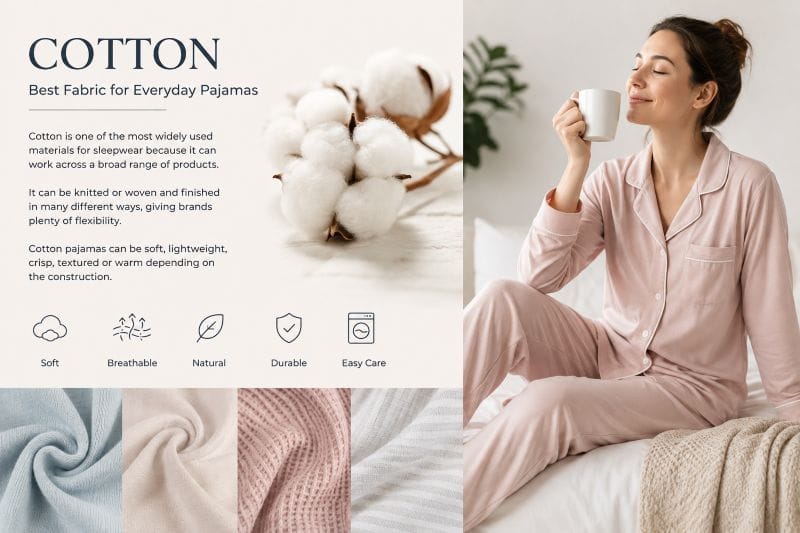
Best Fabric for Everyday Pajamas
Cotton is one of the most widely used materials for sleepwear because it can work across a broad range of products.
It can be knitted or woven and finished in many different ways, giving brands plenty of flexibility.
Cotton pajamas can be soft, lightweight, crisp, textured or warm depending on the construction.
Why Choose Cotton?
- Comfortable against the skin
- Breathable
- Easy to care for
- Available in many constructions
- Suitable for different seasons
- Familiar to consumers
Things to Consider
Cotton can wrinkle depending on the fabric construction.
Some cotton fabrics can also shrink if they have not been properly treated or pre-shrunk.
For production, it is important to evaluate the actual fabric rather than assuming all cotton behaves the same way.
Best For
- Everyday pajama sets
- Classic sleepwear
- Men’s pajamas
- Women’s pajamas
- Year-round basics
- Family sleepwear
2. Cotton Jersey
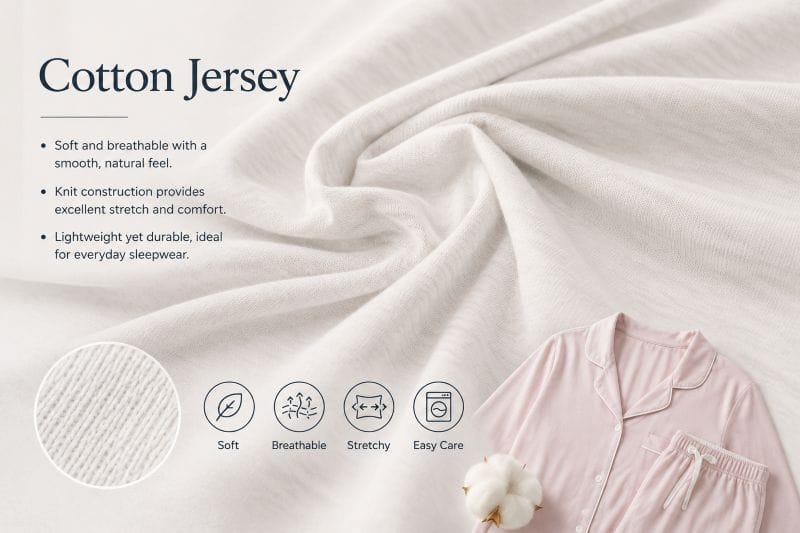
Best Fabric for Comfortable Pajamas
Cotton jersey is a knitted fabric with a softer and more flexible feel than many woven cotton fabrics.
Its natural stretch makes it particularly suitable for relaxed pajamas and styles where movement is important.
A simple T-shirt and pajama pants set can work especially well in jersey.
Why Choose It?
- Soft hand feel
- Comfortable movement
- Natural stretch
- Suitable for relaxed silhouettes
- Good option for casual sleepwear
Things to Consider
Jersey does not provide the same crisp structure as woven cotton.
If the garment needs a sharp collar or tailored appearance, a woven fabric may be more suitable.
Poor-quality jersey can also lose shape or develop pilling after repeated wear, so sampling matters.
Best For
- T-shirt pajama sets
- Lounge sets
- Relaxed pajamas
- Children’s sleepwear
- Fitted sleepwear
3. Cotton Lawn

Best Lightweight Fabric for Summer Pajamas
Cotton lawn is a finely woven, lightweight cotton fabric.
Its light construction makes it particularly useful for summer sleepwear and warm climates.
It can create a pajama that feels much less substantial than traditional cotton while still maintaining a clean appearance.
Why Choose It?
- Very lightweight
- Airy feel
- Smooth surface
- Comfortable in warm weather
- Suitable for flowing summer styles
Things to Consider
Because it is lightweight, some colors may appear slightly sheer.
It is also not designed to provide much warmth.
For production, opacity should be checked on the finished garment rather than only on a small fabric swatch.
Best For
- Summer pajamas
- Warm-climate sleepwear
- Nightdresses
- Lightweight women’s pajama sets
4. Cotton Poplin
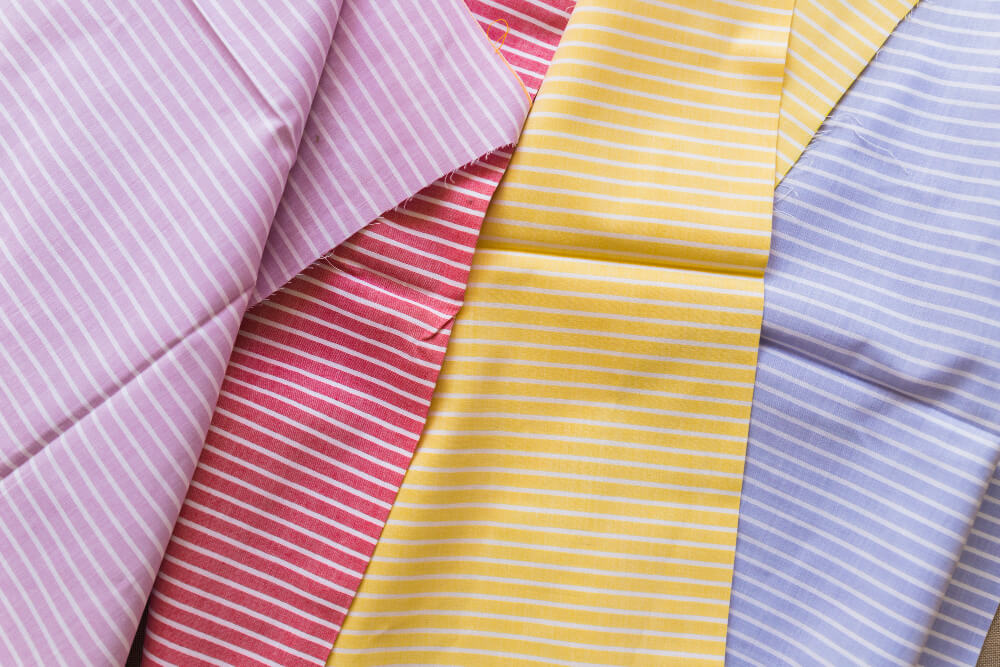
Best Fabric for Classic Button-Up Pajamas
If you picture a traditional pajama set with a collared shirt, piping and matching pants, cotton poplin is one of the fabrics worth considering.
Its smooth surface and relatively crisp structure help collars, cuffs and button plackets keep their shape.
Why Choose It?
- Clean appearance
- Smooth surface
- Holds structure well
- Suitable for classic pajama designs
- Works well with many prints
Things to Consider
Poplin is generally less fluid than modal or viscose.
It can also show wrinkles more easily than some knitted fabrics.
That is not necessarily a problem. For traditional pajamas, a slightly crisp appearance is often part of the style.
Best For
- Classic pajama sets
- Button-front pajamas
- Men’s sleepwear
- Tailored women’s pajamas
- Printed woven pajamas
5. Linen

Best Breathable Fabric for Hot Weather
Linen is a natural choice when the priority is airflow and a relaxed summer appearance.
It has a distinctive texture that gives pajamas a more natural, casual character.
For customers living in hot or humid climates, lightweight linen can be an attractive option.
Why Choose It?
- Excellent airflow
- Lightweight options available
- Naturally textured appearance
- Comfortable for warm weather
- Develops a softer feel with use
Things to Consider
Linen wrinkles easily.
Some customers love that relaxed look. Others prefer sleepwear that stays smooth.
Linen can also feel more textured than cotton or modal, so the hand feel should be checked before production.
Best For
- Summer pajamas
- Hot-climate sleepwear
- Relaxed pajama sets
- Resort-inspired sleepwear
- Summer loungewear
6. Cotton-Linen Blend

Best for a Balance of Comfort and Breathability
A cotton-linen blend combines characteristics from both fibers.
The cotton component can make the fabric feel softer and more familiar, while linen adds airflow and its characteristic natural texture.
The exact result depends on the blend ratio.
That makes the fabric specification important when sourcing.
Why Choose It?
- Breathable
- Softer than some pure linen fabrics
- Relaxed appearance
- Suitable for warm weather
- Can wrinkle less than pure linen
Things to Consider
Different blend ratios can produce noticeably different results.
Do not approve a cotton-linen blend simply based on the fiber percentages. The actual fabric weight, construction and finish still need to be checked.
Best For
- Summer pajama sets
- Relaxed sleepwear
- Transitional-season pajamas
- Everyday warm-weather loungewear
7. Modal
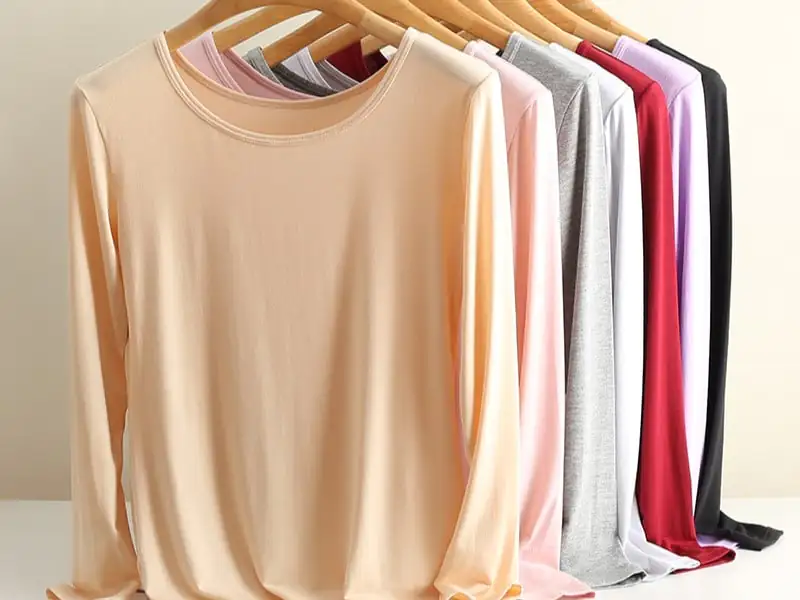
Best Soft Fabric for Pajamas
Modal is popular in sleepwear because of its smooth hand feel and soft drape.
It is particularly well suited to pajamas where comfort and a relaxed silhouette are more important than structure.
Modal fabrics are also frequently blended with elastane for additional stretch.
Why Choose It?
- Very soft feel
- Smooth surface
- Fluid drape
- Comfortable for relaxed silhouettes
- Suitable for lightweight sleepwear
Things to Consider
The actual performance depends on the fabric construction and blend.
A modal fabric that feels excellent in a sample still needs to be checked for shrinkage, pilling and recovery before bulk production.
Best For
- Women’s pajama sets
- Lounge sets
- Nightwear
- Soft everyday sleepwear
- Lightweight robes
8. Viscose

Best Fabric for Flowing Sleepwear
Viscose is another strong choice when a soft, flowing appearance is wanted.
It can create a fluid silhouette that looks very different from structured cotton poplin.
That makes it useful for women’s pajamas, nightdresses and relaxed lounge pieces.
Why Choose It?
- Soft feel
- Fluid drape
- Lightweight options
- Comfortable against skin
- Suitable for flowing silhouettes
Things to Consider
Viscose fabrics can differ considerably in durability and care requirements.
Some may need more careful washing than everyday cotton.
Before bulk production, test the actual fabric that will be used rather than relying on general assumptions about viscose.
Best For
- Women’s pajamas
- Nightdresses
- Flowing pajama pants
- Soft loungewear
- Warm-weather sleepwear
9. Silk
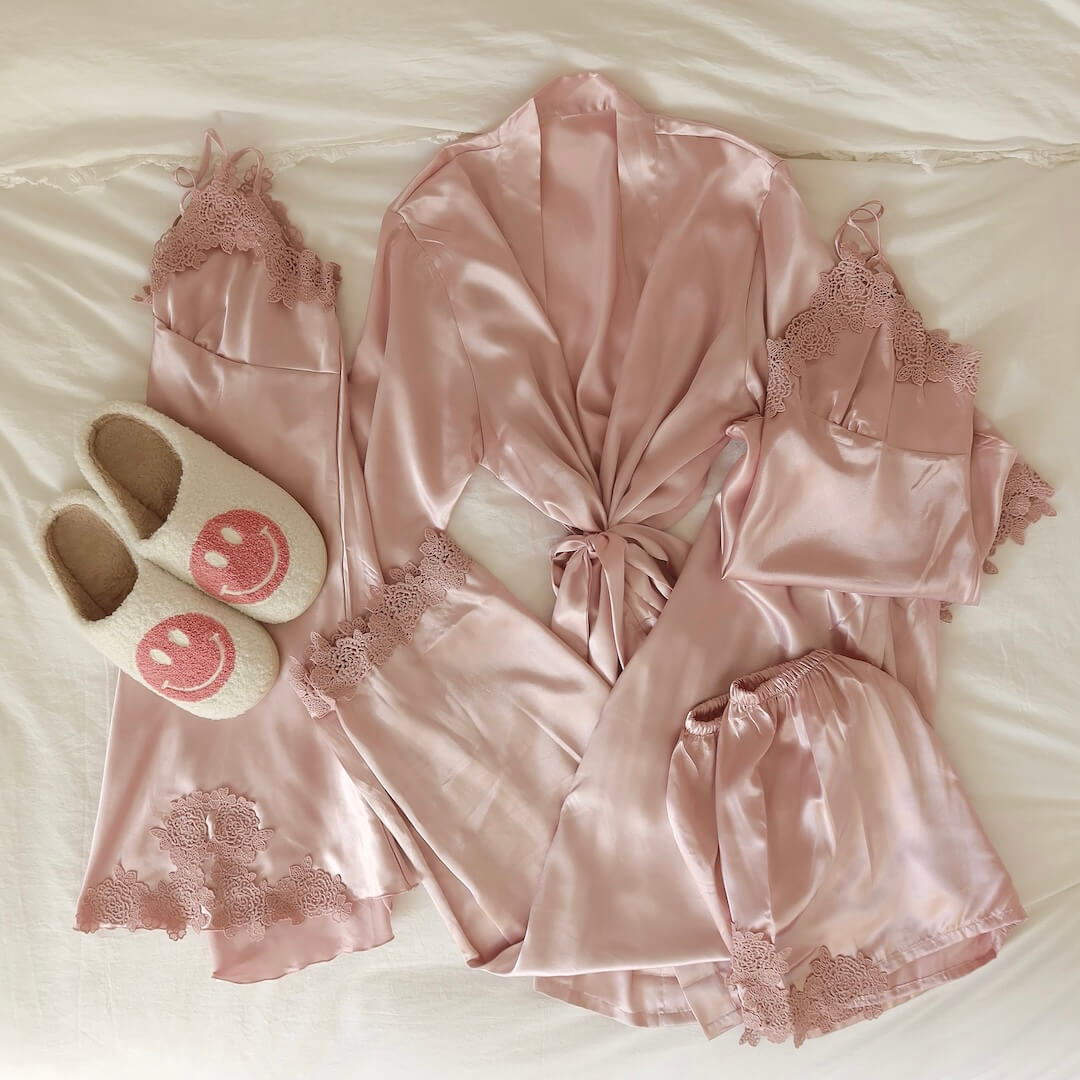
Best Luxury Fabric for Pajamas
Silk belongs to a different end of the sleepwear market.
Its smooth surface, natural sheen and elegant drape make it a popular choice for luxury pajama sets, robes and special-occasion sleepwear.
It can also give a relatively simple silhouette a much more premium appearance.
Why Choose It?
- Smooth hand feel
- Elegant drape
- Lightweight
- Premium appearance
- Suitable for luxury collections
Things to Consider
Silk is generally more expensive than everyday pajama fabrics.
Care can also be more demanding, depending on the specific silk fabric and finish.
For a brand, that means the fabric needs to be considered together with the target retail price and customer expectations.
Best For
- Luxury pajama sets
- Premium sleepwear
- Robes
- Bridal sleepwear
- Gift-oriented collections
10. Flannel

Best Warm Fabric for Winter Pajamas
When the weather gets cold, the priorities change.
Instead of focusing primarily on lightweight breathability, customers often want warmth and a soft surface.
Flannel is a classic choice for this type of sleepwear.
Its brushed surface gives it a cozy feel, while heavier versions can provide substantial warmth.
Why Choose It?
- Warm
- Soft surface
- Comfortable in cold weather
- Classic sleepwear appearance
- Suitable for many prints and patterns
Things to Consider
Flannel can be too warm for summer or heavily heated bedrooms.
Heavier fabrics can also add bulk around collars, cuffs and waistbands.
The fabric weight should therefore match the intended garment and climate.
Best For
- Winter pajamas
- Cold-weather sleepwear
- Plaid pajama sets
- Holiday pajamas
- Cozy loungewear
Which Pajama Fabric Is Best for Summer?
If your customers sleep in warm or humid conditions, start with lightweight fabrics.
Good options include:
Cotton lawn for an airy and lightweight feel.
Linen when airflow and a natural texture are important.
Lightweight cotton for an easy-care everyday option.
Modal or viscose when a softer, more fluid silhouette is wanted.
But fabric is only part of the equation.
Fit matters too.
A loose pajama made from a moderately lightweight fabric may feel more comfortable than a close-fitting pajama made from an extremely lightweight material.
Which Pajama Fabric Is Best for Winter?
For winter sleepwear, flannel is one of the most familiar choices.
Heavier cotton, fleece and other brushed fabrics can also work depending on the desired level of warmth.
For a brand developing seasonal pajamas, it is useful to think about the customer’s actual environment rather than simply labelling a fabric as “winter.”
A customer in a cold climate may want substantial warmth.
A customer sleeping in a heated room may prefer something much lighter.
Which Fabric Is Best for Sensitive Skin?
Comfort against the skin is highly personal.
Soft cotton, modal, viscose and silk are commonly considered when a smooth hand feel is important.
However, the fiber itself is not the whole story.
Finishing, dyes, fabric construction and even seams can affect how comfortable a pajama feels.
For a commercial collection, avoid making broad claims about a fabric being suitable for every sensitive-skin customer. Instead, focus on creating a smooth, comfortable garment and maintaining appropriate material and product standards.
What Fabric Is Best for a Pajama Brand?
For a clothing brand, the question becomes slightly different.
You are not only asking:
“Which fabric feels best?”
You also need to ask:
“Which fabric makes sense for this product?”
A brand developing everyday pajamas may prioritize cotton because it is familiar, versatile and easy to care for.
A premium women’s sleepwear label may prefer modal, viscose or silk.
A winter collection may require flannel.
A summer resort collection may work better with linen or a cotton-linen blend.
The fabric should support the product’s price, design, season and target customer.
What Should You Check Before Ordering Pajama Fabric?
Before moving from an idea to production, request a fabric sample whenever possible.
Check the following:
Hand Feel
Does it feel as soft as expected?
Weight
Is it appropriate for the intended season?
Opacity
Is the fabric sufficiently opaque, particularly in white and light colors?
Stretch
Does it provide enough movement for the design?
Recovery
Does it return to its original shape?
Shrinkage
How much does it change after washing?
Pilling
Does the surface remain clean after repeated friction?
Color
Does the color match your approved standard?
Availability
Can the same or equivalent fabric be supplied for future orders?
These checks can prevent a small fabric decision from becoming a much larger production problem.

Best Fabric for Pajamas: A Simple Comparison
If you are still deciding, use this as a starting point:
| If You Want… | Consider… |
|---|---|
| An everyday pajama | Cotton |
| More stretch and casual comfort | Cotton Jersey |
| A very lightweight summer set | Cotton Lawn |
| A classic button-up pajama | Cotton Poplin |
| Maximum airflow | Linen |
| A balanced summer fabric | Cotton-Linen Blend |
| A very soft lounge set | Modal |
| Fluid and flowing sleepwear | Viscose |
| Luxury sleepwear | Silk |
| Warm winter pajamas | Flannel |
There is no need to choose a fabric simply because it is considered “premium.”
The right material is the one that gives the finished pajama the feel, appearance and performance your customer expects.
How Xiuxinyang Can Help With Pajama Fabric Selection
At Xiuxinyang, fabric selection can be developed around the actual pajama you want to produce.
If you already have a tech pack, reference sample or fabric specification, our team can work from that starting point.
If you only have a design concept, the conversation can instead begin with the target market, season, desired hand feel, garment style and price positioning.
From there, suitable fabric options can be evaluated before sampling.
This is particularly useful for brands developing multiple pajama styles. A summer set, luxury nightwear piece and winter pajama do not necessarily need the same material, even when they belong to the same collection.
You can explore our pajama and sleepwear products to see different styles and product possibilities.
If you are planning your own branded sleepwear collection, you can also learn more about private label pajama manufacturing.
Frequently Asked Questions
What is the best fabric for pajamas?
Lightweight to medium-weight cotton is a versatile choice for everyday pajamas, but the best fabric depends on the season, climate, design and desired feel. Modal, linen, viscose, silk and flannel may be better choices for specific sleepwear applications.
Is cotton good for pajamas?
Yes. Cotton is breathable, comfortable, widely available and easy to care for. Different cotton constructions can create very different pajama styles.
Is modal good for sleepwear?
Modal can be an excellent choice for soft, lightweight sleepwear because of its smooth hand feel and fluid drape. The actual fabric should still be tested for shrinkage, pilling and recovery.
What is the best pajama fabric for hot weather?
Lightweight cotton, cotton lawn, linen, modal and viscose can all work well for warm-weather pajamas. Fabric weight, construction and garment fit should also be considered.
What is the warmest fabric for pajamas?
Flannel, fleece and other heavier brushed fabrics can provide substantial warmth for winter pajamas. The best choice depends on the climate and the desired garment weight.
Is silk good for pajamas?
Silk is a strong option for luxury sleepwear because of its smooth surface, drape and refined appearance. It generally requires more careful handling than everyday cotton pajamas.
Final Thoughts
The best fabric for pajamas is not the same for every customer or every collection.
Cotton remains a reliable everyday choice. Cotton jersey adds flexibility, cotton lawn works well for lightweight summer sleepwear, and linen brings excellent airflow to warm-weather collections. Modal and viscose are useful when softness and drape are the priority, while silk offers a more luxurious direction. For cold-weather pajamas, flannel provides the warmth and comfort many customers expect.
For brands, the smartest approach is to start with the finished product.
Think about the customer, climate, season, fit and price point first. Then choose a fabric that supports those requirements and test it before moving into bulk production.
The right fabric does more than make pajamas feel comfortable.
It helps determine how the entire product looks, fits and performs.
Developing a New Pajama Collection?
If you have a pajama design, reference sample or fabric idea, Xiuxinyang can help you move from concept to sample and bulk production.
Contact Xiuxinyang to discuss your sleepwear project.