Velvet Pajama Manufacturer: Nap, Lace, and Seam Approval
Table of Contents
- Define the Velvet Product Before Sourcing
- Control Nap Direction and Shade
- Balance Lace with Velvet
- Manage Seam Bulk and Stretch
- Test Wear and Care
- Compare Approval Points
- Protect Size Consistency
- Prepare the Production File
- Questions for the Development Call
- Frequently Asked Questions
- Start with a Clear Velvet Brief
Velvet sleepwear sells through touch, depth of color, and a polished surface, but those same qualities make production decisions easy to see. Panels cut in different directions can reflect light differently. Lace that looks delicate on a trim card can feel rigid against the body. Thick seam intersections can interrupt the drape of an otherwise fluid pajama set.
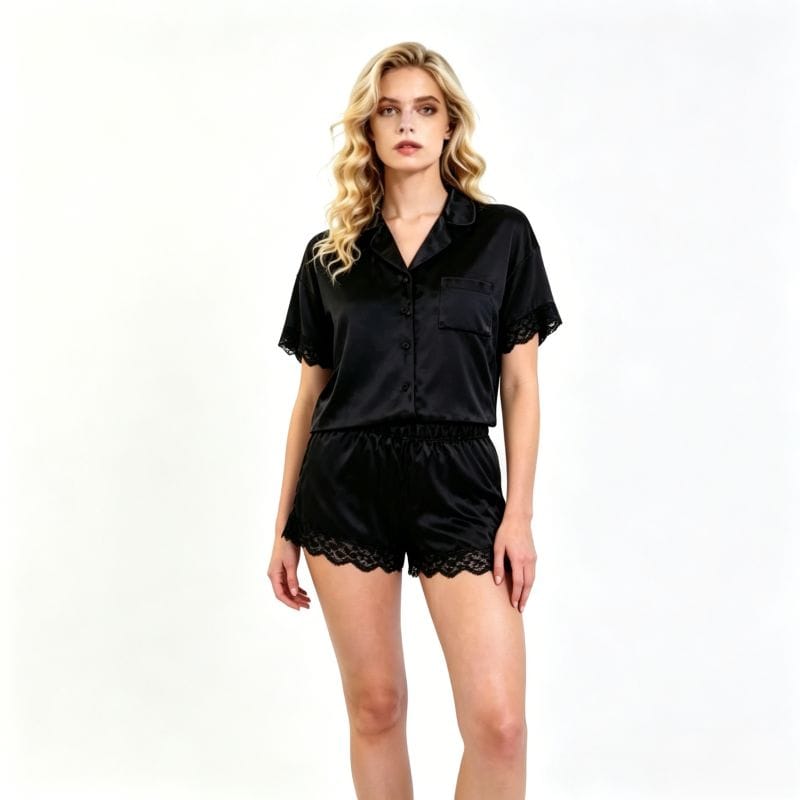
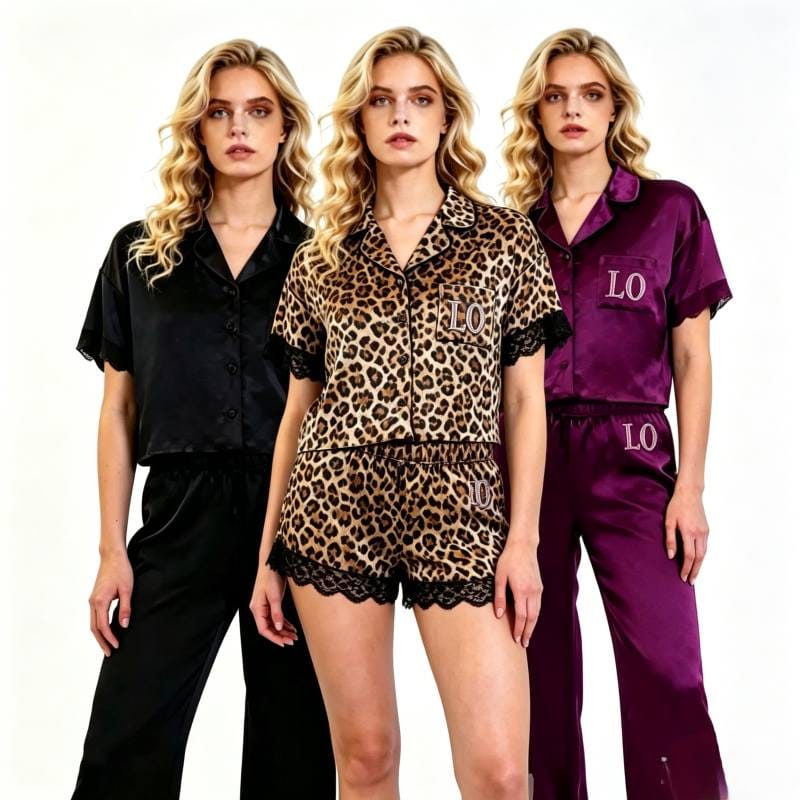
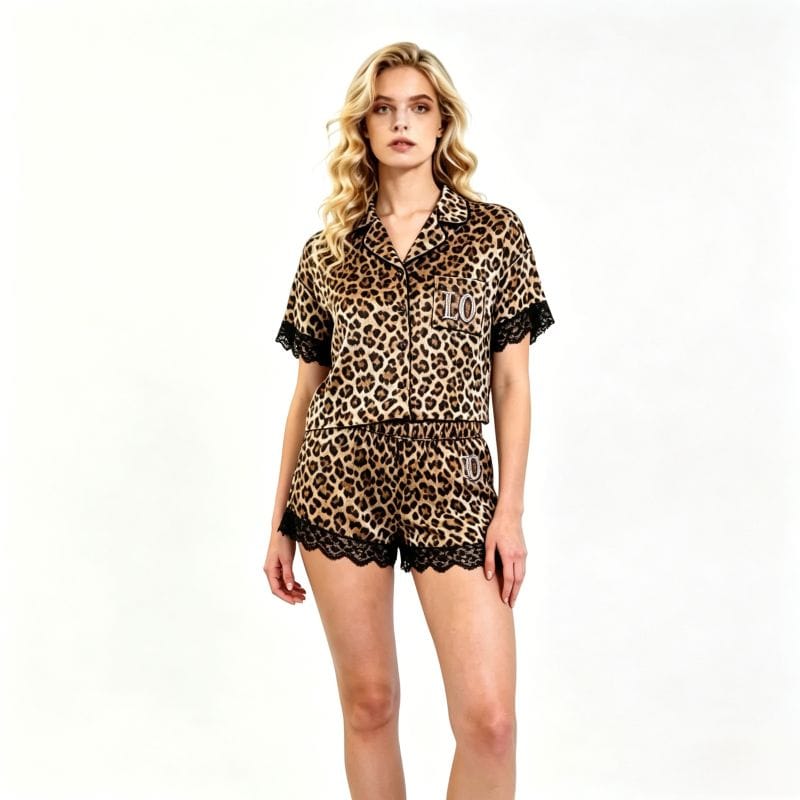
A brand working with a velvet pajama manufacturer needs an approval process built around the actual product, not a generic pajama checklist. This guide uses the lace-trimmed velvet pajama set shown in the XXY Apparel catalog to explain nap control, trim selection, construction, sampling, care, and bulk consistency.
Define the Velvet Product Before Sourcing
Describe the intended silhouette first: fitted or relaxed, camisole or sleeved top, shorts or trousers, and whether the garment is designed mainly for sleep, gifting, or elevated homewear. The pattern ease and internal finishing should reflect that use. A visually rich fabric does not compensate for a neckline that gapes or a short that twists during wear.
Identify every place where lace meets velvet. Necklines, hems, side slits, straps, waist openings, and robe edges each place different demands on the trim. Add close-up construction references to the technical pack and link the request to the exact catalog product instead of describing it only as a luxury pajama.
Control Nap Direction and Shade
Velvet has a directional pile that changes appearance as light hits it. Before markers are approved, the brand should decide the intended nap direction and require every visible panel to follow it unless the design deliberately uses contrast. Turning a pattern piece to improve fabric utilization can create a noticeable shade difference in the finished set.
Ask the velvet pajama manufacturer to label nap direction on patterns and sample cutting instructions. Review the garment under more than one light source and compare the top and bottom together. Color approval should be completed on the selected velvet construction because pile height and finish influence how the shade is perceived.
When confirming fiber information and labels for the U.S. market, use the FTC textile-labeling guidance. Do not copy fiber content from an early sourcing note if the approved bulk fabric specification later changes.
Balance Lace with Velvet
Lace must work visually and mechanically with the base fabric. Compare its weight, softness, stretch, edge stability, color, repeat, and recovery. A narrow rigid lace may distort a stretch velvet neckline, while an unstable lace can ripple after sewing or washing. Skin-contact areas deserve a hand-feel review from both the face and seam side.
Approve trim color beside the velvet under the same lighting used for garment review. Tonal black, navy, burgundy, and other deep colors can reveal mismatch even when each component looks acceptable alone. If lace comes from a separate dye lot, define how shade variation will be reviewed before cutting.
Manage Seam Bulk and Stretch
Velvet pile adds thickness at folded edges, crossed seams, elastic casings, and areas where lace is layered over the base. The sewing method should secure the fabric without crushing the surface or creating hard ridges. Test seam type, needle choice, stitch density, thread, pressing method, and trimming at the sample stage.
A velvet pajama manufacturer should show how the seam behaves when the garment is worn, not only when it is laid flat. Check underarm, side seam, crotch, waistband, neckline, and strap attachment. Pulling, skipped stitches, visible needle marks, or flattened pile can become more noticeable after the garment has been packed.
Before wear testing, the velvet pajama manufacturer should identify the approved fabric face, nap direction, trim code, and sewing revision. The evaluation is only useful when every sample component is traceable.
Test Wear and Care
Use a wear review to assess strap comfort, neckline stability, waist pressure, short rise, inseam, and lace contact. Record surface changes at areas of friction such as the underarm, side waist, seat, and inner thigh. If the set includes adjustable straps, confirm the adjustment range and whether hardware remains flat against the body.
Care approval must consider velvet, lace, elastic, thread, labels, and any decorative hardware as one garment. The FTC Care Labeling Rule guidance explains U.S. responsibilities, while ISO 3758 provides an international care-symbol framework. Final instructions should be supported by the finished-product evaluation.
Compare Approval Points
| Component | Approval Question | Common Problem to Prevent |
|---|---|---|
| Velvet | Is nap direction consistent on every visible panel? | Apparent shade changes between pieces |
| Lace | Does stretch, softness, and color suit the base fabric? | Rippling, irritation, or color mismatch |
| Seams | Is bulk controlled without crushing the pile? | Hard ridges and visible pressure marks |
| Set balance | Do top and bottom match in shade, proportion, and trim placement? | A coordinated set that looks mixed |
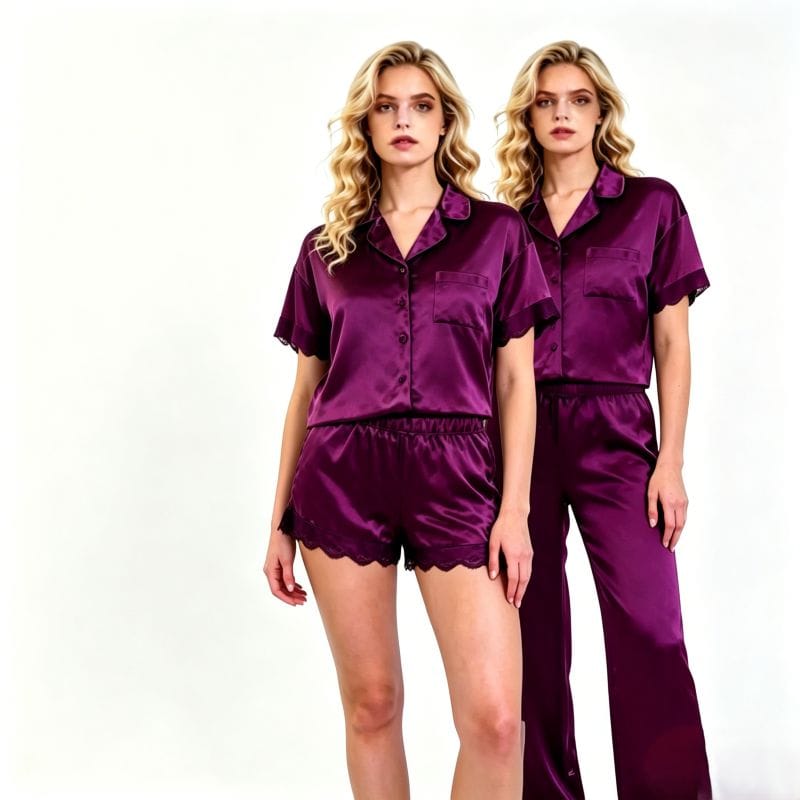
Keep component approvals together. A lace card approved in isolation and a velvet swatch approved weeks earlier do not prove that the finished combination works. Photograph the signed sample with close-ups of important intersections and keep physical references where practical.
Protect Size Consistency
Grade the body pattern and trim lengths with the intended fit in mind. Lace placement should remain visually balanced as necklines, hems, and openings change. Adjustable straps may reduce one fit risk but do not replace correct bust width, neckline shape, rise, hip ease, or inseam grading.
Request representative sizes and compare finished measurements after the approved care method. The velvet pajama manufacturer should record any grade-rule exception and verify that the top and bottom remain coordinated. If the style uses a relaxed top with a closer-fitting bottom, do not apply one blanket ease rule to both pieces.
After representative sizes are signed, the velvet pajama manufacturer should freeze the component list and record any later material or process change for brand review.
Prepare the Production File
Before bulk release, combine the approved fabric code, nap direction, trim code, color references, pattern revision, graded chart, seam details, label artwork, care method, and packaging plan. A first-bulk review should compare surface appearance, shade, trim application, measurements, and workmanship with the signed sample.
Use the XXY Apparel OEM/ODM workflow to structure development discussions and the broader product catalog to compare related silhouettes. If units require retail barcodes, follow the brand owner’s allocation process and consult GS1 barcode standards before packaging artwork is locked.
Questions for the Development Call
- How will nap direction be marked and checked during cutting?
- Which lace properties must match the approved base fabric?
- How will seam bulk and pile crushing be evaluated?
- Which sizes will be reviewed before the full grade is released?
- What changes require a new garment or care approval?
These questions keep the call connected to visible product risks. They also create a useful handoff between design, sourcing, technical, and quality teams.
Frequently Asked Questions
Why can velvet panels look like different colors?
Directional pile reflects light differently. Panels cut in opposing directions may appear mismatched even when they come from the same fabric and dye lot. Nap direction should be defined and controlled in the marker.
Should lace stretch match velvet stretch exactly?
Not necessarily, but the two materials must work together at the specific application point. The sample should show whether the lace restricts, ripples, or loses recovery when the garment moves.
What measurements matter most in a velvet pajama set?
Review neckline, bust, strap length, top length, waist, hip, rise, inseam, leg opening, and trim placement. Add measurements for any slit, overlap, or decorative edge that affects appearance.
Can a fabric swatch prove the final care method?
No. The complete garment includes lace, elastic, thread, labels, and possible hardware. Care instructions should be supported by testing or evaluation of the finished construction.
What should be checked on first bulk units?
Compare nap direction, shade, measurements, lace placement, seam appearance, surface pressure marks, labels, and packaging with the signed sample and production file.
Start with a Clear Velvet Brief
Send the velvet pajama manufacturer the intended silhouette, customer use, size range, velvet direction, lace placement, color plan, labeling market, and packaging needs. The contact page provides a direct route for sharing the specification and requesting a product-focused sampling discussion.