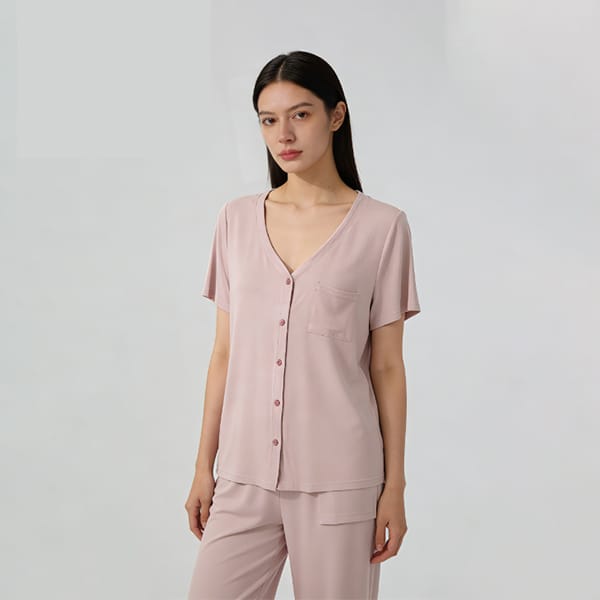
Knitwear Manufacturer: Three-Piece Set Development Guide
Table of Contents
- Define the Three-Piece Set
- Approve Yarn and Knit Structure
- Control Shade and Panel Matching
- Balance All Three Pieces
- Manage Edges and Recovery
- Compare Development Checks
- Grade the Complete Set
- Approve Care and Production
- Questions for Development
- Frequently Asked Questions
- Prepare the Knitwear Brief
A knitted three-piece loungewear set is judged as one coordinated product, but each component places different demands on yarn, structure, fit, and finishing. A cropped top needs stable openings, trousers need seat and knee recovery, and an outer layer must drape without overwhelming the inner pieces.
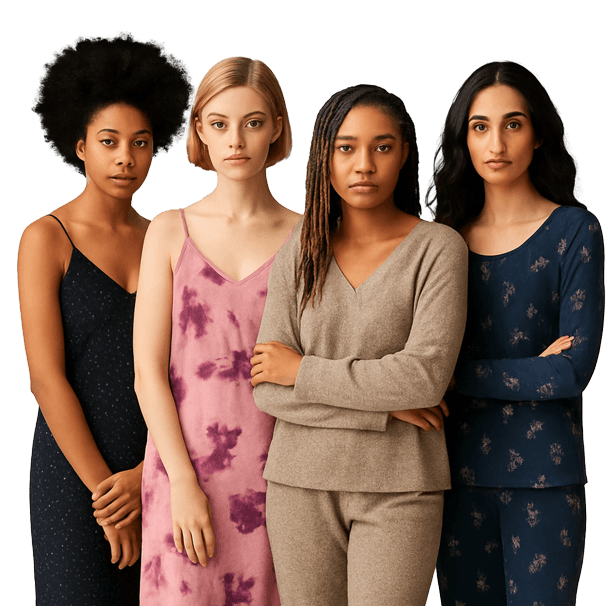
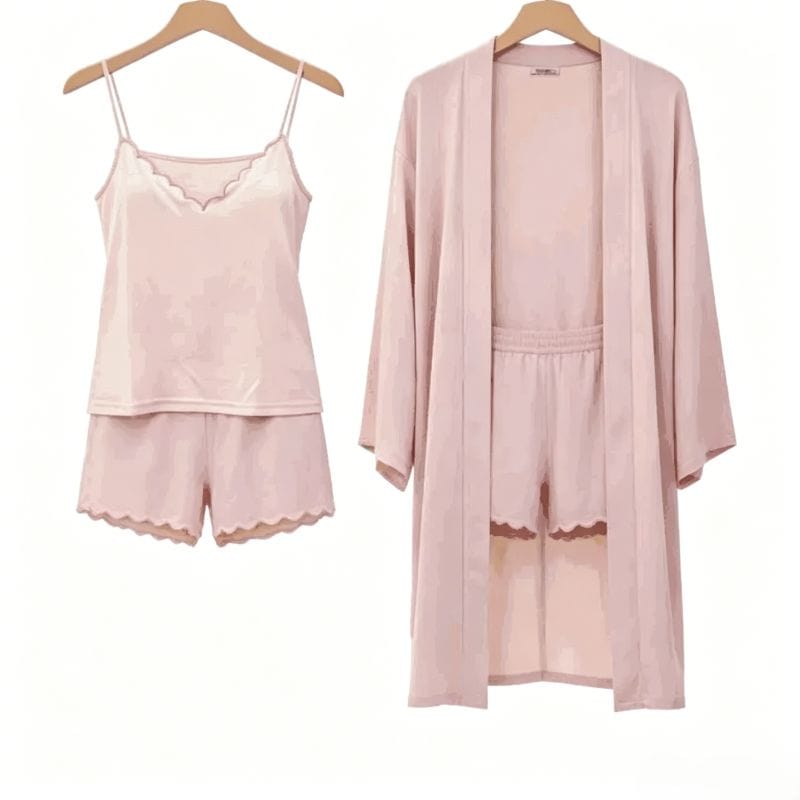
This guide explains how brands can work with a knitwear manufacturer using the Custom Knitted 3-Piece Loungewear Set in the XXY Apparel catalog as the product reference. It focuses on yarn approval, panel consistency, set balance, size grading, and repeat-order control.
Define the Three-Piece Set
List every component and its role. State whether the cropped top, wide-leg or relaxed trousers, and cardigan or outer layer are sold only together or may also be merchandised separately. Define the intended season, skin contact, layering use, and customer fit expectation.
Give the knitwear manufacturer a master specification for the retail unit and a separate page for each component. The master should control colorway, size relationship, labels, packaging, and component count. Each page should control measurements, knit structure, openings, seams, and finishing.
Approve Yarn and Knit Structure
Record fiber content, yarn count, ply, twist where relevant, color, supplier reference, and the knit structures used in each panel. Hand feel alone is not enough. The same yarn can behave differently in rib, jersey, textured, or more open constructions.
Ask the knitwear manufacturer to retain an approved swatch or garment reference that connects yarn and structure. Review weight, stretch, recovery, opacity, surface, and dimensional change. If yarn or finishing changes, repeat the checks that could be affected.
Control Shade and Panel Matching
Approve all pieces together under consistent light. Different structures reflect light differently, so a nominally identical dye shade may appear lighter on ribbed bands or denser panels. State whether the design accepts that effect or requires closer visual matching.
A knitwear manufacturer should keep lot identity connected to the cutting, linking, or sewing records. When components are packed as one set, the brand should define how visible shade variation is reviewed before packing rather than discovering mixed appearance in finished units.
Balance All Three Pieces
Fit every component separately and layered. The top length influences waistband exposure. The trouser rise affects where the crop appears to finish. The outer layer changes volume at the shoulder, sleeve, waist, and hip. Review the set standing, sitting, walking, and reaching.
Use the size-planning guide to organize measurements, then add component-specific points. ISO 8559-1 can help teams align body-measurement terminology while the brand retains its own finished-garment chart.

Manage Edges and Recovery
Necklines, straps, armholes, waistbands, cuffs, hems, and front edges can grow or ripple if structure, tension, and finishing are not balanced. Define the intended finished dimensions and check them after wear and the approved care method.
The knitwear manufacturer should document any elastic, reinforcement, binding, or stabilizing method. If a panel is linked or sewn to another structure, review seam stretch and bulk so the joint supports movement without creating a hard ridge.
Compare Development Checks
| Area | Approval evidence | Risk controlled |
|---|---|---|
| Yarn and structure | Approved material and swatch reference | Unexpected hand feel, weight, or recovery |
| Color | Complete-set shade review | Panels or pieces that appear mismatched |
| Fit | Individual and layered fitting | Conflicting lengths and excess bulk |
| Packing | Component and size checklist | Missing pieces or mixed sizes |
Do not approve these checkpoints in isolation. The signed reference should represent the complete set, and any material or pattern revision should state which earlier approvals remain valid.
Grade the Complete Set
Grade each component from the same body-size strategy but do not force identical ease rules. The top, trousers, and outer layer have different functions. Review opening stretch, torso and sleeve length, rise, hip, inseam, and overall set proportion in representative sizes.
A knitwear manufacturer should flag transitions where structure, needle setup, panel count, or trim length changes by size. Fit smaller, middle, and larger samples together rather than checking three unrelated garments.
Approve Care and Production
Care instructions must reflect the complete product, including yarn, elastic, thread, labels, and any hardware. ISO 3758 provides a care-symbol reference, while U.S. brands should review the FTC Care Labeling Rule guidance.
Before bulk, lock the approved yarn, structures, colors, patterns, measurements, tolerances, labels, and packaging. Compare first bulk units with the signed set. Retail barcodes should follow GS1 standards and the brand owner’s assigned data.

Questions for Development
- Which yarn and structure references will be retained?
- How will shade be compared across different knit panels?
- How will the three components be fitted together?
- Which dimensions are checked after wear and care?
- How will repeat-order changes be documented?
Frequently Asked Questions
Should all three pieces use the same knit structure?
Not necessarily. Different structures may support coverage, stretch, or visual detail, but they must be approved together for color, hand feel, care, and set balance.
Why can the same yarn look different across panels?
Structure, density, pile, finishing, and light reflection affect appearance. Approve the complete garment rather than relying on a yarn card alone.
How should knitted openings be measured?
Record relaxed dimensions, appropriate extended dimensions, and recovery after a defined procedure. The method should match the product function and be repeatable.
What causes knitwear panels to grow?
Yarn, structure, tension, finishing, garment weight, wear, and care can all contribute. The production specification must connect these factors to measurable checks.
What should a repeat-order file contain?
Retain the signed sample, yarn and structure codes, color reference, patterns, graded measurements, labels, packaging, and a change log.
Before sampling, build a component map showing which yarn, color, stitch, trim, and label belongs to each piece. Mark any shared specifications and any deliberate differences. This lets the knitwear manufacturer order and test materials as one coordinated set instead of treating the cardigan, top, and bottom as unrelated garments.
Consolidate feedback through one approval owner. Knit development comments often interact: changing garment length affects weight, changing stitch density affects drape, and changing yarn can alter both shade and care behavior. Ask the knitwear manufacturer to explain the likely consequence of every requested change, then update the specification and sample reference together.
Create clear gates for yarn approval, lab dip or shade approval, knit panel review, fit sample, size set, pre-production sample, and first-bulk comparison. Each approval should carry a version and date. If one component is revised, identify the other pieces that must be rechecked. This record gives the knitwear manufacturer a stable basis for repeat orders and helps the brand distinguish an approved variation from an uncontrolled substitution.
For repeat colors, retain the approved yarn reference and a finished garment from the original order when practical. Compare new production under consistent lighting and after the agreed care procedure. Record acceptable variation before manufacturing begins, because photographs on different screens are not a dependable color standard for coordinated pieces.
Prepare the Knitwear Brief
Send the knitwear manufacturer the component list, target customer, size range, yarn direction, structures, colorways, fit expectations, labeling market, and packaging plan. Review the product catalog, follow the OEM/ODM process, and submit the controlled specification through the contact page.