
Ribbed Pajama Knee Bagging: Can Stretched Knees Recover?
جدول المحتويات
A rounded patch at the knees after sitting does not always mean your ribbed pajamas are permanently stretched. Let the trousers rest without pulling them, then compare the shape again. If the bulge relaxes, it was at least partly a temporary response to wear. If it remains pronounced after the care allowed on the label, the cut or the fabric’s recovery may be a poor match for your routine.
The useful response to ribbed pajama knee bagging is to separate three questions: does the fabric recover, are the legs too tight when bent, and did laundering change the shape? Those questions lead to better decisions than immediately washing the set hotter or buying a smaller size. Extra heat and extra tension can create new problems without solving the original one.
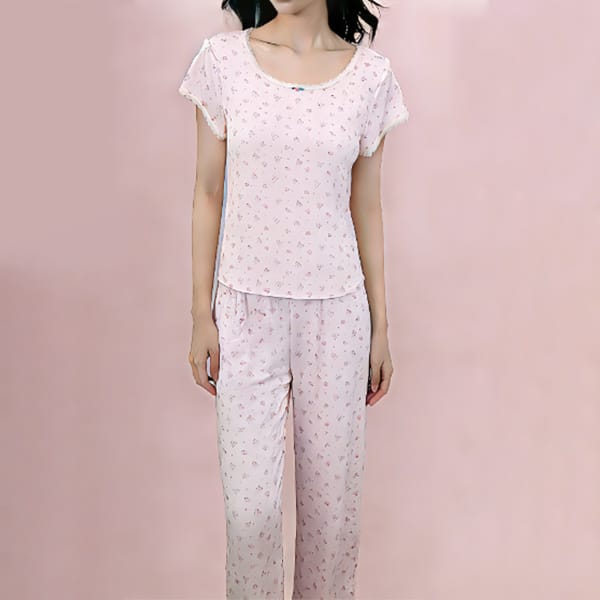
What the knees are doing while you sit
When your knee bends, the fabric over the front of it has to accommodate a larger curved shape. The cloth can move upward from the lower leg, stretch, or do a mixture of both. A relaxed trouser has more room to move. A close-fitting leg may ask the same small patch of fabric to supply most of the extra space.
Ribbed fabric makes this change particularly easy to notice because its columns open and the surface catches light differently. A knee area that has become more rounded can look different even without a dramatic change in overall trouser size. Look from the side as well as from above before deciding what has changed.
You may see temporary shaping in the seat or elbows too. That does not mean every visible change is acceptable or that a garment cannot have a recovery problem. It simply explains why the timing of your comparison matters. Trousers taken straight from several hours on the sofa are in a different state from trousers that have been resting flat.
ال knitted fabric overview on Wikipedia explains the looped construction behind knit structures. For your pajamas, the practical point is that the fabric’s movement and return depend on the complete material and construction, not just on the presence of rib lines.
Keep a simple three-observation record
You do not need special equipment. Before wearing the trousers, lay them naturally on a flat surface and photograph the knee area from a consistent angle. Do not stretch them smooth for the picture. This gives you a reference for how the garment looks when it is relaxed.
After a normal period of sitting or lounging, make a second observation. Note what you were doing: sitting at a desk, curling your knees underneath you, or spending an evening on the sofa. The purpose is to connect the visible change to ordinary use, not to force the fabric until it fails.
Then let the trousers rest. Put them somewhere they can lie without being stretched over a hanger or a chair back. Compare them again later under similar lighting. You are looking for a direction of change: smaller, similar or more distorted. There is no universal household waiting time that proves a garment passes or fails a standard.
This small record is useful because memory exaggerates differences. A photograph taken close to the knees can make a mild bulge look severe, while a dark fabric in low light can hide it. Keep the angle and distance similar. If you contact a seller, send the original view and the comparison instead of only the most dramatic close-up.
Read the pattern of the change
If both knees bulge similarly after wear and both become less visible after resting, temporary shaping is a reasonable explanation. You can decide whether the remaining change bothers you. Pajamas worn mostly in bed may have a different appearance requirement from a lounge set you wear throughout the day.
If one knee changes much more than the other, think about your sitting position before blaming an uneven fabric. Do you tuck one leg underneath you or keep one knee raised? An asymmetrical routine can put repeated strain in one place. If the difference appears before ordinary wear or worsens quickly, document that too.
If a bulge remains while the rest of the trouser looks relaxed, inspect the surrounding fit. Tight fabric across the thigh can prevent the leg from moving upward as the knee bends. A narrow calf or ankle opening can also affect how the trouser shifts. The visible problem is at the knee, but the cause may involve the whole leg shape.
If the side seam has moved around your shin, you may be seeing twisting as well as knee bagging. Lay the garment flat and see whether the seam returns naturally to its original position. Avoid pulling it straight and treating that as a permanent correction. Twisting needs its own comparison before and after the permitted wash.
Try this fit check before changing your laundry routine
Put on the trousers at the waist position where you normally wear them. Sit in a chair with your feet comfortably placed. Notice whether the cloth already feels taut over the knees before you curl up or cross your legs. If it does, the leg may not have enough room for the way you sit.
Now stand up and look at the seat and front rise. Does the waistband drop when you sit, or does the crotch pull? More knee stretch will not correct a rise that is too short. A larger size may supply extra room, but it can also alter the waist. Compare a different cut if sizing up creates a new problem.
If the trousers have a cuff, check whether it grips the lower leg tightly enough to limit movement. A comfortable cuff should work with the rest of the leg rather than anchoring the fabric while the knee does all the stretching. Do not cut or alter a returnable garment to test this; use the observation to choose another style.
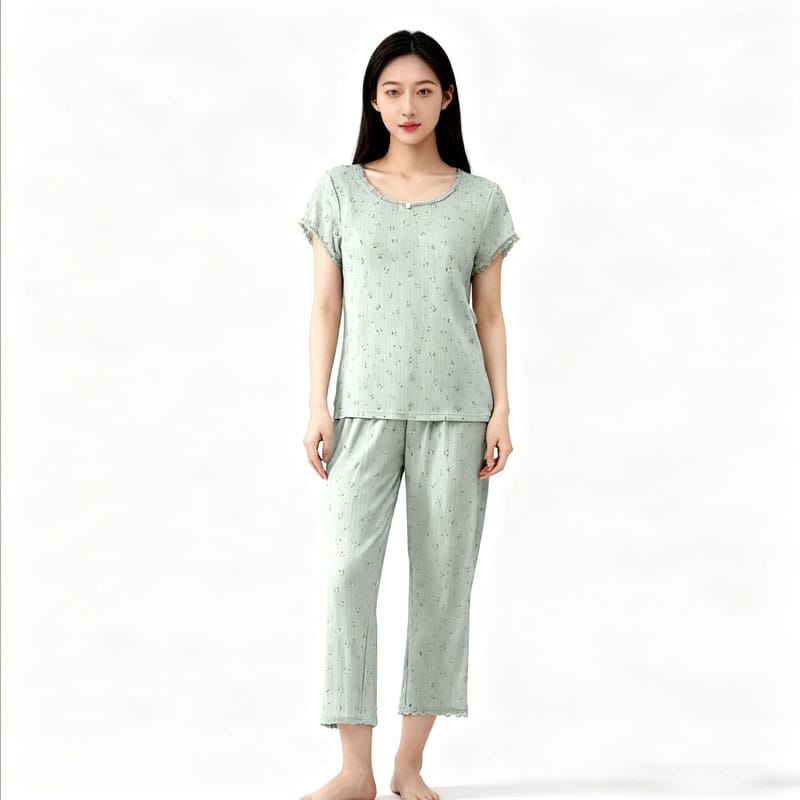
For a reference to this kind of textured set, see the women’s ribbed pajamas. When comparing sizes, use the actual garment information and your preferred amount of room. A picture of a standing model cannot tell you how the trousers will feel after an hour in your usual chair.
Why the spandex percentage does not settle the question
It is tempting to look for a higher stretch-fiber percentage and assume that it prevents baggy knees. The percentage is useful composition information, but it is not a recovery result for the finished trousers. Yarn choice, knit construction, finishing and the amount of strain during wear all contribute to the outcome.
Two fabrics with similar composition can have different thickness, rib depth and firmness. They may also be cut into trousers with very different amounts of room. One garment can recover reasonably in a relaxed fit while another stays under tension because it is too close around the leg.
Ask about the complete garment rather than requesting an isolated number. If you are reviewing a sample for a small collection, describe the sitting routine and the change you observed. If you are buying for yourself, compare the fabric feel and the cut with a pair you already wear comfortably. Neither situation requires you to guess a universal ideal percentage.
What a permitted wash can tell you
Some temporary changes become less noticeable after the garment has been washed and dried according to its label. That does not justify a hotter wash, extra dryer heat or repeated washing solely to force the knees back into shape. Use the instructed procedure and evaluate the whole garment afterward. The FTC guide to U.S. care labeling is a useful reference for understanding the role of garment-specific instructions and warnings.
Compare the waist, leg length and side seams as well as the knees. A knee that looks flatter because the entire trouser has become shorter is not necessarily a successful result. You want a garment that maintains a comfortable overall fit, not a local improvement obtained at the expense of everything else.
Do not judge the fabric while it is still damp. A wet garment can hang or cling differently from a dry one. Allow the permitted drying process to finish, then lay it down naturally. Avoid tugging the knees or smoothing them under tension before your comparison.
If the garment changes substantially under the stated care, record the label and what you did. The useful message is specific: “After one wash following these instructions, the knees remain rounded and the side seam has moved.” That gives the seller something to investigate. “The fabric is bad” leaves the actual problem unclear.
Avoid the fixes most likely to make things worse
Do not use a hot iron on the knees without checking whether ironing is permitted. A textured surface can flatten, shine or change under inappropriate heat. Ironing a bulge flat also does not prove that the fabric will recover better the next time you sit down.
Do not stretch the surrounding leg to make the knee look less noticeable. That can trade a small shaped area for a larger distorted one. Likewise, hanging wet trousers from the waistband may put unnecessary weight on a garment whose label calls for another drying method.
Do not choose a smaller size to “hold everything in place.” Tighter fabric usually has to accommodate more of your movement through extension rather than spare room. If your existing pair is under strain, reducing the size is unlikely to create the relaxed appearance you want.
And do not assume that a loose garment is automatically well fitting. Extra fabric at the knee can fold or wrinkle even when it is not stretched. If the change is mostly creasing rather than a rounded area that stands away from the leg, compare the trouser length and the amount of excess fabric too.
Use the result to make the next choice easier
If the knees mostly recover and the pajamas are comfortable, the set may still suit you well. You might prefer to let the trousers rest between longer periods of wear, or simply accept a little temporary shaping in clothing used for relaxing. That is a preference, not a rule every wearer must follow.
If the knees recover but you dislike how quickly they show, try a roomier leg or a different fabric feel next time. If the knees do not recover and the fit is already relaxed, bring the documented change to the seller. If the fabric is visibly damaged, a repair assessment may be more relevant than another wash.
For a wardrobe built around long hours at home, it can help to distinguish sleeping pajamas from all-day lounge trousers. You do not need two separate wardrobes, but the routine matters: a fabric that works for a short evening may not keep the appearance you want through an entire seated workday.
If you are also comparing smooth and textured sets, the site’s sleepwear fabric guide provides broader fabric context. Keep your knee observations alongside that information. They tell you which features matter in your own next pair instead of leaving you to choose by fabric name alone.
الأسئلة المتداولة
Will washing always fix baggy knees in ribbed pajamas?
No. A permitted wash may reduce temporary shaping, but it cannot guarantee recovery or correct an unsuitable cut. Follow the label and compare the whole dry garment afterward.
Does knee bagging mean I bought the wrong size?
Not necessarily. Fabric recovery and sitting habits also matter. Check whether the leg is already taut when you sit, and whether the rise, thigh or cuff is restricting movement.
Should I iron the knees flat?
Only consider ironing if the garment label permits it, using its stated conditions. Heat is not a dependable cure for poor recovery and can affect a textured or synthetic surface.
What information should I send to the seller?
Send the size, composition and care label, plus consistent photos before wear, after ordinary wear and after resting or permitted care. Explain which change remains and whether it affects comfort.
