
Milk Silk Fabric Pajamas Composition: Is It Actually Silk?
جدول المحتويات
“Milk silk” on a pajama listing does not, by itself, mean the garment contains silk. Treat it as a description that needs a fiber composition beside it. If that composition says polyester or polyester and spandex, those are the materials you should use to understand the garment. A silky touch, a fluid drape or a lustrous photograph cannot turn polyester into silk.
The quickest answer to a milk silk fabric pajamas composition question is to find the percentage breakdown. Then read the care instructions and decide whether the actual fabric suits your preferences. You can enjoy a smooth polyester pajama without calling it silk, and you can prefer silk without assuming every soft sleepwear description refers to it.
اقرأ هذه المعلومات الثلاثة بشكل منفصل
First is the marketing name: milk silk, silky, cloud-soft or another appealing phrase. It tells you how the seller wants to describe the experience. It may be useful as a clue about softness or appearance, but it is not enough to identify the fiber.
Second is the composition: for example, 100 percent polyester, or a blend of polyester and spandex. This is the information you need when comparing materials. If the listing gives a number such as “95/5” without naming both fibers, ask what the numbers refer to. A proportion without the material names is incomplete information.
Third is the care instruction. This tells you how the particular garment is intended to be maintained. A fabric name does not override the label on the finished item. Sleepwear can include lace, elastic, prints or other components that affect the permitted washing and drying routine. In its official U.S. care-labeling guidance, the FTC discusses care information for the garment as a whole, including its components.
Keep those three lines separate while shopping. A smooth handfeel might attract you to the set, the composition might help you compare it with an existing favorite, and the care label might decide whether it will work in your household. Each answers a different question.
لماذا يوصف القماش الناعم المتدفق بأنه يشبه الحرير
Many shoppers use “silky” to describe a sensation rather than a fiber. A fine, smooth knit can slide over the hand and fall into soft folds. That experience can be appealing in a nightgown or camisole set, regardless of whether silk is present. The problem begins when a sensory description is mistaken for a material declaration.
There are several separate things you might be noticing. The yarn can feel smooth. The fabric can be thin or fluid. The surface can have some sheen. The cut can allow it to move freely. None of these observations, on its own, confirms what the textile is made from.
You may also see “silk” used beside words for structure or finish. Read the whole description rather than looking for a single familiar word. A composition statement that clearly names the fibers is more useful than guessing from the product title. If the title and the stated composition appear to disagree, ask the seller to explain the discrepancy before ordering.
ما تقوله مراجع منتج Xiuxinyang بالفعل
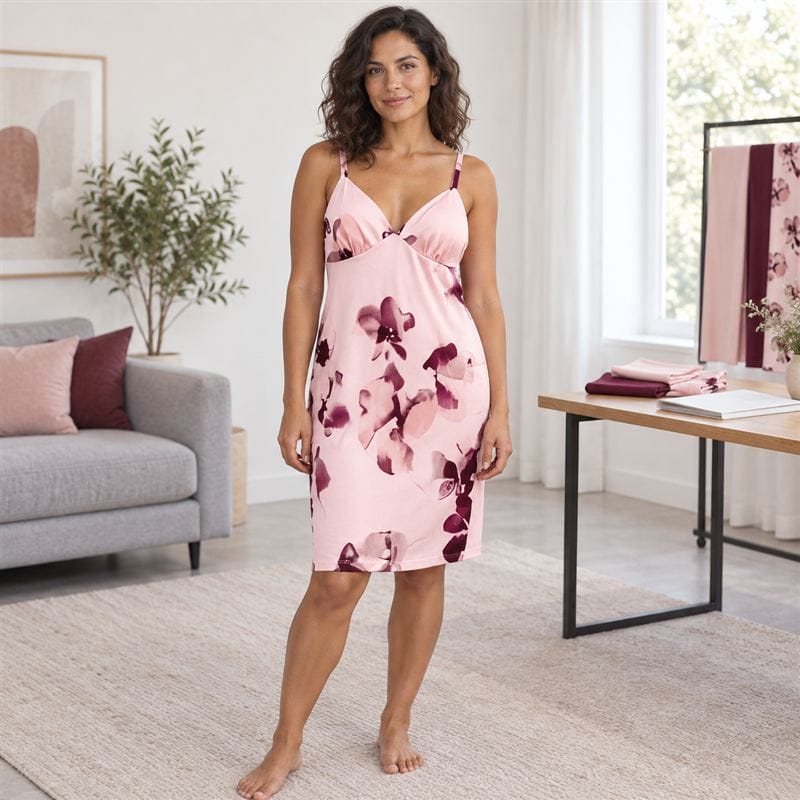
ال V-neck nightgown reference identifies its existing material description as polyester and asks that the selected material be confirmed. Its photographs show floral and dotted slip-style nightgowns. Those images illustrate the cut and print; they do not provide evidence of silk content.
ال robe with lace trim is another relevant example: its material reference uses the commercial name “Milk Silk” alongside polyester information. Read those details together. Do not drop the composition and retain only the more luxurious-sounding part of the name.
These are product references for customizable garments, so the material selected for a particular order still needs to be identified. If you are reviewing a proposed sample or a finished garment, compare its actual material information with the description you relied on. A reference page is useful context, but the agreed or supplied version is what you need to understand.

الحرير والساتان والألياف اللدنة لا تعني نفس الشيء
Silk is a natural protein fiber. The Wikipedia article on silk explains that basic identity and provides further background. A product called silk should have composition information that supports the description. The fact that a different material resembles silk in appearance does not make the two materials interchangeable in a fiber declaration.
Satin usually refers to a weave or a satin-like surface description, rather than automatically naming a fiber. A shiny garment therefore needs a composition check too. Do not assume that a photographed sheen proves silk, or that every smooth pajama is satin. The everyday shopping lesson is simple: appearance, construction and fiber are separate pieces of information.
Spandex is a stretch fiber, also commonly called elastane. When it appears in a blend, it is one contributor to the way the fabric moves. A small percentage does not tell you exactly how tight, supportive or elastic the finished garment will feel. The structure of the fabric and the amount of room in the cut still matter.
You do not need to become a textile specialist to compare these descriptions. Ask yourself which kind of information each word supplies. Is it naming a fiber, describing a surface or suggesting a feel? If the listing never gives the fiber content clearly, that is a good reason to request clarification.
اتبع الملصق، وليس خدعة تحديد هوية المنزل
You may encounter suggestions to burn a thread, pull fibers apart or test a garment with chemicals. Those methods can damage clothing and are unnecessary for an ordinary purchase decision. A mixed fabric can also be difficult to identify by a simple home trick. Keep the item intact and ask for clear material information instead.
Nor can you reliably settle the question from a close-up photograph. Lighting changes shine. Editing changes color and texture. A smooth dark fabric may appear more lustrous than a pale one even when the underlying material is the same. A detailed image can help you inspect seams and print, but it is not a composition test.
If your garment arrives with a composition label that differs from the listing, save the relevant order information and take a clear photograph of the label. Describe the mismatch directly to the seller. “The page says one material and the garment label says another” is a more useful question than “this does not feel expensive enough.”
قرر ما تريد أن يفعله القماش في الاستخدام اليومي
For a nightgown, start with drape and room to move. Sit down, reach forward and turn as you would during normal wear. Check whether the fabric pulls across the hips or the neckline moves farther than you want. A fluid fabric can still feel restrictive when the garment is too narrow.
For a camisole set, check the straps and the edge under the arms. A smooth body fabric does not prevent a rough strap join or an uncomfortable lace edge. If you like light sleepwear, compare how the pieces feel against your body and how much coverage you want when moving around the house.
For a robe, pay attention to overlap and belt position. A beautifully soft fabric will not keep the front closed if the robe is too narrow or the belt sits at an awkward height. The fabric may be appealing, but the cut must still do the job you need.
For any pale or close-fitting style, inspect coverage in ordinary room light. Do this without overstretching the garment. A material can look opaque on a hanger and become more revealing when pulled across the body. If you dislike the result, consider a different cut or a different fabric rather than expecting the marketing name to guarantee coverage.
قارن قائمتين دون أن تضيع في الصفات
Imagine one listing says “luxury milk silk sleepwear,” and another says “polyester-spandex camisole set.” Neither description gives you a complete comparison yet. Find the composition in both, check which garments are included and compare the same practical details.
Are you looking at a single nightgown, a two-piece set or a robe combination? Is there a size chart for the actual garment? Are the care instructions available? Does the seller describe the selected material clearly? These questions can reveal meaningful differences even if the photographs and the price look similar.
Then compare what you will notice each day: neckline coverage, waistband feel, strap adjustment, surface texture and laundry requirements. You may discover that two differently named fabrics have similar compositions but different finishes or cuts. You may also find that the more plainly described set is easier to evaluate because the information is clearer.
If you already own a set you like, its label is a useful reference. It will not let you predict every new fabric, but it gives you a better starting point than “soft” alone. Note the fibers, the construction if known and the details you enjoy. You can then ask a specific question about the new product rather than searching for a vague equivalent.
أسئلة تستحق طرحها قبل الطلب
Ask for the complete fiber composition of the version you are considering. If the garment is customizable, specify that you are asking about the selected fabric, not the broad range of materials the supplier can source. Ask whether the outer layer and the main garment use the same material if you are buying a multi-piece set.
Ask for the care instructions if they are not shown. If your normal routine uses a tumble dryer, do not assume a smooth synthetic blend permits it. If you usually wash everything together, check whether colors, trims or delicate details require a separate routine. You can then decide whether the garment is convenient for you before it enters the laundry basket.
Ask what a fabric weight figure means when a listing gives only “g.” It may not be clear whether that is an area-based fabric weight or another reference. A number with an uncertain unit is not a dependable way to compare thickness between two products. Do not treat a larger unexplained number as proof of better quality.
You can keep the message short: “Please confirm the fibers and percentages, the care instructions and the fabric used for each piece in this set.” That is enough to move the discussion from an attractive name to information you can use.
ما الذي يجعل الاسم مفيدًا بعد أن يكون التكوين واضحًا؟
Once you know the material, the commercial name can still help identify the fabric option in a conversation. It may distinguish one soft finish from another within a seller’s range. The important point is to keep it attached to the actual composition and the specific garment, rather than using it as a substitute for them.
There is no need to dismiss a comfortable pajama because the name is unfamiliar, or to pay more simply because a familiar luxury word appears in the title. Choose the set whose stated material, fit and care make sense for you. Clear information makes it easier to appreciate the garment for what it is.
الأسئلة المتداولة
هل قماش بيجامة حرير الحليب حرير حقيقي؟
الاسم وحده لا يثبت ذلك. تحقق من تركيبة الألياف. إذا تم تعريف الثوب على أنه بوليستر أو بوليستر سباندكس، فافهمه على أنه تلك المادة بدلاً من افتراض تضمين الحرير.
هل يعني حرير الحليب أن القماش يحتوي على ألياف مشتقة من الحليب؟
Do not infer that from the name. Ask for the complete composition of the specific garment. A commercial phrase is not enough to confirm an animal-derived, plant-derived or synthetic ingredient.
Can polyester sleepwear still feel silky?
Yes. “Silky” can describe a smooth sensation or fluid drape. That sensory description does not change the named fiber, and it does not tell you everything about warmth, stretch or care.
Is a higher spandex percentage always more comfortable?
No. Comfort also depends on construction, fit, seams, elastic and personal preference. Compare how the finished garment feels when you sit and move rather than judging it by one percentage.
What should I do if the product description and label differ?
Keep the order description and photograph the garment label. Ask the seller to explain the specific difference before washing or altering the item, while following any applicable return conditions.

