Strapless Jumpsuit Manufacturer: Neckline and Torso Fit Approval
Table of Contents
- Define the Product Use Before Development
- Engineer Neckline Hold Without Excess Pressure
- Solve Torso Length Before Styling Details
- Plan Fabric Stretch and Recovery
- Review the Sample in Motion
- Compare Construction Decisions
- Control Grading Across the Size Range
- Approve Bulk Production with Measurable Checks
- Questions to Ask Before Sampling
- Frequently Asked Questions
- Build a Production-Ready Brief
A strapless jumpsuit can look effortless on a product page, yet its development depends on several connected decisions. The neckline must stay in place, the torso must allow sitting and bending, the waist must sit at the intended level, and the fabric must recover after movement. If one element is wrong, a comfortable loungewear concept can become a garment customers keep adjusting.
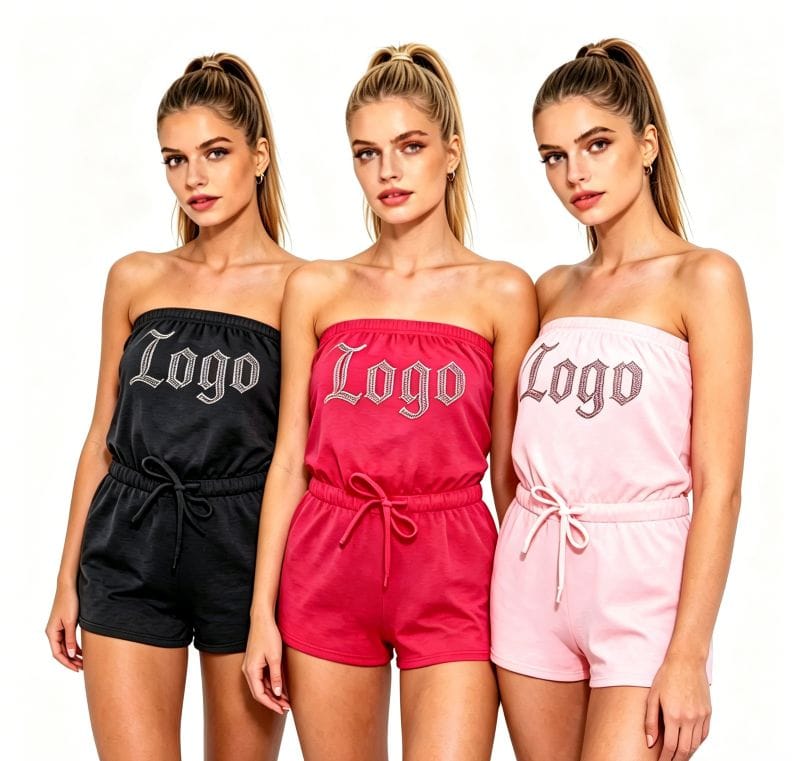
This guide explains how a private-label brand can work with a strapless jumpsuit manufacturer to turn a real product concept into an approval-ready specification. The focus is the item already represented in the XXY Apparel product range: a strapless jumpsuit designed for loungewear use, not a generic eveningwear silhouette.
Define the Product Use Before Development
Start by describing where and how the customer will wear the piece. A lounge-first jumpsuit may need relaxed ease, soft interior contact, easy dressing, and enough seat room for long periods of sitting. A style intended to move between home and casual outings may need a cleaner waist shape, more controlled opacity, pockets, or a surface that photographs well under natural light.
Clarify whether the top edge should sit straight across the chest, curve slightly, or include a folded band. State whether the waist is elasticated, drawstring-adjusted, seamed, or visually shaped through the pattern. These decisions affect the pattern before color, labels, or packaging should be discussed. Review the available product collection to keep the brief aligned with silhouettes the factory actually shows.
Engineer Neckline Hold Without Excess Pressure
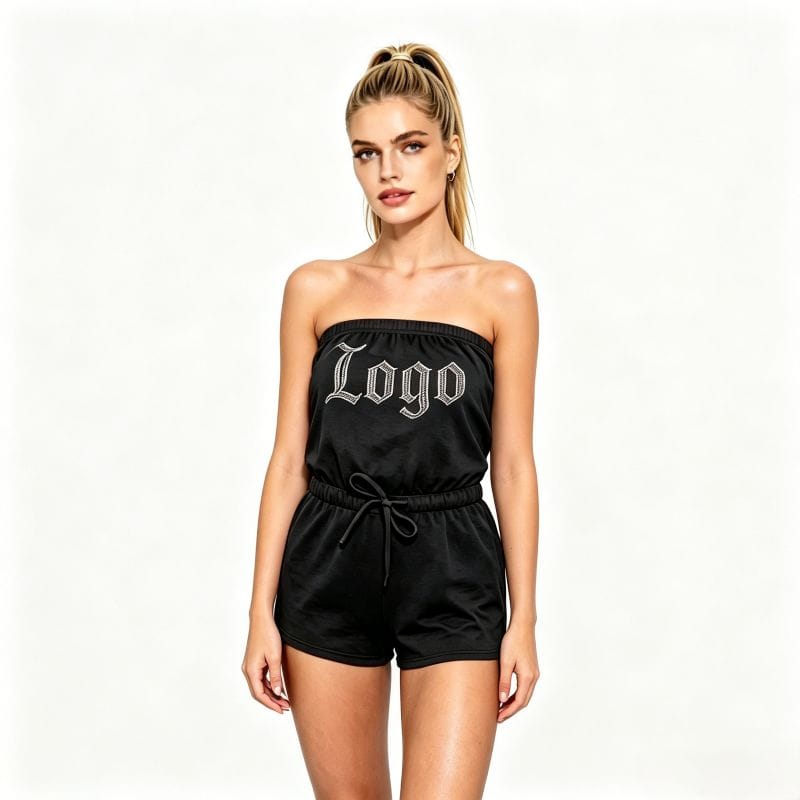
A strapless neckline stays stable through a combination of pattern shape, elastic specification, fabric recovery, and the relationship between the upper chest and garment opening. Making the opening smaller is not a complete solution. Excess tension can create visible indentation, rolling, discomfort, or distortion at the side seam.
Ask the strapless jumpsuit manufacturer to record the relaxed opening measurement, stretched measurement, elastic type, elastic width, and application method. The sample review should note whether tension is distributed evenly and whether the top edge returns to position after the wearer raises both arms. If grip elastic or an internal support layer is proposed, confirm its hand feel against skin before approving it for bulk production.
Solve Torso Length Before Styling Details
Torso length is one of the most important measurements in a one-piece garment. Too little vertical length can pull the neckline downward, create pressure through the rise, and move the waist above its intended position. Too much length can cause pooling at the waist or a dropped crotch that looks accidental rather than relaxed.
Measure the sample on the body while standing, sitting, and reaching. Record vertical trunk length, front and back rise, waist position, and full garment length. A brand should also identify whether the jumpsuit is intended for a standard, petite, tall, or deliberately relaxed proportion. The private-label sizing guide provides a useful starting point for documenting body and garment measurements, although one-piece styles require their own vertical checks.
Plan Fabric Stretch and Recovery
Fabric selection must support both comfort and neckline stability. Four-way stretch can improve movement, but stretch percentage alone does not describe recovery, weight, opacity, surface appearance, or how the material behaves when held under elastic tension. A soft fabric that grows during wear may leave the upper edge less secure by the end of the day.
Request the fabric code and record weight, composition, usable width, stretch direction, relaxed appearance, and recovery after extension. Review opacity at the seat and thigh when the wearer bends. If the color is light, evaluate the approved production fabric over the intended underwear shades instead of relying only on a folded swatch.

Brands selling in the United States should review the FTC textile-labeling guidance when confirming fiber-content and identity information. Care symbols and written instructions should be based on the finished garment; ISO 3758 is a useful international reference for care labeling.
Before the wear review, the strapless jumpsuit manufacturer should confirm which sample revision, fabric lot, and elastic specification are being assessed. This prevents comments from being applied to an outdated construction.
Review the Sample in Motion
A hanger review cannot prove that a strapless style works. Use a short wear sequence that reflects customer behavior: walk, sit in a chair, sit on a sofa, raise the arms, bend to pick up an object, and put the garment on and take it off. Photograph the neckline, side seam, waist, rise, and hem before and after the sequence.
The first sample should answer structural questions before decorative details are finalized. If the neckline moves, identify whether the cause is opening measurement, elastic tension, fabric growth, torso length, or a combination. A strapless jumpsuit manufacturer should receive comments linked to measurements and construction rather than instructions such as “make it tighter.”
Compare Construction Decisions
| Decision | Option to Review | Buyer Risk to Check |
|---|---|---|
| Top-edge finish | Encased elastic, folded band, or internal support | Rolling, pressure, or uneven tension |
| Waist treatment | Elastic, drawstring, seam shaping, or relaxed waist | Incorrect waist position and difficult dressing |
| No pocket, side seam, or patch pocket | Added bulk, gaping, or visible show-through | |
| Hem | Straight, cuffed, elasticated, or adjustable | Length inconsistency and restricted movement |
Use the comparison table during the technical review, not as a styling menu after the sample is complete. Every added feature changes weight, balance, sewing sequence, and the measurements quality-control teams must check.
Agree on a measurement vocabulary before grading begins. The strapless jumpsuit manufacturer and brand can use ISO 8559-1 body-measurement definitions as a reference while keeping the brand’s own points of measure explicit.
Control Grading Across the Size Range
Grading a strapless jumpsuit requires more than increasing width. The neckline opening, torso length, rise, hip ease, inseam, and elastic length may need different grade rules. A proportional increase that works at the hip can create too much change at the upper opening, while insufficient vertical grading can make larger sizes feel short through the body.
Ask for measurements from at least a smaller, middle, and larger size before releasing the full range. The strapless jumpsuit manufacturer should compare the graded nest with the approved base pattern and identify any point where the rule changes. Conduct the same movement review on representative sizes rather than assuming the base-size result will scale automatically.

Once representative sizes are approved, the strapless jumpsuit manufacturer should lock the pattern, measurement chart, and elastic rules under the same revision. Any later change should be recorded before cutting.
Approve Bulk Production with Measurable Checks
The production file should include the signed sample, pattern revision, fabric code, color reference, elastic specification, measurement chart, seam and pocket details, labels, and packaging instructions. Define tolerances for the neckline opening, torso length, waist position, rise, inseam, and overall length. First bulk units should be compared with the signed sample before the run progresses too far.
If the fabric lot, elastic supplier, or finishing method changes, repeat the affected checks. The OEM/ODM development process can be used to organize sampling and approvals, while GS1 barcode guidance helps brands plan retail identification without delaying packing.
Questions to Ask Before Sampling
- Which measurements control neckline security and torso comfort?
- How will elastic length and application tension be recorded?
- Which movement checks are appropriate for the intended customer use?
- How will vertical measurements be graded across the size range?
- Which first-bulk measurements will be checked against the signed sample?
Specific questions reveal whether the development conversation is connected to the actual garment. They also give both teams a clearer record when the sample is revised.
Frequently Asked Questions
What should a tech pack include for a strapless jumpsuit?
Include flats, fabric information, top-edge construction, elastic specification, torso and rise measurements, waist treatment, pocket details, graded measurements, labels, and packaging. Add photos or diagrams showing the intended neckline and waist position.
How should neckline security be tested?
Use a defined movement sequence and record the opening measurement before and after wear. Note rolling, sliding, pressure, and recovery rather than judging the sample only while standing still.
Why does torso length affect the neckline?
A short torso can pull the entire garment upward through the rise and downward at the top edge. Correct vertical balance allows the neckline, waist, and crotch to sit where the pattern intends.
Should every size use the same elastic tension ratio?
Not automatically. The ratio must be checked against opening dimensions, fabric recovery, body variation, and comfort in representative sizes. The approved rule should be documented instead of inferred during sewing.
When is the style ready for bulk approval?
Release it only when fabric, fit, movement, measurements, construction, labels, packaging, and the approved sample are aligned in one production file. Unresolved fit comments should not be left for inline production decisions.
Build a Production-Ready Brief
A productive inquiry gives the strapless jumpsuit manufacturer enough information to evaluate the real product: target customer, use case, size range, fabric direction, neckline construction, waist treatment, delivery market, and expected packaging. Share existing artwork and measurement references through the XXY Apparel contact page so sampling can begin from a clear, product-specific brief.