Lace Camisole Set: Approve a Replacement Trim Before Reordering
Table of Contents
A repeat order for a lace camisole set can change unexpectedly when the original lace is unavailable. A proposed replacement may look close on a trim card while behaving differently at the neckline or shorts hem. The buyer needs to decide whether it preserves the approved product, requires a design revision or should be rejected. This guide focuses on that replacement decision, using retained references and controlled comparisons rather than reopening the entire collection as a new general development project.

Start with the relevant Xiuxinyang product or service reference, then confirm the proposed materials and construction for your order.
Identify exactly which approved trim is unavailable
Start with the original lace reference, its location on the garment and the last approved sample revision. Ask the supplier to explain whether the issue concerns temporary availability, a changed construction or a discontinued reference. Record which order and quantities are affected. A request to use similar lace is too broad to evaluate. Keep the original material and lace camisole set accessible so the buyer can compare the proposed alternative with the product the customer previously received.
Compare visible structure before discussing equivalence
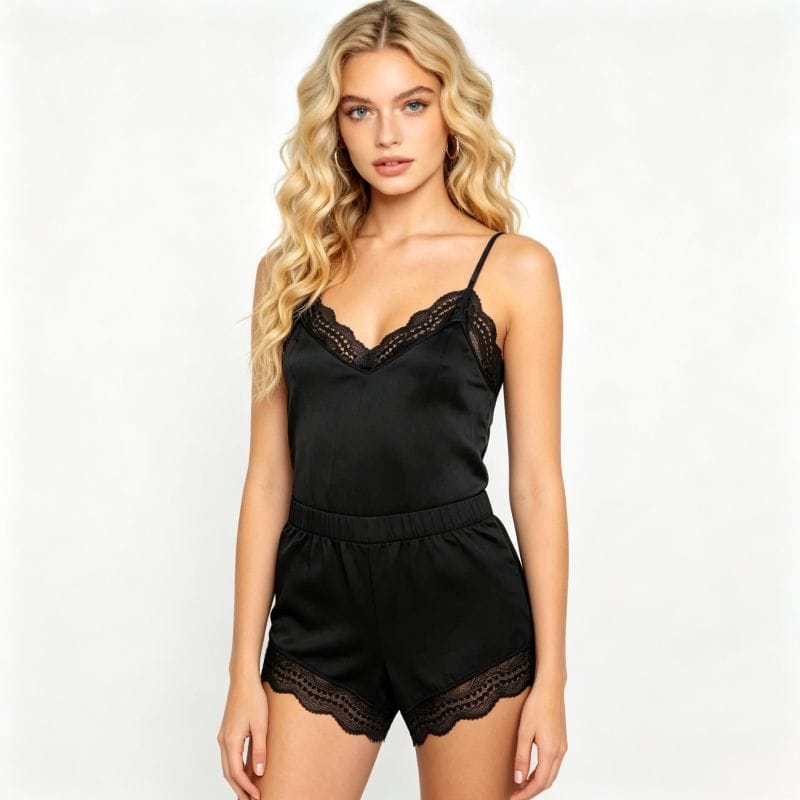
Place the original and proposed trims together with their face and direction aligned. Compare width, edge profile, openness, motif scale and the visual relationship to the body fabric. Record intended differences rather than calling every close shade an exact match. For the lace camisole set, view the replacement at both neckline and shorts hem if it appears in both places. A trim can look suitable in a long edge and crowded at a short curved opening.
Ask for the replacement's actual material information
Request the proposed composition, construction, finish and supplier reference, together with any relevant supporting information. Do not infer material equivalence from a photograph or a shared descriptive name. Identify whether dye, elastic content or edge construction has changed from the original. Keep the information with the replacement request. Where the material affects labeling, claims or product assessment, ask the responsible party to review those consequences separately from the visual preference.
Sew original and replacement assemblies on the same body fabric
Use the approved body material, thread and construction for both comparisons wherever available. Keep the seam route and relevant assembly dimensions consistent. Observe relaxed appearance, extension during dressing and recovery after the same review sequence. A lace camisole set replacement decision should isolate the trim change rather than introduce a new body fabric at the same time. If the original cannot be reproduced, document that limitation and compare with the retained garment carefully.
Review how the replacement changes coverage and proportion
Put the proposed trim into a representative complete sample and compare the actual neckline and shorts edge with the approved outfit. A change in lace width or openness can alter coverage without a change in the base pattern. Review the intended wearing positions and record any required correction. Do not let a nominally similar trim silently redefine the product. If the buyer accepts a different appearance, identify it as an approved design revision rather than claiming the replacement is indistinguishable.
Compare care behavior under the same procedure
Use an agreed procedure on identifiable original and replacement assemblies and the relevant garment trial. Compare edge curl, surface appearance, dimensions and the joined seam after consistent resting. Keep the exact conditions in the record. For the lace camisole set, ask whether the replacement changes the proposed care instructions or the scope of any required evaluation. A short visual comparison supports an observed choice but does not justify an unlimited durability or comfort promise.

Review cost and timing after the technical comparison
Ask the supplier to identify commercial consequences of the selected alternative, including sampling work, material assumptions and the actual order plan. Keep estimates distinguishable from confirmed decisions. If the buyer prefers a different trim but cannot accept the resulting commercial conditions, leave the request unresolved rather than letting production choose another unreviewed option. Connect the technical and commercial approvals to the same replacement reference and order so both teams understand which version was accepted.
Release the replacement as a controlled revision
Update the component list, artwork or construction details affected by the decision and identify the new approved sample. Mark the original reference as superseded for the specified order while retaining it for historical comparison. Ask the supplier to acknowledge the selected replacement before use. A lace camisole set repeat should remain traceable to the actual trim supplied. Keep the reason, comparison evidence and approval together so the next reorder does not restart with an ambiguous description of similar lace.
A practical decision example
Compare one change at a time
Suppose the original neckline lace is unavailable and the proposed alternative has a slightly wider scalloped edge. Compare both trims on the same body fabric, then review the replacement in a complete sample. If the wider edge changes coverage, decide whether to accept a new appearance or revise the pattern and resample. Repeat the relevant care comparison and ask the supplier to confirm commercial effects. Issue one final component reference for the order. The example is hypothetical and does not claim that a specific trim has been discontinued. It shows why visual similarity, construction behavior and buyer acceptance need to be recorded separately when an approved product is reordered.
Decision table
| Replacement check | Compare | Decision |
|---|---|---|
| Visible trim | Width, edge, openness and motif | Same appearance or accepted revision |
| Sewn assembly | Original and new lace on approved body | Construction compatibility |
| Worn coverage | Neckline and shorts edge | Pattern change or acceptance |
| Care and release | Identified trials and final component code | Approve the actual reorder reference |
Review the complete set on the intended customer
Invite a fit participant who represents the intended customer to review the complete outfit. Record body measurements separately from garment measurements, and explain whether each garment measurement is taken flat or around the body. Ask the participant to sit, reach forward, raise both arms and walk at a normal pace. Photograph the front, side and back with permission. A convincing standing photograph can conceal a neckline that opens during movement, shorts that ride up or a waistband that rolls when seated. Those observations belong in the fit comments alongside the measured differences.
Keep the commercial decision attached to the technical comment. If a change improves coverage but alters the intended silhouette, ask the buyer to choose which outcome matters more. Specify one approved correction rather than sending several conflicting suggestions to the pattern maker. Review the revised garment in the same activities, with the same measurement method and comparable underlayers. Confirm fabric, trim and construction together before signing off. A change in one component may invalidate an earlier fit approval even when the nominal size label has stayed the same.
Compare the relevant product range and development context with your intended customer and order. Confirm any requested material, size or construction option before treating it as available.
References for the review
Use the relevant primary resources when framing market and test questions: FTC textile guidance, FTC care guidance, AATCC methods, ISO care symbols. Confirm the applicable scope and methods with the responsible specialist for the actual product and destination.
Discuss the proposed order
For your lace camisole set project, send the design reference, intended customer, destination market, complete-unit quantity and size breakdown. Include the specific decisions described above and identify any material or construction that still needs confirmation. Review Xiuxinyang OEM/ODM services and contact the team with your lace camisole set brief to discuss the appropriate sampling and order requirements.
Frequently asked questions
Is similar-looking lace an equivalent replacement?
Not automatically. Compare its actual structure, material information and sewn behavior with the approved reference. Review the complete outfit and any relevant market implications before accepting the change.
Should both trims be sewn onto the same fabric?
Where practical, keep the approved body material and construction consistent to isolate the trim change. If the original cannot be reproduced, document the limitation and use the retained approved garment as a reference.
Can a wider replacement change coverage?
Yes. Width, openness and edge profile can change the apparent neckline or shorts coverage. Review a representative complete sample and record any accepted design difference or required pattern revision.
Does a replacement require a new care review?
Compare the joined construction under the proposed procedure and ask the responsible team whether instructions or relevant assessment need updating. Do not assume the old material evidence covers every new trim.
What should the reorder approval retain?
Retain original and replacement references, comparison observations, relevant samples, commercial decisions and the final revised component list. Ask the supplier to acknowledge the exact trim approved for the specified order.