Pajama Colorfastness: How Buyers Can Check Fading and Dye Transfer
To check pajama colorfastness before a bulk order, ask for evidence of color retention after washing and resistance to color transfer through rubbing. Evaluate the finished set as well as its fabric: a top can retain its shade while staining pale trousers, lace or bedding. Agree the test method, conditions and acceptance criteria before approving production.
For importers, distributors and sleepwear brands, the buying decision is whether the proposed color combination can deliver the appearance and care experience promised to customers. This guide explains how to make that decision, what a useful test report should contain, and when a color issue calls for a revised sample.
Table of Contents
What Does Pajama Colorfastness Actually Tell a Buyer?
Colorfastness describes resistance to color change or transfer under a particular exposure. It is not a single guarantee that a garment will never fade. The AATCC textile terminology reference distinguishes changes in a material’s own color from transfer to adjacent materials. Both matter in sleepwear, which is worn against skin and in contact with other textiles.
Keep three observations separate in your approval notes. Fading is a change in the garment’s original appearance. Staining is color transferred to another material. A shade mismatch is a difference between components that may already exist before use. A washing result cannot establish whether the original top and trousers matched, and a good shade match cannot establish resistance to transfer.
The distinction makes supplier conversations more productive. Instead of reporting that a sample has ‘bad color,’ identify the affected panel, the exposure and the receiving surface. A pale waistband stained after washing needs a different investigation from two unwashed sleeves that look different under the same light. Photographs can document the issue, but keep physical samples for comparison.
Which Colorfastness Checks Belong in a Sleepwear Order?
Start with the customer’s expected use and the proposed care instructions, then ask a textile laboratory to select the appropriate method and option. Wash testing addresses laundering exposure; rubbing tests address transfer caused by contact. Neither should be treated as a substitute for the other. Add other exposures only where they serve the product’s use case or the customer’s specification.
The table below is a test-selection aid, not a pass standard. The named methods have different scopes. A buyer and laboratory should agree which are relevant, which edition applies and how results will be accepted before samples are submitted.
| Buying concern | Check to discuss | What to request | What it does not establish |
|---|---|---|---|
| Color changes after laundering | Accelerated laundering, such as AATCC TM61 | Method option, exposure conditions and separately reported color change and staining results | Resistance to every detergent or care routine |
| Color marks on a contacting textile | Dry and wet rubbing, such as AATCC TM8 | Separate dry and wet findings for the relevant surface | Wash durability or matching between components |
| Color changes during contact with perspiration | A relevant perspiration method, such as AATCC TM15 for acid perspiration | Sample identity, exposure used and the reported outcomes | Complete reproduction of every wearer's conditions |
| A dark component stains a pale one | Finished-set laundering review alongside laboratory tests | Photos, retained controls and observations at fabric and trim junctions | A standardized laboratory grade from an informal wash |
| Top and trousers look different | Side-by-side shade approval | Named reference, agreed lighting and component identification | Resistance to fading or dye transfer |
The official AATCC TM61 scope describes accelerated laundering evaluation for textiles expected to be washed repeatedly. The published listing identifies TM61-2013e(2020)e2. Use the edition and procedure agreed with the laboratory; an accelerated result should not become an unsupported claim about the garment’s lifetime.
For rubbing, AATCC TM8-2016e(2022)e covers transfer to white test cloth in dry and wet conditions. For perspiration, AATCC TM15-2021e addresses acid perspiration. These references explain test scope; they do not mean a Xiuxinyang product has already passed those tests.
Which Colorways Deserve Closer Review?
Prioritize designs where a transfer would be especially visible: a dark body beside pale piping, a colored print on a light ground, or a deep-colored top packed against lighter bottoms. This is a practical consequence-based review, not a claim that all dark colors fail. Each proposed colorway still needs evidence appropriate to its materials and processing.
Give the laboratory a component map rather than sending an unidentified fabric square. Mark the body fabric, contrasting panels, lace, thread and printed areas. Ask whether the sample area is suitable for the selected method. Small motifs and narrow trims may need a different sampling approach; the TM8 scope itself notes limitations for some small printed areas.
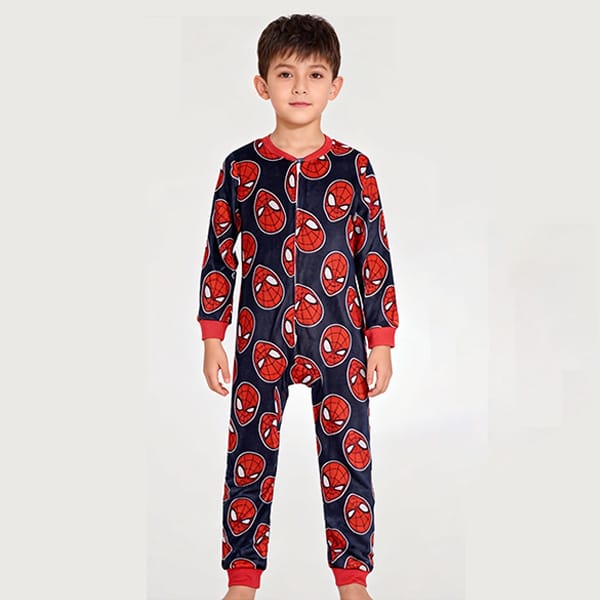
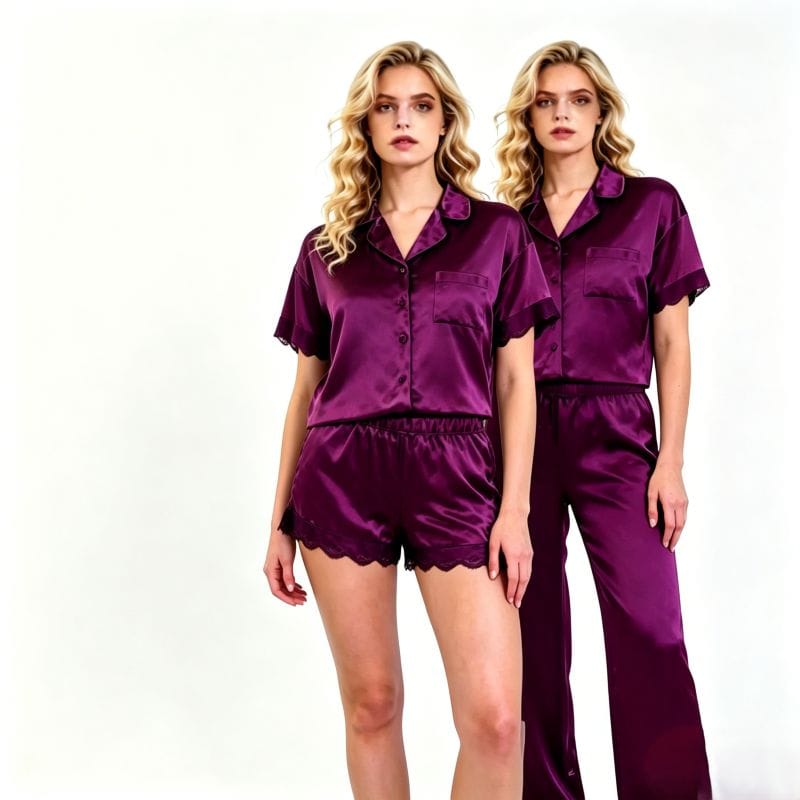
Xiuxinyang’s custom pajama and homewear range includes coordinated sets and textured styles. For an actual order, confirm the construction and color of every component rather than assuming a catalogue photo defines the production specification. The product images in this guide illustrate styles and component combinations, not tested performance.

Can Fiber Content Predict Whether Pajamas Will Bleed?
Fiber content alone is insufficient evidence for a colorfastness decision. A label saying cotton, poly-cotton or rayon identifies material composition, not the outcome for a particular shade and finished construction. Treat the fabric description as part of sample identification and require results for the actual proposed material.
Xiuxinyang’s available fabric directions include cotton, poly-cotton, rayon, jersey, crepe, terry and fleece. These terms describe different things: cotton and rayon are fibers, while jersey and terry describe fabric structures. Write both composition and construction into the brief. ‘Cotton jersey’ is more informative than ‘soft fabric,’ but still needs the agreed weight, finish and color reference.
If you are still choosing the material family, the cotton versus polyester pajama guide covers broader selection considerations. Once the material is selected, evaluate color performance separately. Do not rank an untested blend above another purely because it has a more familiar fiber name or feels smoother in the hand.
How to Read a Colorfastness Report Before Approving an Order
Read the sample description before the result. Check the style reference, color code, fabric specification, component and batch identity against the material you intend to buy. An excellent result for another shade or an earlier development fabric is useful background, but it is not direct evidence for the production lot in front of you.
Next, find the method, edition and test conditions. For laundering, the selected procedure matters; for rubbing, dry and wet outcomes should be identifiable. Check whether a reported number refers to color change or staining, and which receiving fabric it concerns. A summary saying only ‘colorfastness passed’ removes information the buyer needs to judge relevance.
Set the acceptance criteria in the purchase specification with your customer and laboratory. Do not adopt an unexplained universal grade from a blog or compare reports made under different conditions as if they were equivalent. This guide intentionally gives no blanket passing score because a defensible limit must refer to a named method, an application and an agreed requirement.
Finally, ask what the report covers and what it excludes. A fabric result may not include attached trims or a later print treatment. Record the laboratory’s sample identification and any deviations. If the report cannot be linked to the order, pause that approval point and obtain clarification before treating the document as a release decision.
How Should Buyers Check Color Consistency Across a Complete Set?
Compare the top and trousers together, first unwashed and then after the agreed care trial. Include a matching outer layer when buying a three-piece style. Xiuxinyang supplies these products as complete sets rather than selling the top and trousers separately, so the unit of visual approval should also be the complete set.
Use the approved physical reference under agreed lighting and place each component in the same orientation. Record an intentional contrast as a design feature rather than a defect. For pile or textured surfaces, rotate the pieces during review: a visual difference deserves investigation before being classified as a dye problem.
Ask how components will be identified and paired through production. If a matching set uses different constructions for its body and trim, document the acceptable visual relationship for those materials. A single color name is not enough to tell an inspector whether a slightly different lace shade is deliberate or requires correction.
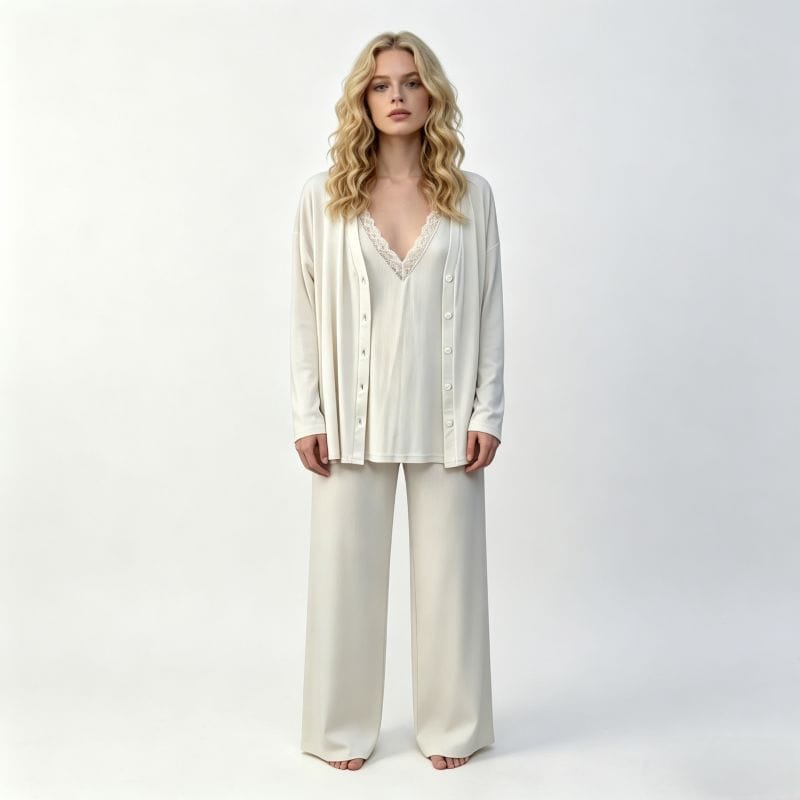
An illustrative scenario is a pale three-piece set with a camisole, trousers and cardigan. Even when each component looks acceptable by itself, the combined outfit may reveal a mismatch. Reviewing the ensemble prevents separate component approvals from overlooking what the retail customer receives. This is a buying example, not a reported customer case.
What Should a Pajama Wash Test Record?
A practical pajama wash test should produce a record someone else can understand and repeat. Keep an unwashed control from the same approved material and identify every trial garment. Record the proposed care instruction, machine or hand-wash procedure, water temperature, detergent, drying approach and number of completed cycles. Document any departure from the agreed plan.
After the garment is dry, compare the original and washed samples under the same lighting. Note changes in body color, staining on lighter components, print appearance and whether the set still looks coordinated. Photograph the same areas before and after, with the reference visible where useful. Avoid relying on photographs alone for a close shade decision.
Separate observations from conclusions. ‘Pink mark along the pale side seam after the agreed wash’ is an observation. ‘The dye system is wrong’ is a diagnosis that needs technical investigation. A household trial can reveal a problem requiring laboratory work, but it does not create a standardized fastness grade.
Keep dimensions in a separate part of the record. The site’s pajama shrinkage guide addresses that issue in more detail. A sample can retain its color but change size, or retain its dimensions but stain its trim. Approving one result should not silently approve the other.
How Do Destination Markets Change the Test Brief?
Ask your importer or retail team how the target customer is expected to care for the product. Asia, Africa and Latin America are not single laundry environments. Different households within one city may hand wash, machine wash, line dry or use a dryer. Describe the intended routine instead of assigning an assumption to an entire region.
A distributor expecting frequent hand washing needs a brief that addresses that routine; a brand promising machine-washable sleepwear needs evidence aligned with the proposed instructions. Where sun exposure, particular detergents or soaking practices are material concerns, discuss a relevant additional assessment with the laboratory. A laundering test does not automatically answer every exposure question.
Resolve any mismatch between the desired customer experience and the sample before finalizing care artwork. A restrictive instruction that customers are unlikely to follow is a product decision to reconsider, not simply text for a label. Have the destination-market requirements for labeling checked separately; a colorfastness report is not proof of overall market compliance.
What Should Happen When a Sample Transfers Color?
Identify the affected colorway and hold its approval while the issue is investigated. Preserve the tested sample, its unwashed control and the written conditions. Ask the supplier to connect the result to the fabric and component records, then explain the proposed corrective action. Do not accept a replacement photograph as evidence that the problem has been resolved.
If the remedy changes the material, finish or trim combination, request an updated complete-set sample and repeat the relevant checks. The corrected version should receive a new reference so it cannot be confused with the earlier approval. Recheck appearance and fit when the correction could affect those features as well.
For reorders, compare the new production material with retained references and the agreed test plan. An earlier passing report remains useful history; it does not identify the new lot by itself. Keep the change record short and specific: what changed, why it changed, which evidence supports acceptance, and who approved the revised specification.
Turn the Findings Into a Supplier Brief
A useful color brief connects design intent to verifiable acceptance. Include the complete-set style, component materials, color references, contrast details, destination market and proposed care routine. Attach customer testing requirements where they exist, and identify decisions still waiting for laboratory advice. This gives the supplier a defined problem to address.
Specify which sample represents development approval and which material will represent bulk production. Ask for traceable reports, retained samples and a written response to any failed result. Include a clear release point so that an attractive color sample is not mistaken for approval of all performance requirements.
For a Xiuxinyang inquiry, send the proposed set design and flag the areas where color transfer would be most visible, such as pale lace beside a dark body. Discuss the fabric, color combination and sampling requirements with the team before finalizing the order. Confirm the available testing arrangements and achievable specification for that product.
Conclusion
A sound pajama colorfastness decision combines the right exposure tests, a report tied to the proposed material, and a finished-set review. Define what customers will wear and how they will care for it, then agree evidence and acceptance criteria around that use. The result is a clearer purchasing decision and a more useful production specification.
FAQ
Can one report cover every color in a pajama collection?
Only when its scope and the agreed testing plan justify that coverage. Do not assume a result for one shade applies to all shades. Ask the laboratory and supplier to explain the sampling rationale and identify the colorways covered by the report.
Is a lab dip enough to approve bulk color performance?
A lab dip is a small color-development sample. It can help establish the target shade, but does not by itself establish performance for the finished bulk garment. Keep shade approval and performance approval as separate, documented decisions.
Does washing pajamas separately solve a transfer problem?
Separate washing may reduce contact with other garments, but it does not separate the components sewn into a pajama set or address transfer during wear. Investigate the observed problem and assess the revised sample before approving it.
Can a buyer compare test results from different laboratories?
First compare the sample identities, methods, editions, conditions and evaluation procedures. Matching test names alone are insufficient. Ask the laboratories to clarify differences before treating the results as directly comparable or deciding that one material performs better.
Does a colorfastness pass prove that pajamas are safe for children?
No. A colorfastness result addresses the stated color-related test only. Children's sleepwear can have separate safety, design and labeling requirements in the destination market. Those requirements need their own review and supporting evidence for the intended product.