Men’s Loungewear Set: Fabric, Fit, and Set Approval
Table of Contents
- Define the Wearing Occasion
- Treat the Top and Bottom as One Product
- Compare Fabric Families
- Choose Jersey or Terry
- Evaluate Cotton, Poly-Cotton, and Rayon
- Review Crinkle, Towel, and Textured Fabrics
- Select the Right Fleece Construction
- Balance the Top and Bottom
- Grade the Complete Set
- Build a Useful Sample and Test Plan
- Control Color, Trims, and Bulk Packing
- Prepare the Supplier Brief
- Frequently Asked Questions
- Develop the Complete Set
A men’s loungewear set succeeds when the top and bottom feel deliberately designed as one product. Fabric weight, stretch, surface, warmth, neckline structure, waistband pressure, rise, inseam, and finished proportions must work together. Choosing a soft material is only the beginning; the brand also needs a repeatable approval process that protects fit and set consistency from sampling through bulk production.
This guide explains how a private-label brand can develop a men’s loungewear set using jersey, terry, cotton, poly-cotton, rayon, crinkle fabric, towel fabric, textured knit, polar fleece, single-sided fleece, or double-sided fleece. It focuses on commercial product development rather than consumer styling, and it treats the top and trousers as a complete sellable set.
Define the Wearing Occasion
Start with the use case before selecting fabric. A set intended for sleeping needs different thermal comfort, seam bulk, and ease from a set designed for working at home, traveling, or casual indoor-outdoor wear. Write down the expected season, indoor temperature, activity level, target customer, size range, and desired silhouette.
Translate the use case into measurable requirements. For example, a relaxed winter set may need room for layering, a stable neckline, a comfortable elastic waist, and cuffs that do not feel restrictive. A lighter transitional set may prioritize drape, moisture management, and easy movement. The supplier should receive these priorities before fabric sourcing begins.
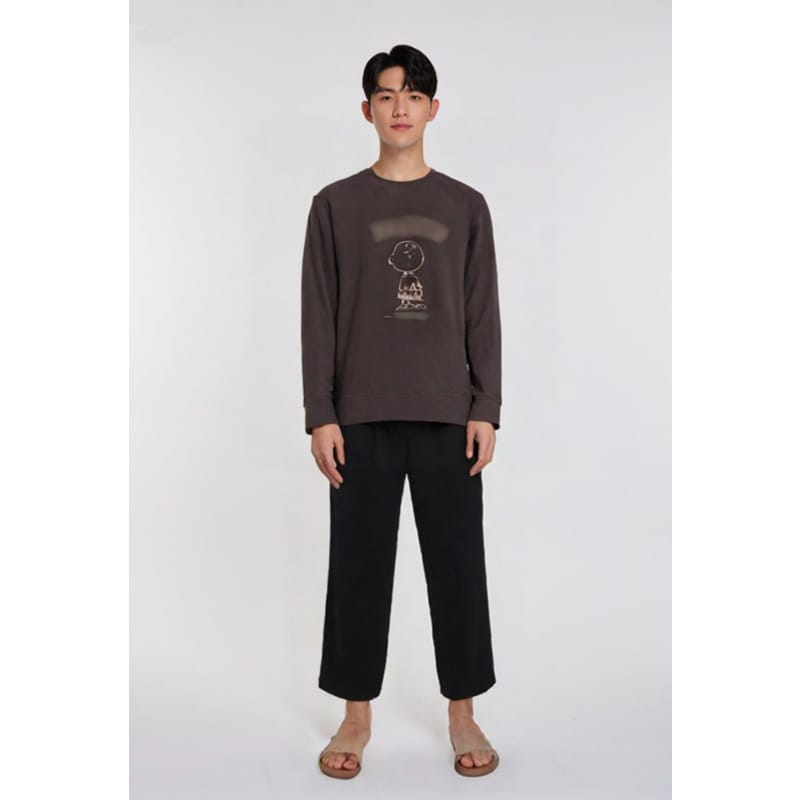
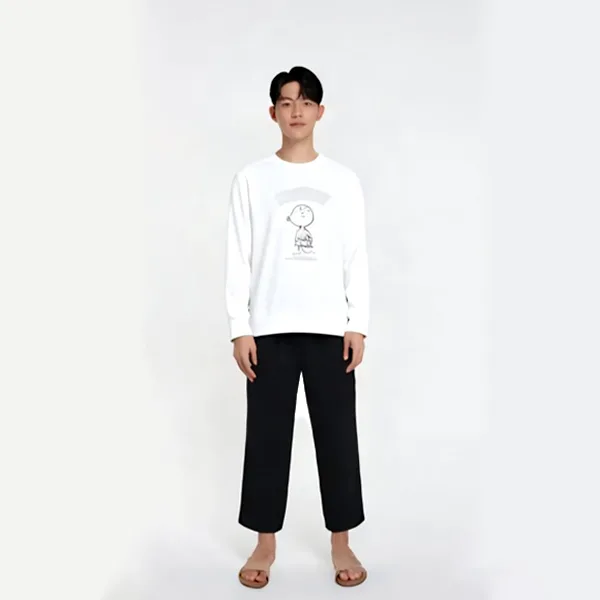
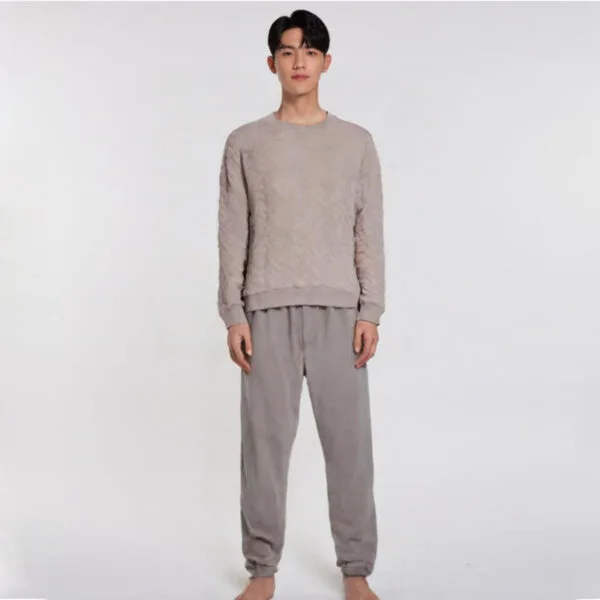
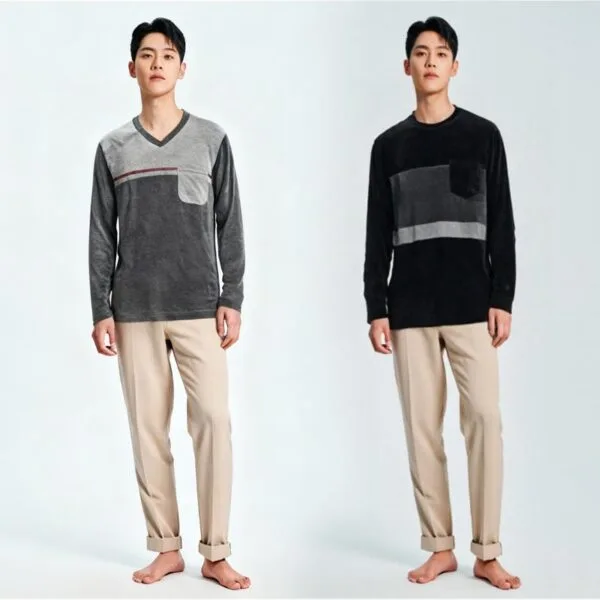
The existing crew neck sweatshirt set, men’s coral fleece pajama set, and men’s velvet pajama set illustrate how different constructions can support different product directions.
Treat the Top and Bottom as One Product
The top and trousers may have separate patterns, but they should never be approved as unrelated garments. Their fabric behavior, color, visual weight, ease, rib or cuff construction, logo placement, and care instructions must remain compatible. A change to one component can disturb the balance of the complete men’s loungewear set.
Create one bill of materials and one approval record for the full set. Identify the shell fabric, rib, elastic, drawcord, labels, thread, decoration, and packaging used by each component. If the top uses a heavier rib or the trousers use a different fabric lot, record the difference deliberately rather than allowing it to appear as an unapproved substitution.
Packing instructions should also keep the pieces together. Define the fold, size sticker, barcode, polybag or other approved pack, and carton assortment at set level. Retail identification can follow the applicable GS1 barcode framework, but the brand must decide how its complete product is identified in the destination market.
Compare Fabric Families
Do not choose a fabric by fiber name alone. Record construction, composition, weight, usable width, stretch direction, recovery, surface, drape, shrinkage after the agreed care method, color standard, and lot reference. Two fabrics described as cotton jersey can perform differently because yarn, knit density, finishing, and dyeing are different.
| Fabric family | Useful product direction | Approval focus |
|---|---|---|
| Jersey | Lightweight sleep and lounge sets | Drape, recovery, opacity, twisting, and shrinkage |
| French terry or loopback | Transitional lounge and sweatshirt sets | Loop stability, weight, stretch, and seam bulk |
| Cotton or poly-cotton | Familiar everyday sets | Hand feel, dimensional stability, pilling, and color |
| Rayon or viscose | Soft, fluid lounge sets | Growth, shrinkage, recovery, and wet-care behavior |
| Crinkle or textured fabric | Distinctive warm-weather sets | Texture retention, seam response, and measurement method |
| Towel fabric | Spa-led or absorbent lounge concepts | Weight, pile loss, seam bulk, and drying behavior |
| Polar, single-sided, or double-sided fleece | Cold-weather sets | Warmth, bulk, surface change, and matching |
The table is a development starting point, not a universal pass-or-fail standard. The brand must set acceptance criteria for its product and market. The sleepwear fabric sourcing guide provides a broader framework for organizing fabric decisions.
Choose Jersey or Terry
Jersey is suitable when the design needs softness, stretch, and a relatively light hand. Check whether the fabric grows at the knees and seat, twists after laundering, becomes transparent under extension, or loses neckline shape. Record measurements before and after the agreed care procedure instead of relying on a general statement such as pre-shrunk.
French terry or loopback fabric can create a more structured silhouette while remaining comfortable. Review the face and loop side, weight, stretch, rib compatibility, and seam thickness. A sweatshirt-style top and trouser combination should retain a consistent visual weight; overly light rib or elastic can make the finished set look mismatched.
For knitted fabrics, ASTM D2594/D2594M describes methods for stretch properties. A brand and supplier can use an applicable method as a common technical reference, while still defining product-specific extension and recovery limits.
Evaluate Cotton, Poly-Cotton, and Rayon
Pure cotton can provide a familiar natural hand, but construction and finishing still determine shrinkage, recovery, surface change, and durability. Poly-cotton can improve stability or drying behavior depending on the blend and structure. The selection should follow the product brief rather than an assumption that one fiber is always superior.
Rayon or viscose can support a softer, more fluid silhouette. It also requires careful measurement and care testing because the fabric can respond differently when wet, relaxed, or repeatedly worn. Test the complete men’s loungewear set, including waistband, cuffs, neckline, and seams, instead of approving only a loose fabric swatch.
For U.S. sales, fiber-content and care information should be reviewed against current Federal Trade Commission textile labeling guidance. Requirements vary by destination, so the brand remains responsible for confirming the final label copy for each market.
Review Crinkle, Towel, and Textured Fabrics
Crinkle fabric needs a measurement method that respects its relaxed texture. Pulling it flat during inspection can produce inconsistent results and may not represent how the garment sits on the body. Agree whether measurements are taken relaxed, gently smoothed, or under a defined tension, and use the same method for samples and bulk.
Towel fabric can create an absorbent or spa-inspired product, but pile, weight, drying time, seam bulk, and edge finishing require attention. Textured fabrics sometimes described locally as ant cloth should be matched to an exact construction, sample, and technical specification before English marketing terminology is finalized.
A men’s loungewear set made from a specialty texture should be tested as a complete outfit. Confirm that the top does not appear disproportionately heavy, the waistband remains comfortable, pockets do not sag, and both components retain a consistent surface after the approved care cycle.
Select the Right Fleece Construction
Polar fleece, single-sided fleece, and double-sided fleece are not interchangeable. Compare face and back surfaces, loft, thickness, stretch, recovery, pilling tendency, seam bulk, and warmth. The design may need different seam allowances, pocket construction, cuff proportions, or elastic strength when moving from a light knit to fleece.
Double-sided fleece can add warmth and visual substance but may also increase bulk at the waistband, crotch, neckline, and cuffs. Single-sided fleece may allow a cleaner interior or exterior depending on construction. Polar fleece needs careful color and surface approval because pile direction and finishing can influence appearance.
Keep an approved fabric cutting and finished sample as references. If bulk material changes in weight, hand feel, stretch, or surface, the supplier should flag the change and repeat the affected checks before production continues.
Balance the Top and Bottom
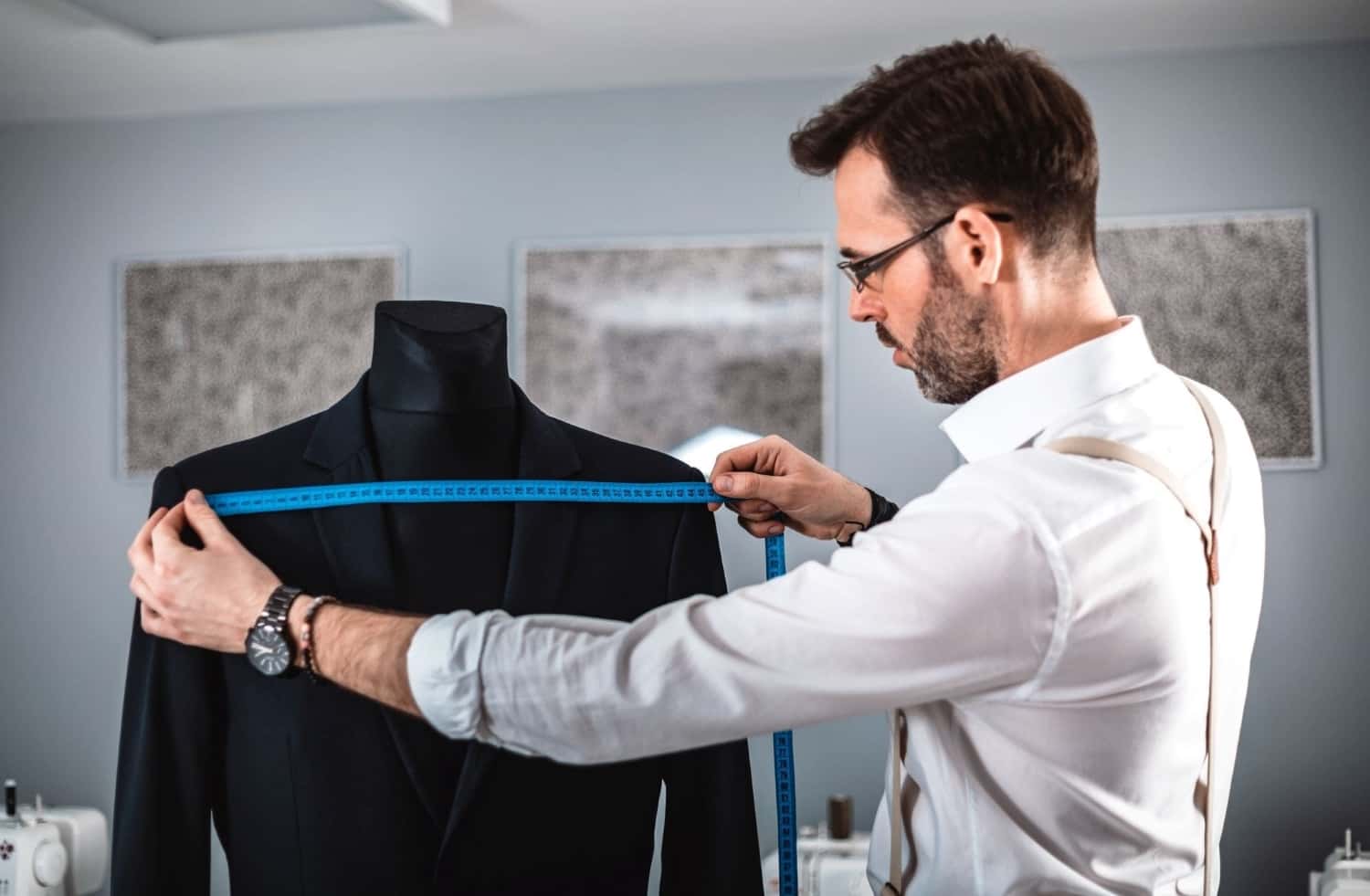
Top and trouser measurements must create one coherent silhouette. Review chest, shoulder, sleeve, body length, neckline, waist, hip, rise, thigh, inseam, leg opening, and cuff dimensions together. A very relaxed top paired with narrow trousers may be intentional, but the proportion should be approved on the target body rather than created accidentally.
Include movement checks such as sitting, bending, reaching, walking, and lying down when sleep use is intended. Observe neckline movement, back rise coverage, waistband pressure, knee restriction, cuff position, and fabric growth. Comments should identify the measurement or construction causing the problem.
Use the private-label pajama size-chart guide to organize body and garment measurements. ISO 8559-1 is also a useful reference for consistent body-measurement terminology.
Grade the Complete Set
Approve representative smaller, middle, and larger sizes. Do not assume the same increment works for every point. Chest, shoulder, sleeve, body length, waist, hip, rise, thigh, inseam, and openings can require different grade rules, particularly when the fabric has limited recovery or high bulk.
Check proportional balance at each representative size. A neckline that works in the base size can become too wide, a cuff can become too tight, or the top length can appear short relative to the rise. The men’s loungewear set should still look coordinated across the intended size range.
Build a Useful Sample and Test Plan
Create approval gates for fabric, first fit, revised fit, size set, pre-production sample, packed sample, and first-bulk comparison. Each gate should identify the version, date, color, fabric lot or reference, and open comments. Approval language such as looks good is not sufficient for repeatable manufacturing.
A practical test plan can include dimensional change, colorfastness, seam performance, pilling or surface change, stretch and recovery where relevant, and care-label verification. The exact methods and limits depend on fabric, intended use, destination market, and the brand’s quality standard.
Control Color, Trims, and Bulk Packing
Compare the top and trousers under consistent lighting, especially when they use separate cutting batches or components. Approve shell fabric, rib, elastic, drawcord, thread, labels, and decoration against one color reference. Even a small shade or sheen difference can make a two-piece product look incorrectly matched.
At first-bulk inspection, measure both pieces from the same packed unit and compare them with the signed sample. Confirm that size labels match, drawcord and elastic specifications are correct, decorative positions align, and the complete men’s loungewear set is folded and packed together.
Prepare the Supplier Brief
The development brief should state the target customer, wearing occasion, complete set composition, size range, fabric options, construction details, measurement chart, tolerances, color references, labels, decoration, care requirements, packaging, tests, and approval stages. Highlight every point that remains open.
- Name one approved fabric reference and one backup only after both have been tested.
- Use one comment sheet for the top and trousers so revisions remain synchronized.
- State that the components form one sellable set and are not approved for separate packing.
- Identify which changes require a new fit review, care test, or color approval.
- Keep the approved sample and production file under the same version number.
Brands can review the OEM/ODM development service and the wider product catalog before preparing an inquiry.
Frequently Asked Questions
Which fabric is best for a men’s loungewear set?
There is no universal best fabric. Jersey can support lighter, flexible sets; terry can add structure; cotton and poly-cotton can serve everyday programs; rayon can add drape; and fleece constructions can support colder seasons. Choose according to use, season, silhouette, care expectations, and approved test results.
Must the top and trousers use exactly the same fabric?
Not always, but any difference should be intentional and documented. If rib, lining, reinforcement, or a second shell fabric is used, compare color, weight, stretch, recovery, care behavior, and visual balance so the pieces still function as one set.
How should a brand approve the fit of the complete set?
Review the top and trousers together on representative sizes. Check standing and movement positions, record all garment measurements, photograph issues, and connect every comment to a specific pattern, material, trim, or construction change.
What changes when a jersey set is converted to fleece?
Fleece usually changes thickness, warmth, stretch, seam bulk, and surface behavior. Pattern ease, waistband construction, cuffs, neckline, pockets, and packing may all need revision. A new sample should be approved rather than treating the change as a simple fabric substitution.
Can the top and trousers be approved or packed separately?
Technical teams may measure the components separately, but commercial approval should cover the complete product. The approved top and trousers should share one set-level bill of materials, size identification, color reference, packaging instruction, and final inspection record.
Before final approval, compare the men’s loungewear set with the original product brief rather than evaluating each sample in isolation. This final review should confirm that comfort, visual proportion, fabric performance, labeling, and packing still support the intended customer and use.
For repeat orders, retain the signed sample, measurement chart, fabric reference, trim specifications, and packed-set standard. These records give the men’s loungewear set a stable production baseline when colors, quantities, or delivery destinations change.
Develop the Complete Set
To develop a men’s loungewear set, send the intended use, target customer, size range, preferred fabric family, reference design, measurement chart, colors, branding, destination market, and packing requirements. Keep the top and trousers within one controlled specification from first sample to bulk approval.
Review suitable product directions and submit the complete brief through the XXY Apparel contact page. The clearer the set-level requirements are at the beginning, the easier it is to evaluate fabric, fit, grading, and production changes consistently.