
Premium Private Label Clothing Manufacturing: Supply Chain Guide
The global fashion landscape is undergoing a monumental shift. For independent apparel brands, emerging designers, and corporate retailers, navigating the transition from a creative concept to a retail-ready product line is more complex than ever. Consumers no longer just demand visually appealing garments; they expect longevity, impeccable fit, ethical production, and material integrity. To meet these elevated market expectations, establishing a robust, highly reliable sourcing partnership is the ultimate defining factor for a brand’s success. This is where the strategic implementation of premium private label clothing manufacturing becomes a cornerstone for scalable growth.
Unlike basic white-labeling or standard cut-and-sew operations, premium private label clothing manufacturing represents a deeply collaborative, technically advanced B2B supply chain model. It empowers brands to engineer custom garments from the fiber up without maintaining their own physical factories. However, bridging the gap between design sketches and high-quality mass production requires a structured approach. This comprehensive guide serves as a technical blueprint for clothing brands looking to optimize their sourcing, minimize production errors, and leverage the full potential of premium private label clothing manufacturing to build long-term brand equity.
Table of Contents
1. Defining the Technical Architecture of Private Label Manufacturing
To successfully navigate the production ecosystem, it is essential to understand what separates premium private label clothing manufacturing from low-cost, mass-commodity garment assembling. In a standard OEM (Original Equipment Manufacturer) setup, a factory might simply replicate a generic template. In contrast, premium private label clothing manufacturing offers a fully integrated, end-to-end engineering solution tailored to a brand’s unique identity and specifications.
When a brand invests in premium private label clothing manufacturing, they are gaining access to a sophisticated infrastructure that includes:
- Advanced Tech Pack Auditing: A tech pack is the structural blueprint of a garment. It details every single component, from the base fabric weight down to the exact thread count, stitch type, and tolerance levels.
- Material Science and Custom Textiles: Premium manufacturing allows brands to develop proprietary fabric blends, specifying the exact composition of organic fibers, synthetic polymers, or moisture-wicking finishes.
- Precision Pattern Grading: Ensuring that an extra-large garment retains the exact aesthetic balance and proportions as a size small requires mathematical precision in pattern grading.
Partnering with an asset that understands these micro-level technical details prevents the most common pitfalls in apparel retail, such as structural twisting, inconsistent sizing across batches, and unexpected fabric shrinkage after post-consumer washing.
2. Fabric Engineering: The Foundation of Quality Apparel
A garment can only be as good as the raw textile from which it is cut. When utilizing premium private label clothing manufacturing, the selection of fabrics goes far beyond picking a color from a swatch book. Brands must analyze the physical characteristics of the textile to ensure it aligns with the intended use case of the product line.
Understanding Fabric Weight and Construction
Fabric weight is typically measured in grams per square meter (GSM) or ounces per square yard (Oz/Sq Yd). This metric dictates the drape, warmth, and durability of the finished product.
| Garment Category | Recommended Fabric Types | Weight Range (GSM) | Technical Advantages |
| Premium High-Street Tees | Long-staple Combed Cotton, Interlock Knit | 180 – 240 GSM | High structural retention, minimal pilling, smooth surface for embellishments |
| Athletic Wear / Athleisure | Nylon-Spandex Blends, Recycled Polyester | 220 – 300 GSM | Four-way stretch, dimensional stability, rapid moisture dissipation |
| Luxury Loungewear | French Terry, Heavyweight Fleece, Modal Blends | 320 – 450 GSM | Dense loop architecture, supreme thermal insulation, soft hand-feel |
| Structured Outerwear | Twill Weaves, Weatherproof Canvas, Nylon Rips | 150 – 400 GSM | High tensile strength, abrasion resistance, barrier protection |
When executing premium private label clothing manufacturing, the construction of the knit or weave is just as critical as the weight. For example, an interlock knit utilizes two rows of needles to create a fabric that is smooth on both sides, offering superior thickness and structural integrity compared to a single-jersey knit. Recognizing these differences allows sourcing managers to make informed decisions that directly protect the retail margins of the brand.

3. The Technical Milestones: From Tech Pack to Bulk Production
Navigating the production timeline requires an airtight project management strategy. A single misstep during the pre-production phase can cascade into costly delays and unusable bulk inventory. The lifecycle of premium private label clothing manufacturing follows a strict sequence of milestone approvals.
[Phase 1: Tech Pack & CAD] --> [Phase 2: Proto & Fit Sample] --> [Phase 3: Pre-Production Sample] --> [Phase 4: Bulk Cut & Sew]
Milestone 1: The Tech Pack and CAD Development
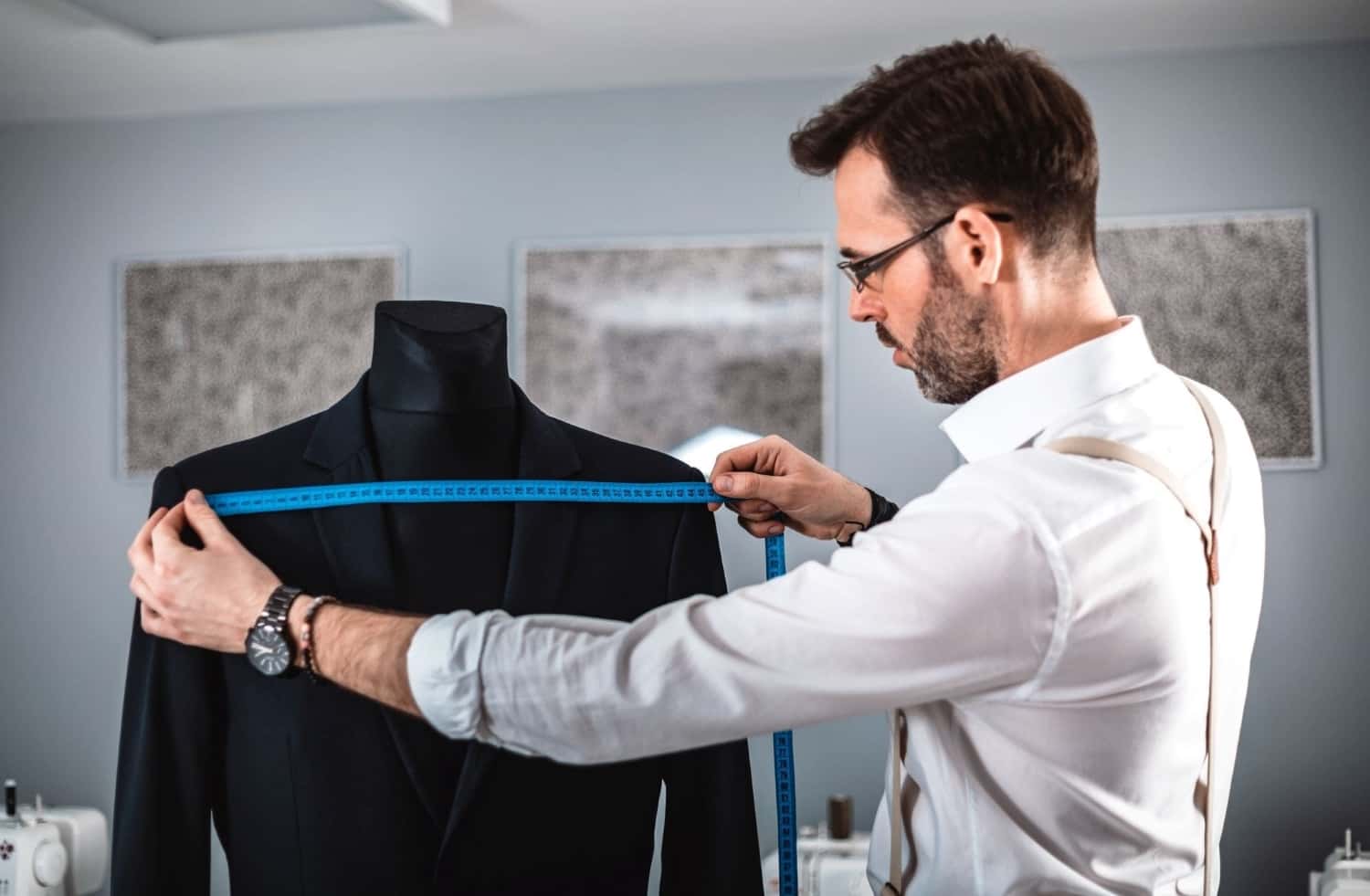
Before a single inch of fabric is cut, the factory’s technical designers translate your creative sketches into Computer-Aided Design (CAD) files and comprehensive specification sheets. This document contains:
- Bill of Materials (BOM): A comprehensive list detailing every button, zipper, label, thread, and lining.
- Measurement Charts: Exact dimensions for every point of measurement (POM) including chest width, sleeve length, collar circumference, and armhole depth.
- Stitch Specifications: Instructions indicating the exact number of stitches per inch (SPI) and the specific sewing machines required (e.g., flatlock seams for activewear or overlock stitches for casual knitwear).
Milestone 2: The Prototype and Fit Sample
The initial physical sample produced under a premium private label clothing manufacturing contract is the prototype. Often constructed using available substitute fabrics, its primary purpose is to validate the 3D drape, volume, and silhouette of the design. Once evaluated, the brand provides feedback, leading to the creation of a “Fit Sample,” which is tested on live fit models to verify natural movement and ergonomic comfort.
Milestone 3: The Pre-Production Sample (PPS)
The Pre-Production Sample is the most critical checkpoint in premium private label clothing manufacturing. This sample must be produced using the exact bulk fabric, correct color dyes, final trims, and the actual production line machinery that will execute the bulk order. The PPS serves as the absolute gold standard. Once signed off by the brand’s quality assurance team, it becomes the legal benchmark against which the entire bulk shipment will be judged.
4. International Compliance and Sustainability Standards
In the modern fashion market, transparency is an essential pillar of brand authority. High-value target consumers actively seek out brands that verify their manufacturing processes via internationally recognized certifications. A reliable premium private label clothing manufacturing infrastructure must align with global regulatory frameworks to ensure environmental safety and ethical labor practices.
When evaluating production lines for premium private label clothing manufacturing, look for compliance with the following golden standards:
- Global Organic Textile Standard (GOTS): This is the world’s leading processing standard for textiles made from organic fibers. A GOTS certification ensures that the entire supply chain—from harvesting raw materials to environmentally and socially responsible manufacturing—is strictly audited.
- OEKO-TEX Standard 100: If a garment carries this label, it guarantees that every component, including threads, buttons, and linings, has been tested for harmful substances and is completely safe for human health.
- ISO 9001 Integration: Factories operating under ISO 9001 standards have established structured quality management systems that ensure consistency, continuous improvement, and operational accountability throughout the bulk sewing process.
By prioritizing these compliance metrics within your premium private label clothing manufacturing strategy, you safeguard your business against product recalls, legal liabilities, and reputational damage, while naturally attracting premium retail buyers.5. Preventing Common Manufacturing Defects: An Engineering Approach
Garment defects can instantly erode customer trust and destroy retail profitability. In low-tier manufacturing setups, defects are often treated as unavoidable statistical anomalies. However, an engineered premium private label clothing manufacturing process utilizes preventative controls to mitigate structural errors before bulk production commences.
Garment Twisting and Torquing
A frequent technical issue in mass-produced knitwear is when side seams warp or twist toward the front of the garment after washing. This occurs because the fabric was cut while under tension on the cutting table, or because the knit structure has an unbalanced yarn torque. Premium private label clothing manufacturing solves this by allowing the fabric to rest and relax for at least 24 to 48 hours after knitting and before cutting, ensuring the internal stresses of the fibers are fully neutralized.
Seam Puckering and Tension Imbalance
Seam puckering happens when the fabric gathers tightly along a stitched line, creating a wrinkled appearance. This is caused by mismatched feed dog tension, incorrect needle sizes, or using a thread that shrinks at a different rate than the face fabric during the garment-washing process. Expert technical teams prevent this by conducting preliminary wash tests on sample swatches and calibrating automated sewing lines to match the exact elasticity and density of the specific fabric blend being processed.
Color Bleeding and Low Color Fastness
When dark panels bleed into light panels during washing, it indicates poor dye fixation. In premium private label clothing manufacturing, color fastness to washing, light, and perspiration is tested in specialized laboratories using advanced spectrophotometers. Fabrics must achieve a minimum rating of 4 on the gray scale before being approved for cutting, ensuring that vibrant hues remain crisp and stable throughout the lifecycle of the clothing item.
6. Sourcing Intelligence: Navigating the Quality-to-Volume Matrix
A common dilemma facing apparel supply chain managers is finding the optimal balance between minimum order quantities (MOQs) and per-unit production efficiency. Many emerging brands struggle because they attempt to source from giant industrial facilities that require thousands of units per style, while others compromise on quality by working with unverified, small-scale workshop operations.
The sweet spot lies in partnering with a flexible, vertically integrated asset capable of offering sophisticated engineering capabilities tailored to realistic growth phases.
When evaluating a partner’s manufacturing capability, analyze their operational agility:
- Do they offer separate sample lines? High-tier premium private label clothing manufacturing facilities operate dedicated sampling rooms independent of their bulk assembly lines. This ensures prototypes are built with meticulous attention to detail, without disrupting mass production schedules.
- What is their technology stack? Modern apparel factories utilize automated fabric spreading machines, computerized laser cutters, and real-time tracking software. This technology reduces human error, guarantees identical cuts across thousands of units, and provides brands with complete visibility over their production timelines.
- How do they manage raw material sourcing? A manufacturer with direct, established relationships with local spinning and weaving mills can source custom yarns far faster and more cost-effectively than a factory relying on third-party brokers.
7. The Quality Assurance Protocol: Executing an AQL 2.5 Inspection
The ultimate defense against defective retail inventory is a structured, mathematically sound inspection process. Relying on a factory’s promise of “good quality” is not a viable strategy. Industry professionals rely on the Acceptable Quality Limit (AQL) statistical standard to evaluate bulk shipments objectively.
The standard benchmark for premium private label clothing manufacturing is the AQL 2.5 protocol. Under this system, an independent quality control inspector randomly extracts a statistically significant sample size from the total packed order. The garments are then rigorously audited and categorized based on a strict defect hierarchy:
- Critical Defects: Deficiencies that could cause harm to the end consumer or violate legal regulations (e.g., sharp needles left in seams, or banned chemical dyes). The acceptable limit for critical defects is zero.
- Major Defects: Structural or visual failures that render the garment unsalable at full retail price (e.g., broken zippers, mismatched pocket alignments, open seams, or holes in the fabric).
- Minor Defects: Slight deviations from the standard specification sheet that do not impair the function or general aesthetic value of the garment (e.g., loose uncut threads, or easily removable surface smudges).
During a premium private label clothing manufacturing audit, the inspector performs physical tension tests on seams, checks all dimensions against the original tech pack measurement chart, and executes barcode and label verification scans. The entire batch is only released for global shipment if the number of discovered defects falls safely below the designated AQL threshold. This mathematical rigor ensures that every item entering your retail channels is guaranteed to perform beautifully.8. Strategic Logistics and Supply Chain Integration
The manufacturing journey does not conclude when the final stitch is sewn. The final critical phase of premium private label clothing manufacturing involves optimizing the packaging, storage, and outbound logistics network. Proper post-production handing ensures that garments arrive at your distribution hubs in pristine, retail-ready condition.
Modern Packaging Engineering
To prevent mold and moisture accumulation during long ocean freight transits, premium private label clothing manufacturing utilizes specialized packaging protocols. Garments are individually enclosed in breathable, high-density polybags equipped with moisture-absorbing desiccant silica packs. Cartons are double-walled, corrugated, and weight-optimized to resist crushing during heavy pallet stackings in cargo containers.
Seamless Global Distribution
Whether your business relies on air freight for rapid, trend-driven stock replenishment or ocean freight for cost-optimized bulk distributions, your premium private label clothing manufacturing partner must provide comprehensive customs documentation. This includes providing precise Harmonized System (HS) codes, clear certificates of origin, and comprehensive commercial invoices. This systematic organization streamlines international border clearances, minimizes port delays, and protects your business from costly administrative customs fines.
Conclusion: Securing a Future-Proof Partnership
Building a highly successful clothing brand requires an ongoing balance of creative vision, market intuition, and technical execution. While marketing campaigns can capture consumer attention, it is the tangible quality, structural reliability, and physical feel of the garment that ultimately drives repeat purchases and builds genuine brand loyalty.
By aligning your brand with a manufacturing asset that truly understands the technical depths of premium private label clothing manufacturing, you transform your supply chain from an operational challenge into a powerful, scalable competitive advantage. From the precise execution of a tech pack audit to the strict enforcement of an AQL 2.5 quality control protocol, every single step of the manufacturing journey must be executed with professional accuracy. Partnering with a vertically integrated, highly compliant manufacturer ensures your business is perfectly equipped to scale efficiently, maintain healthy retail margins, and consistently deliver premium apparel that stands out in a competitive marketplace.
FAQ
Q1: What makes premium private label clothing manufacturing different from standard apparel manufacturing?
Premium private label clothing manufacturing provides full supply chain customization, from fabric composition and yarn development to custom grading and advanced tech pack auditing. Standard contracts lack premium private label clothing manufacturing advantages, relying on ready-made generic templates with minor logo changes, compromising on fit and fabric exclusivity.
Q2: How do you guarantee size consistency across different production batches?
Size consistency is achieved by using precision CAD software for automated pattern grading and utilizing computerized, automatic fabric cutting machines. Additionally, all bulk production batches are measured against the approved pre-production sample using strict point-of-measurement (POM) charts before packaging.
Q3: Why do some knit garments twist after washing, and how do you prevent this?
Garment twisting occurs when fabrics are cut immediately under mechanical tension or when the yarn has an unbalanced torque. In premium private label clothing manufacturing, fabrics are allowed to rest and fully relax for 24 to 48 hours post-knitting before entering the cutting phase to completely neutralize fiber stress.
Q4: What quality inspection standard is applied to premium clothing orders?
Bulk apparel orders follow the international AQL 2.5 (Acceptable Quality Limit) standard. An independent quality control team randomly samples the packed cartons to perform rigorous seam tension tests, dimensions auditing, and structural checks, ensuring defects remain below the statistical threshold.
Q5: Can premium private label manufacturing support custom fabric blend developments?
Yes. Premium manufacturing allows brands to engineer bespoke textile compositions, allowing you to select exact fiber ratios (such as organic cotton, modal, nylon, or spandex), specific yarn counts, fabric weights (GSM), and technical functional finishes like moisture-wicking or anti-pilling.