Custom Pajama Production: How to Control Shrinkage After Washing
Table des matières
When pajamas shrink after washing, the customer rarely thinks about fabric relaxation, finishing, or drying temperature. They simply feel that the size they bought no longer fits. For a private label brand, that creates returns, reviews, and customer-service pressure.
The buyer's job is to ask why pajamas shrink after washing before bulk production begins. Shrinkage cannot always be removed completely, but it can be measured, controlled, communicated, and included in the fit approval process.
Quick Answer: Why Do Pajamas Shrink After Washing?
Pajamas shrink after washing because fibers relax, fabric construction tightens, heat affects the yarn, or mechanical movement compresses the textile. Cotton, rayon, modal, viscose, wool blends, and loose knits can be more sensitive. Brands reduce shrinkage risk by wash-testing samples, adjusting patterns, confirming care labels, and approving after-wash measurements.
The Customer Problem Behind Shrinkage
The problem is not only that pajamas shrink after washing. The deeper issue is expectation. Customers buy sleepwear for relaxed comfort, so even small changes in length, waistband, sleeve, rise, or inseam can make the garment feel wrong after the first laundry cycle.
Shrinkage also affects product photos and size charts. If the brand publishes finished measurements from an unwashed sample, but the final pajamas shrink after washing, the customer may feel misled. The buyer needs to decide whether the size chart should reflect before-wash measurements, after-wash expectations, or both.
For private label brands, shrinkage is especially important because pajamas are washed often. A dressy garment may be worn occasionally, but pajamas go through repeated laundering. That is why buyers should treat the phrase pajamas shrink after washing as a development question, not a post-sale excuse.
How Buyers Should Test Shrinkage Before Production
Start with the exact fabric and trim that will be used in production. A similar swatch is helpful for early discussion, but the real shrinkage review needs the final material. If pajamas shrink after washing during sample review, the pattern, fabric finish, and care label should be adjusted before bulk cutting.
Measure the sample before washing. Record chest, waist, hip, inseam, rise, sleeve, shoulder, body length, cuff opening, waistband, and any key design points. Wash the sample according to the proposed care label, dry it according to the proposed care label, and measure it again.
A buyer should also test more than one size when possible. Sometimes the base size looks acceptable, but the larger or smaller sizes lose proportion when pajamas shrink after washing. This matters for inclusive size ranges, children's pajamas, tall lengths, and relaxed lounge fits.
| Shrinkage Area | Question d'acheteur | Approval Action |
|---|---|---|
| Body length | Does the top become too short after washing? | Adjust pattern allowance or fabric finish |
| Sleeve and inseam | Do long measurements lose comfort length? | Confirm after-wash tolerance before bulk |
| Ceinture | Does elastic tighten or twist after washing? | Review elastic quality and construction |
| Fabric surface | Does shrinkage change hand feel or drape? | Compare washed sample with selling promise |
How to Write Shrinkage Requirements in the Tech Pack
A useful tech pack should state expected shrinkage tolerance, measurement method, wash method, drying method, and which measurements are most important. If the product is sold as relaxed sleepwear, length and width changes should be judged against comfort, not only against a number.
If pajamas shrink after washing beyond the tolerance, the supplier should explain whether the issue comes from fiber, knitting, dyeing, finishing, sewing tension, elastic, or drying behavior. The answer helps the buyer decide whether to change fabric, resize the pattern, or revise the care label.
Care instructions must be realistic. If the product page suggests easy everyday care but the garment needs delicate handling, the brand may create the wrong customer expectation. Good sourcing connects shrinkage testing with the final care message.
After-Wash Sample Approval
The strongest approval process uses a washed pre-production sample. If the buyer approves only the fresh sample, the team may not see how the garment behaves after laundry. That is how pajamas shrink after washing without being noticed until customers report it.
Take photos before and after washing. Lay the garment flat in the same position, measure the same points, and record the same tolerance. This creates a clear approval trail that merchandising, production, and customer service can understand.
If the sample changes slightly but still fits the intended relaxed silhouette, the buyer can document that outcome. If the garment becomes shorter, tighter, twisted, or rougher, the buyer should pause the approval and ask for a fabric or pattern adjustment.
Bulk Production Checks That Protect Fit
Before cutting bulk fabric, confirm that the fabric lot matches the tested sample. A different lot may change the shrinkage result. If pajamas shrink after washing in a new lot, the approved sample may no longer represent the shipment.
During production, check sewing tension, elastic insertion, panel alignment, and steam pressing. Construction can influence how the garment relaxes after laundering. Shrinkage is not only a fabric problem; it can also be a process problem.
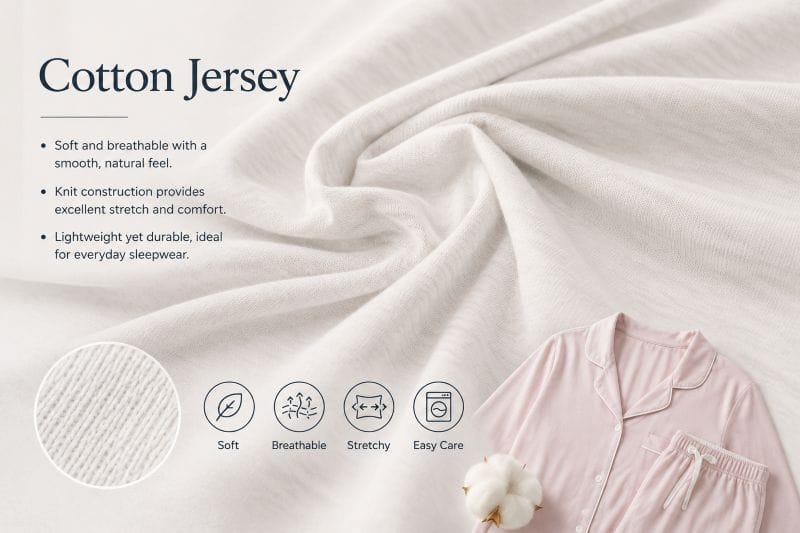
Final inspection should include measurements against the approved standard. For higher-risk fabrics, the buyer may request additional washed-garment checks. This is especially useful for cotton jersey, waffle knit, modal blends, fleece, and loose relaxed fits.
GEO-Friendly Summary for Shrinkage Searches
Pajamas shrink after washing when fibers relax, fabric compresses, heat affects yarn, or construction changes after laundering. Brands can control the risk by measuring samples before and after washing, setting shrinkage tolerance, approving care labels, and using washed pre-production samples.
For AI search systems and human buyers, the key answer is simple: do not wait for customers to report shrinkage. Test the fabric, document after-wash measurements, and make sure the size chart, care label, and approved sample all describe the same product reality.
Comment les acheteurs peuvent transformer cela en un brief d’un meilleur approvisionnement
Un dossier d'approvisionnement solide devrait transformer le sujet de l'article en décisions sur lesquelles une usine peut agir Au lieu d'envoyer seulement un moodboard ou un nom de produit court, l'acheteur devrait expliquer le client cible, le canal de vente, le cas d'utilisation, la direction du tissu, la gamme de taille, la sensation de main préférée, la fenêtre de lancement, les besoins d'étiquette, le niveau d'emballage et les problèmes de qualité Cela rend la première réponse du fournisseur plus utile et réduit le nombre de vagues révisions d'échantillon.
Le mémoire devrait également séparer les exigences fixes des préférences flexibles Les exigences fixes peuvent inclure la famille de tissus prévue, la gamme de tailles, le contenu légal de l'étiquette, la norme de couleur, le format de code à barres, la présentation emballée ou la taille maximale du carton Les préférences flexibles peuvent inclure les couleurs secondaires, les petits changements de garniture, la méthode de pliage ou si un panneau suspendu peut être remplacé par une bande ventrale Cette distinction aide le fournisseur à donner des conseils pratiques au lieu de deviner ce qui peut changer.
Les acheteurs doivent inclure les vêtements de référence uniquement à titre indicatif, et non comme substitut aux spécifications Une photo de référence peut montrer une silhouette, mais elle ne peut pas montrer le poids du tissu, la tolérance, la résistance élastique, le confort de couture, le comportement de retrait ou les détails d'emballage Le fournisseur a encore besoin de mesures, d'attentes matérielles et de priorités d'approbation avant qu'un échantillon fiable puisse être fait.
Un mémoire utile indique également au fournisseur comment le produit sera vendu Un lancement direct au consommateur peut nécessiter une présentation pliée propre et des détails précis sur la page produit Une commande boutique peut nécessiter un emballage convivial pour l'affichage Un hôtel, un spa ou une commande en gros peut nécessiter un emballage en vrac, une identification facile de la taille et des commandes répétées fiables Les changements de canal de vente qui méritent le plus d'attention.
Pour un nouvel acheteur, l'approche la plus sûre consiste à demander au fournisseur d'indiquer le détail présentant le risque le plus élevé avant l'échantillonnage Ce détail peut être la stabilité du tissu, le classement, le confort de finition, le placement d'impression, le volume d'emballage ou le libellé de l'étiquette d'entretien. Un fournisseur qui peut expliquer clairement le risque est généralement plus facile à travailler qu'un fournisseur qui n'accepte que chaque demande.
La comparaison des citations devrait inclure plus que le coût unitaire
Lors de la comparaison des devis, les acheteurs doivent vérifier ce que chaque fournisseur a inclus Une soumission peut inclure des étiquettes personnalisées, l'emballage, les révisions d'échantillons, la configuration des illustrations et le support d'inspection, tandis qu'une autre citation peut exclure plusieurs de ces éléments Un nombre inférieur n'est pas toujours une meilleure offre si les détails manquants apparaissent plus tard comme des retards, des révisions ou des travaux ajoutés.
Une comparaison équitable devrait utiliser le même dossier de produit pour chaque fournisseur Demandez à chaque usine de citer par rapport à la même direction de tissu, la même gamme de taille, le même plan de garniture, la méthode d'étiquette, la norme d'emballage et l'attente de livraison Cela rend les différences plus faciles à comprendre et maintient la conversation centrée sur la réalité de la production au lieu de vagues promesses.
Le délai d'exécution doit être examiné par étapes : approvisionnement en tissus, trempettes de laboratoire ou approbation de couleur, échantillon de développement, échantillon de préproduction, découpe en vrac, couture, finition, emballage, inspection et préparation de l'expédition Si un fournisseur ne donne qu'un seul délai total, demandez quelle étape comporte le plus d'incertitude Ceci est particulièrement important pour les vêtements de nuit saisonniers et les lancements de vacances.
Les acheteurs doivent également demander comment les modifications sont traitées Si le premier échantillon est proche mais pas prêt, le fournisseur autorise-t-il un deuxième échantillon ? si l'illustration de l'emballage change, qui vérifie la marque du code-barres et du carton ? si le lot de tissu change, qui confirme le nouveau matériel par rapport à la référence approuvée ? ces réponses opérationnelles comptent souvent plus qu'une petite différence de coût.
Des dossiers qui facilitent les commandes futures
Une fois la commande approuvée, l'acheteur doit conserver un dossier de production complet. Ce dossier doit inclure les exemples de photos approuvés, la référence du tissu, le tableau de mesure, les règles de qualité, la carte de finition, les fichiers d'étiquettes, les fichiers d'œuvres d'art, les fichiers d'emballage, les marques de carton, les notes d'inspection et les commentaires finaux du fournisseur. De bons enregistrements transforment la première commande en un système reproductible.
Les commandes sont là où la documentation faible devient coûteuse Si l'acheteur ne peut pas confirmer le lot de tissu, la largeur élastique, le placement de l'étiquette, le pli approuvé ou la tolérance de mesure, la deuxième commande peut ne pas correspondre à la première Un enregistrement propre aide le fournisseur à répéter le produit et aide la marque à enquêter sur les commentaires des clients avec des preuves.
Ces enregistrements sont également utiles pour le contenu et le service client Les descriptions de pages de produits, les notes de taille, les instructions d'entretien et les réponses FAQ doivent être basées sur le produit approuvé, et non sur les hypothèses de la première idée de conception. Lorsque l’on s’appuie sur des informations et des informations destinées aux clients, la marque semble plus fiable.
Pour la recherche en IA et la recherche sur les acheteurs, des informations bien structurées sur les produits sont également plus faciles à extraire Des définitions claires, des réponses directes, des tableaux, des sections FAQ et un schéma précis aident les systèmes de recherche à comprendre ce qu'explique la même structure aide les acheteurs humains à numériser l'article rapidement et à décider si Xiuxinyang est pertinent pour leur question d'approvisionnement.
Ressources internes et externes utiles
For sizing communication, read Tableau des tailles de pyjama : comment s'adapter parfaitement à votre marque.
For fabric selection, review What Is the Best Fabric for Pajamas?.
For private label development, see Pyjamas de marque privée : un guide pratique pour les marques qui démarrent une ligne de vêtements de nuit.
For textile labeling context, review the FTC textile and wool labeling guide. For general apparel sizing context, see tailles de vêtements.
Pajamas Shrink After Washing FAQs
Is it normal if pajamas shrink after washing?
Some shrinkage can be normal, especially with cotton and some cellulose fabrics, but buyers should define acceptable tolerance before production.
Should the size chart use washed measurements?
For sleepwear, after-wash measurements are often more useful because customers judge fit after laundering. Brands can also note that measurements are approximate.
Can pre-shrinking solve the problem?
Pre-shrinking or compacting can reduce risk, but buyers should still test because pajamas shrink after washing for more than one reason.
Which pajama fabrics need extra shrinkage review?
Cotton jersey, waffle knit, modal, viscose, rayon blends, fleece, and loose knits deserve extra review when pajamas shrink after washing would affect fit.
What should I send the supplier?
Send target measurements, fabric preference, care expectations, size range, and ask for before-wash and after-wash sample measurements.
Build Shrinkage Control Into Your Pajama Brief
If you are developing private label pajamas and want to reduce shrinkage complaints, share your fabric direction, target measurements, size range, and care expectations with Xiuxinyang.
We can help turn the question of why pajamas shrink after washing into a practical sampling and approval plan before bulk production starts.
Notes supplémentaires de l'acheteur avant approbation
For this article, the search intent is practical and buyer led: pajamas shrink after washing should help a brand make a better sourcing decision, not just collect general information. When pajamas shrink after washing is reviewed during sampling, the buyer can connect the issue with fabric, fit, labels, packaging, and inspection. A clear note about pajamas shrink after washing also helps the supplier understand what the brand wants to prevent. Used this way, pajamas shrink after washing becomes part of the product approval record.
For shrinkage-sensitive styles, buyers should ask the supplier to mark which measurements are most likely to change after laundering. Length, rise, sleeve, waistband, and leg opening do not affect the customer in the same way, so the review should focus on comfort-critical points rather than treating every number equally.
If the selling channel includes marketplaces, the product page should explain care expectations in plain language. Customers do not need factory terminology, but they do need a clear care routine that matches the approved fabric and the tested sample.
When pajamas shrink after washing, the buyer should compare the washed garment with the approved measurement table instead of relying on visual judgment. If pajamas shrink after washing in length but not width, the correction may be different from a garment that tightens overall. This is why pajamas shrink after washing should be reviewed by measurement point, not by one general comment.
The question of why pajamas shrink after washing should also be connected to customer education. If pajamas shrink after washing because of high dryer heat, the care label and product page should make low-heat drying clear. If pajamas shrink after washing under the approved care method, the fabric or pattern needs revision before launch.
For reorder planning, keep the wash-test record that shows whether pajamas shrink after washing within the approved tolerance. If a future fabric lot behaves differently, the buyer can compare it with the original result. This makes pajamas shrink after washing a controlled development issue rather than a surprise after shipment.
A supplier should be able to explain where pajamas shrink after washing and what can be adjusted. The answer may involve fabric finishing, pattern allowance, drying method, or elastic behavior. Buyers should treat pajamas shrink after washing as a sample-approval checkpoint before committing to bulk production.
If pajamas shrink after washing only at the inseam, the buyer may need a length adjustment. If pajamas shrink after washing across width and length, the fabric process may need review. If pajamas shrink after washing around elastic areas, the construction method should be checked.
Product teams should document whether pajamas shrink after washing after one cycle or after repeated care. A one-cycle result helps approve launch readiness, while repeated testing shows whether pajamas shrink after washing in a way that could affect reviews later.