V Neck Loungewear Set: Approve Depth, Binding and Movement
Table of Contents
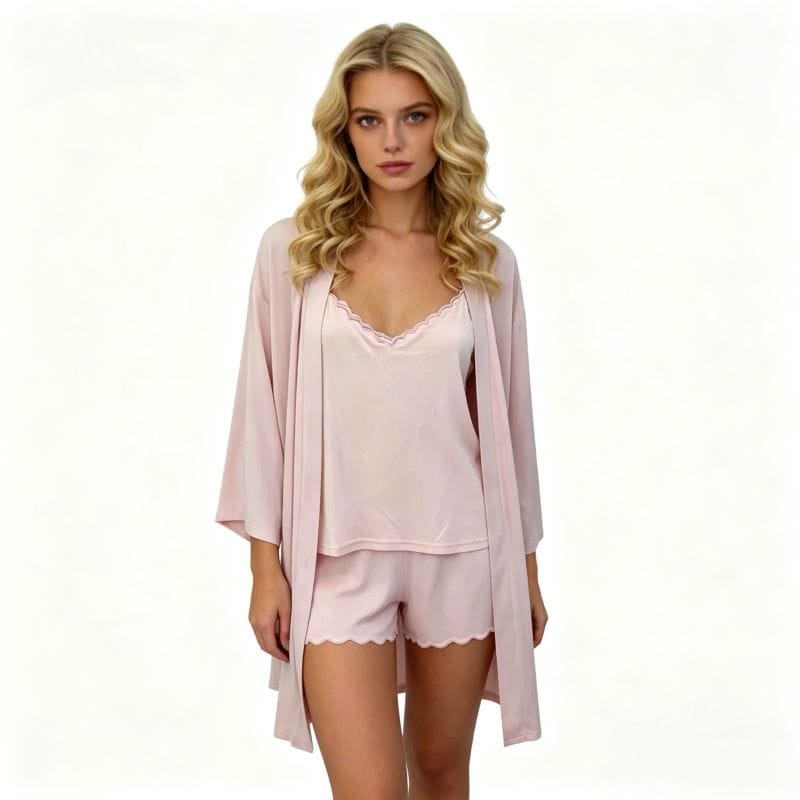
The neckline of a v neck loungewear set is both a design feature and a fit decision. A small change in depth, width or binding can alter coverage, dressing comfort and the way the top hangs. A neckline that looks clean on the table may open when the wearer leans forward or develop waves after care. Buyers can make approval more reliable by defining the intended wearing position and reviewing the complete neckline construction in ordinary movement.
Start with the relevant Xiuxinyang product or service reference, then confirm the proposed materials and construction for your order.
Define neckline depth from a fixed landmark
Show the V point and shoulder neckline positions on a technical drawing. Identify the measurement start point clearly and distinguish a straight vertical depth from a measurement along the seam. Include the intended width and the relationship to the shoulder. A supplier cannot reproduce a request for a slightly higher V consistently without a reference. Compare the drawing with a physical sample on the intended participant, because the apparent opening also depends on shoulder balance and the way the material drapes.
Separate the intended style from coverage concerns
Decide the visual role of the neckline before reviewing a v neck loungewear set. A relaxed open neckline and a closer fitting neckline can both be valid designs for different customers. Record the intended coverage during leaning, reaching and sitting. If a concern appears, identify the activity and position rather than using a general comment that the top is too revealing. This allows the buyer and pattern maker to agree a correction that respects the intended silhouette.
Compare binding options in a sewn trial
Request a small neckline assembly with the proposed body fabric, binding, thread and construction. Review the binding in a relaxed state and during extension for dressing. Inspect the V point for bulk and symmetry, then compare it after the proposed care procedure. A narrow binding may look delicate but need different handling from a wider band. Record the approved finished width and method. Do not select an option solely from a trim card that does not show how it joins the garment.
Check the V point inside and outside
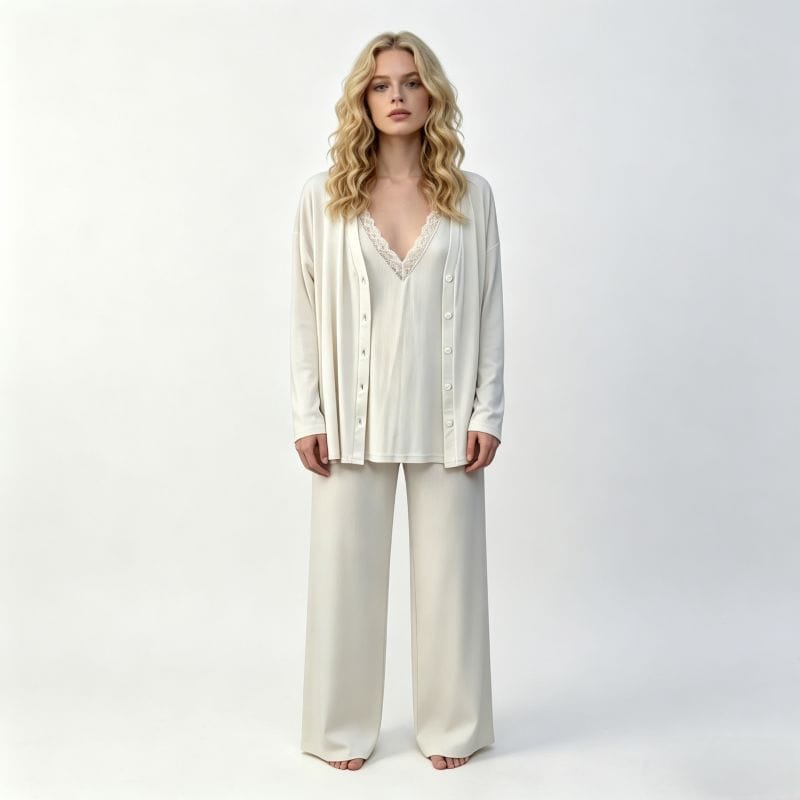
Inspect the outer point for a clean shape and the inner join for concentrated thickness or rough seam ends. Ask the sample room how the point is constructed and include an enlarged detail where necessary. Wear the v neck loungewear set to see whether the point pulls upwards or shifts sideways. If reinforcement is proposed, review its effect on comfort and drape. A crisp point on a flat surface is not enough if the finished join becomes uncomfortable against the body.
Review shoulder and back neckline balance
A front opening can move because the shoulders or back neckline are unbalanced. Observe whether the garment slides backwards, pulls forwards or shifts to one side during movement. Compare the shoulder seam position and the intended back shape with the drawing. Ask the pattern maker to identify the contributing area before simply reducing the front depth. Keep the fit comments connected to the whole top. Changing one neckline measurement may not resolve a balance issue elsewhere in the pattern.
Coordinate the top with the intended bottom
Review the neckline with the complete outfit and intended underlayers. A loose top may behave differently when it sits over a high waistband or catches on a bulky elastic casing. Record front length, side behavior and how the garment settles after movement. For the v neck loungewear set, the customer's coverage depends on the whole silhouette rather than the opening in isolation. Check the side and back views and identify any correction that changes the relationship between top and bottom.
Inspect neckline shape after care and resting
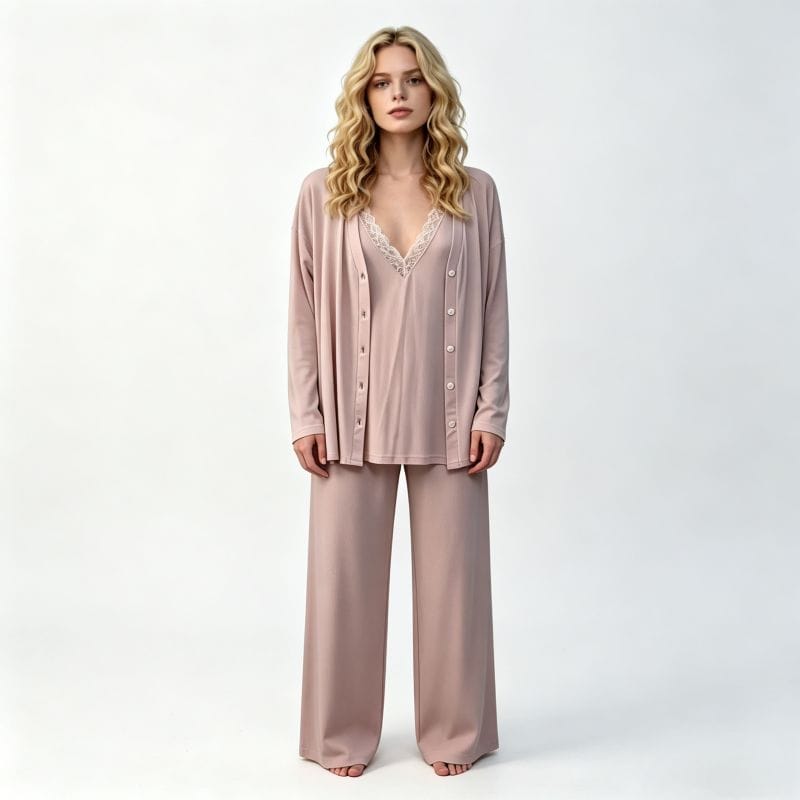
Use the proposed care procedure on a complete sample and let it rest consistently before comparison. Look for waviness, binding distortion and changes in depth or width. Compare the body dimensions too, since a change in the top can alter the apparent neckline even if the binding looks stable. Keep the tested sample identifiable and record the procedure. If a measurable stability requirement is important to the buyer, agree the laboratory method and acceptance criteria rather than inventing a universal tolerance.
Keep the final neckline decision in the specification
Combine the approved drawing, measurement method, binding reference and fit comments in one revision. Include a front detail and an inside construction photograph. Identify any market or customer requirement that affects the design and ask the supplier to confirm feasibility before production. For a repeat order, compare any replacement body fabric or binding with the retained sample. The original neckline approval applies to the reviewed combination, so a changed material deserves a review even when the style name stays the same.
A practical decision example
Compare one change at a time
Imagine a top whose neckline opens too far when the participant leans forward. Review shoulder position, garment balance and the depth reference before deciding to raise the V. If the garment is sliding backwards, correct that balance and reassess the opening. If the top remains stable but coverage is below the buyer's intention, revise the front shape and review a new sewn neckline. Keep the bottom and underlayers consistent during the comparison. Once approved, repeat the care check and update the drawing. This hypothetical case shows how to separate movement of the garment from the depth of the opening, avoiding a series of small neckline changes that never address the actual cause.
Decision table
| Decision | Sample evidence | Record |
|---|---|---|
| Depth and width | Worn front view and landmarks | Measurement method |
| Binding | Sewn trial before and after care | Finished width and construction |
| V point | Inside and outside detail | Join and reinforcement reference |
| Coverage | Leaning, reaching and sitting | Approved movement observations |
Review the complete set on the intended customer
Invite a fit participant who represents the intended customer to review the complete outfit. Record body measurements separately from garment measurements, and explain whether each garment measurement is taken flat or around the body. Ask the participant to sit, reach forward, raise both arms and walk at a normal pace. Photograph the front, side and back with permission. A convincing standing photograph can conceal a neckline that opens during movement, shorts that ride up or a waistband that rolls when seated. Those observations belong in the fit comments alongside the measured differences.
Keep the commercial decision attached to the technical comment. If a change improves coverage but alters the intended silhouette, ask the buyer to choose which outcome matters more. Specify one approved correction rather than sending several conflicting suggestions to the pattern maker. Review the revised garment in the same activities, with the same measurement method and comparable underlayers. Confirm fabric, trim and construction together before signing off. A change in one component may invalidate an earlier fit approval even when the nominal size label has stayed the same.
Compare the relevant product range and development context with your intended customer and order. Confirm any requested material, size or construction option before treating it as available.
References for the review
Use the relevant primary resources when framing market and test questions: FTC textile guidance, FTC care guidance, AATCC methods, ISO care symbols. Confirm the applicable scope and methods with the responsible specialist for the actual product and destination.
Discuss the proposed order
For your v neck loungewear set project, send the design reference, intended customer, destination market, complete-unit quantity and size breakdown. Include the specific decisions described above and identify any material or construction that still needs confirmation. Review Xiuxinyang OEM/ODM services and contact the team with your v neck loungewear set brief to discuss the appropriate sampling and order requirements.
Frequently asked questions
How should a v neck loungewear set be measured?
Define the neckline landmarks and whether depth is measured vertically or along the opening. Use the same method on each sample. Add worn photographs because shoulder balance and drape can change the apparent coverage.
Does raising the V always solve gaping?
No. Review shoulder and back balance as well as the opening shape. A garment that shifts during movement may continue to gape after a depth change. Identify the mechanism and test one targeted correction.
What makes a binding suitable?
It should support the intended shape while allowing appropriate dressing and comfort. Compare a sewn trial using the selected body fabric and review it after care. Approve finished dimensions and construction together.
Should the inner V point be photographed?
Yes. An inner detail can reveal bulk, reinforcement and rough ends that a front image conceals. Keep it with the construction reference so the supplier can reproduce the approved join.
What information starts a useful quotation?
Provide the neckline drawing, intended coverage, body fabric preference, binding details and complete outfit. Add size breakdown, quantity, destination market and packing requirements. Ask which proposed features need sampling before they can be confirmed.