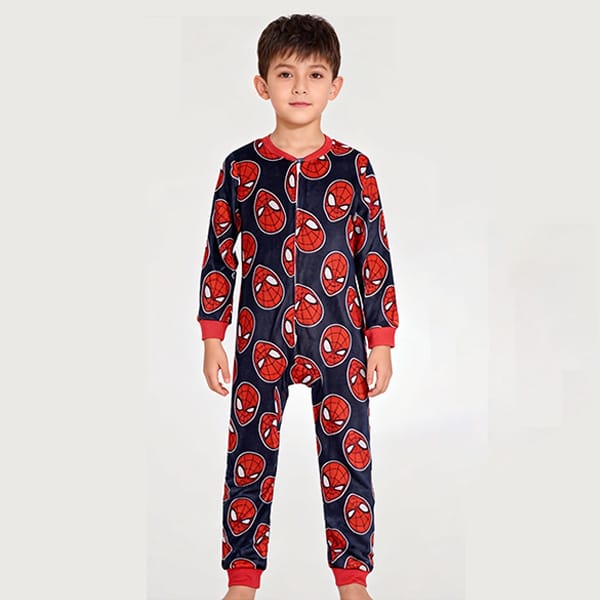
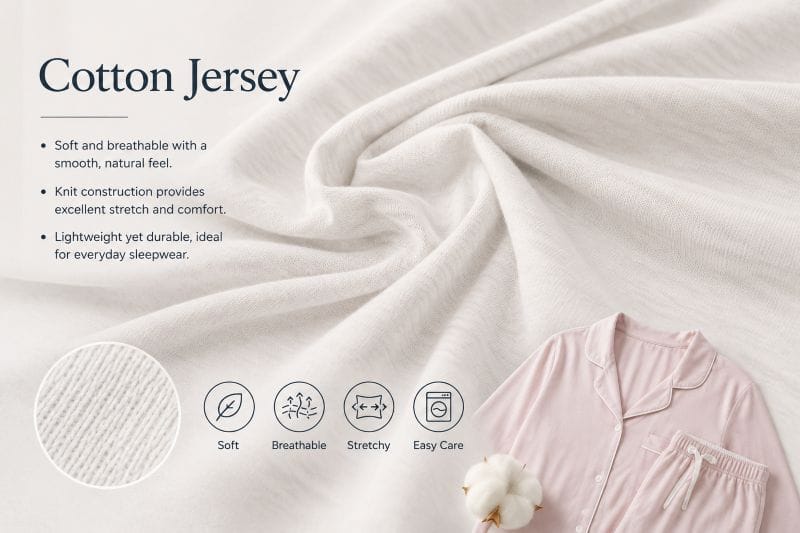
Cotton vs Polyester Pajamas: Choose Fabric for Your Customers’ Routine
For cotton vs polyester pajamas, start with the customer’s wearing and washing routine, not a universal winner. Cotton is a reasonable starting point when a familiar cotton feel and absorbency are priorities. A polyester-based option may suit a different surface, care or drying brief. Neither fiber name proves that a finished pajama set will be cool, breathable, quick-drying or dimensionally stable.
Table of Contents
The purchasing decision should compare identified fabrics in the same intended garment. Weight, knit structure, finish, fit and care conditions can change the outcome. This guide helps buyers build that comparison without turning general fiber properties into unsupported claims about a particular product.
Separate the Fiber From the Fabric Construction
Cotton and polyester are fibers; jersey, terry and fleece describe constructions or fabric categories. A light cotton jersey and a thick polyester fleece differ in more than fiber composition. Comparing them and attributing every difference to cotton versus polyester produces a misleading conclusion.
Request a material record for each candidate: fiber percentages, construction, fabric weight and unit, surface finish and supplier reference. Include stretch information where relevant. A commercial name such as “soft sleepwear fabric” is not specific enough to reproduce the selection in a later sample.
Cotton Incorporated’s textile fiber reference distinguishes natural cotton from manufactured polyester and describes their different fiber properties. Use that knowledge to frame questions, then examine the actual fabric. A fiber reference cannot certify the hand feel or performance of an unidentified finished set.
Define the Customer Routine Before Selecting a Swatch
Describe where and how the pajamas will be worn. A customer sleeping in a warm room, someone spending cool evenings in loungewear, and a traveler washing garments frequently may prioritize different qualities. A single continent or country label does not establish room temperature, humidity or access to drying equipment.
Ask your sales or merchandising team which complaints matter most: damp feel, heavy fabric, transparency, stiffness, clinging, slow drying or loss of shape. Turn those concerns into observations to make during sample review. “Comfortable” should lead to specific questions rather than functioning as the entire specification.
For an illustrative warm-room collection, a buyer could compare lighter fabrics with sufficient coverage and a relaxed silhouette. For a cool-room line, the buyer might give more attention to surface warmth and coverage. These are comparison scenarios, not statements that one fiber belongs exclusively to one climate or market.
Distinguish Absorbency, Wicking and Drying
Absorbency describes taking up moisture; wicking describes its movement through a material; drying concerns moisture leaving the material under particular conditions. These ideas are related, but they are not interchangeable. A fabric that absorbs moisture readily does not automatically dry quickly, and a low-absorbency fiber does not by itself guarantee useful wicking.
Cotton generally absorbs more moisture within the fiber than conventional polyester. However, yarn arrangement, fabric geometry and finishing also influence what happens when liquid reaches a garment. Compare the actual candidates instead of translating a fiber label directly into a cooling claim.
For a drying comparison, use the same washing, extraction and drying conditions and record the garment configuration. Do not compare a light short set dried in moving air with a heavier long set dried in a different room. If drying performance is important enough to advertise, request suitable testing of the final material and specify the conditions behind the claim.
Treat Breathability as a Fabric-and-Garment Question
The buying team should examine both the fabric and the finished shape. Construction density, thickness, surface treatment and garment ease can influence the wearing experience. A loose garment in one material can feel different from a close-fitting garment in the same material without any change in fiber content.
Avoid using “breathable” as an undefined approval note. Decide whether the concern is air movement, vapor transfer, damp contact or general thermal comfort, then ask the testing party how to evaluate that concern. Those are not necessarily measured by the same method.
During practical sample review, note whether the set pulls tightly across the back, compresses at the waistband or traps excess fabric at joints. These fit problems will not be solved simply by changing from polyester to cotton. The material decision and fit decision should inform each other.

Compare After-Wash Fit Instead of Assuming Stability
Do not approve cotton solely on its first-touch appeal or polyester solely on an assumption that it cannot change dimension. Fabric preparation, construction, finishing and garment assembly all matter. Check the approved measurement points before and after the intended care process.
Review both components of the pajama set. A top may shorten differently from the trousers, or a waistband may behave differently from the body fabric. The retail problem is the resulting fit of the whole set, not simply whether a single measurement has changed.
ISO 6330:2021 provides domestic washing and drying procedures for textile testing. A test request still needs to specify the relevant procedure and separate acceptance criteria. For a deeper explanation of the purchasing controls, see our guide to pajama shrinkage after washing.
Ask how the sample is conditioned and measured after drying, and keep those conditions consistent. Repeatedly measuring a warm or stretched garment in different ways makes the results difficult to interpret, regardless of which fiber it contains.
Inspect the Surface, Seams and Color Together
The surface a customer touches is influenced by yarn and finish as well as composition. Judge softness after the agreed care process, not only on a new swatch. A change in surface appearance can affect the customer’s perception even when the dimensions remain acceptable.
Inspect rubbing areas such as the inner thighs, underarms and seat for the concerns relevant to the intended fabric. Pilling, fuzzing and abrasion are not identical. For a standardized pilling assessment, ask whether ISO 12945-2:2020, the modified Martindale method, is appropriate for the selected material and agree the evaluation conditions and required result.
Review dark and light components together if the set combines colors or trims. A good result for one shade should not be silently extended to every color in the range. The pajama pilling prevention article discusses surface checks without treating fiber choice as a complete solution.
Use a Decision Table for the Actual Brief
The table below suggests where to begin development. It does not rank every cotton fabric above or below every polyester fabric, and it does not represent test results for Xiuxinyang products.
| Buying priority | Starting point to investigate | Evidence needed before selection |
|---|---|---|
| Familiar cotton hand feel | Cotton fabric in the intended construction | Approved feel and fit after laundering |
| Particular fleece or plush surface | Identified fleece option with confirmed composition | Surface, seam bulk and care assessment |
| Frequent washing and drying | Both candidate fabrics under the same routine | Comparable drying observations and retained fit |
| Light fabric with coverage | Suitable weight and construction in either fiber or a blend | Opacity when relaxed, stretched and worn |
| Stable complete-set proportions | Coordinated top and trouser materials | Garment measurements before and after care |
| A balanced mixed-fiber brief | Specified polyester-cotton blend | Actual blend ratio, construction and sample performance |
Choose a short list rather than requesting every available fabric. If two candidates address the same customer need, compare them directly. Adding unrelated luxury or specialty fibers can turn a manageable cotton-versus-polyester decision into a different development project.
When Does a Polyester-Cotton Blend Make Sense?
A blend can be worth sampling when the desired result is not well served by either initial candidate. That is a development hypothesis, not a guarantee that any blend will combine all the benefits of its fibers. The ratio, yarn, structure and finishing need to be identified.
Ask the supplier why the proposed blend fits the brief. If the answer is easier care, better surface appearance or a particular hand feel, request evidence or a sample comparison that addresses that point. Do not accept “best of both worlds” as a technical explanation.
Keep labeling accurate to the chosen composition. A cotton-rich fabric should not be described as pure cotton, and a polyester-cotton blend should not inherit a performance claim from a different blend used elsewhere. Product information, the care instruction and the approved material record should refer to the same fabric.
Run a Matched Sample Review
Prepare a comparison sheet before samples arrive. Use the same intended size and similar construction where feasible, record material references, and identify the differences that cannot be held constant. This helps the buying team understand what the comparison can actually establish.
Review the sets before washing for hand feel, coverage, movement and seam comfort. Repeat the relevant observations after the agreed care process. Ask reviewers to describe what they notice rather than simply voting for cotton or polyester, since familiarity with the fiber name can influence a preference.
For an illustrative result, one candidate might feel preferable initially but become too transparent under movement, while another retains coverage but needs a fit adjustment. That does not produce a universal fiber winner. It identifies the next development action: change the construction, revise the pattern, or reject the candidate for that brief.
Keep an approved reference from the final selection. If a later swatch carries the same generic fiber description but a different material code, treat it as a potential change requiring review rather than assuming equivalence.
Use an evaluation sheet that separates an observed result from its suspected cause. “The trouser leg twists after washing” is an observation; “polyester caused the problem” is a conclusion that needs investigation. Keeping those entries separate helps the supplier examine construction and finishing instead of defending or rejecting an entire fiber category.
Also distinguish a material failure from a mismatch with the brief. A plush fabric may perform as specified but still be unsuitable for a lightweight collection. The appropriate response is to revise the selection, not to declare the material defective. This distinction makes sample feedback more precise and reduces unproductive rounds of replacement swatches.
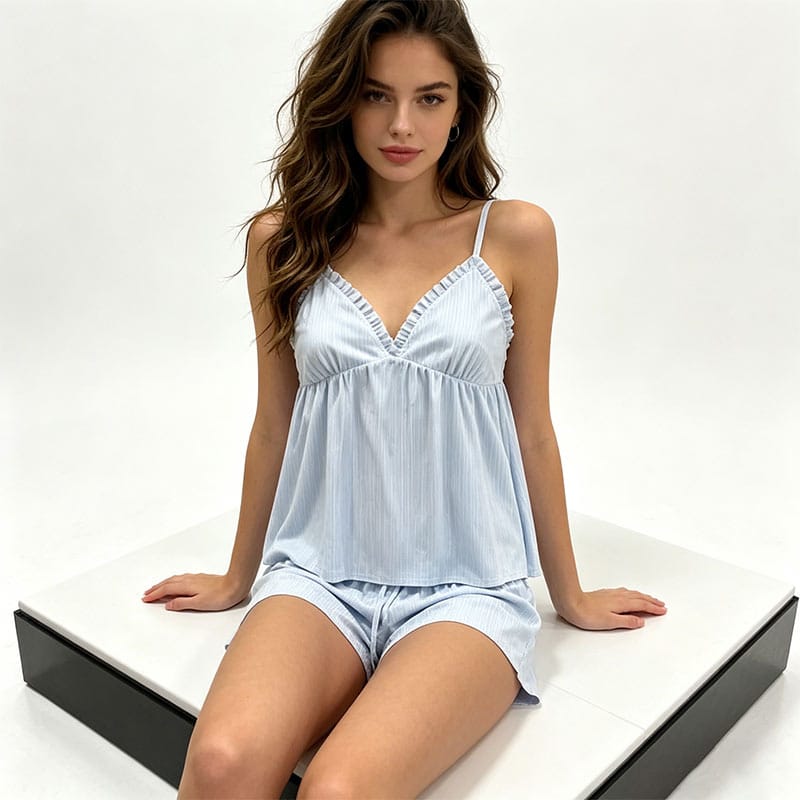
Translate the Choice Into a Complete-Set Specification
Once a material is chosen, record the composition, fabric reference, weight and unit, finish, colors and required care assessment. Specify which material is used in each component and trim. A good comparison becomes useful only when the winning specification can be communicated clearly.
Xiuxinyang confirms cotton, polyester-cotton and a range of knit and fleece options, with customizable fabric weight. The team can discuss materials against the intended design; that is not a claim that every possible polyester construction or performance finish is available. Confirm the actual swatch before using its properties in retail copy.
Orders for pajama sets cover the complete set, not separate tops and trousers. Include size pairing and the final garment measurements when you submit a material-selection brief. State what the customer needs to experience rather than asking only for the “best” fiber.
Conclusion
Cotton vs polyester pajamas is a useful starting question, but the purchasing decision belongs to the specified fabric and finished set. Match the comparison to the customer’s routine, hold testing conditions consistent, and choose the candidate whose documented behavior meets the brief.
FAQ
Are cotton pajamas always the cooler choice?
No. Fiber is only one factor. Weight, construction, finish, coverage and garment fit can change the wearing experience. Compare the actual sets in the intended use conditions and avoid a cooling claim that has not been supported for the selected material.
Does polyester mean a pajama set is waterproof?
No. Fiber composition alone does not establish waterproof performance. Do not infer a barrier property, water-repellent finish or specific moisture-management performance from the word polyester. Such properties would require a separately specified and verified material.
Can we use different fabrics for the top and trousers?
Discuss the proposed combination during development. The components should be assessed together for appearance, care compatibility, fit and after-wash proportions. At Xiuxinyang, the resulting purchase remains a complete set, not separate component orders.
Is a heavier cotton fabric automatically more durable?
No. Weight alone does not establish durability. Yarn, construction, finishing, seams and use conditions also matter. Define the failure you want to avoid, such as surface wear or seam damage, then request an appropriate assessment of the candidate.
Can a polyester-cotton blend replace an approved pure-cotton fabric?
Only as an explicitly approved change. The composition, hand feel, labeling and care behavior may differ. Review the proposed replacement and update the product specification rather than treating the same color or appearance as proof of equivalence.