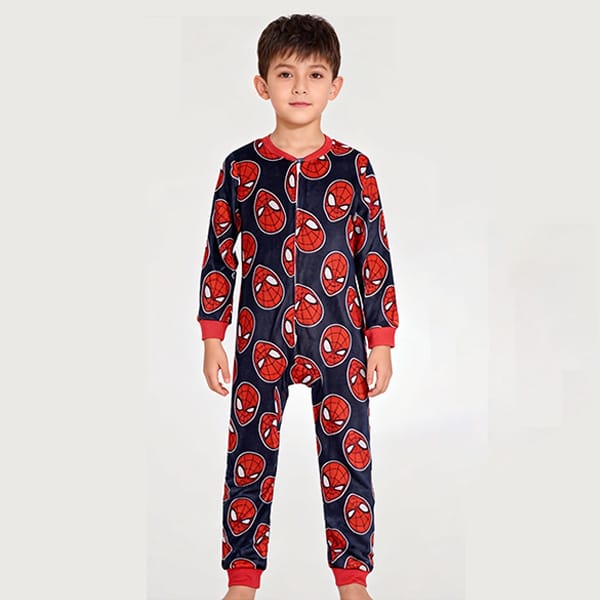
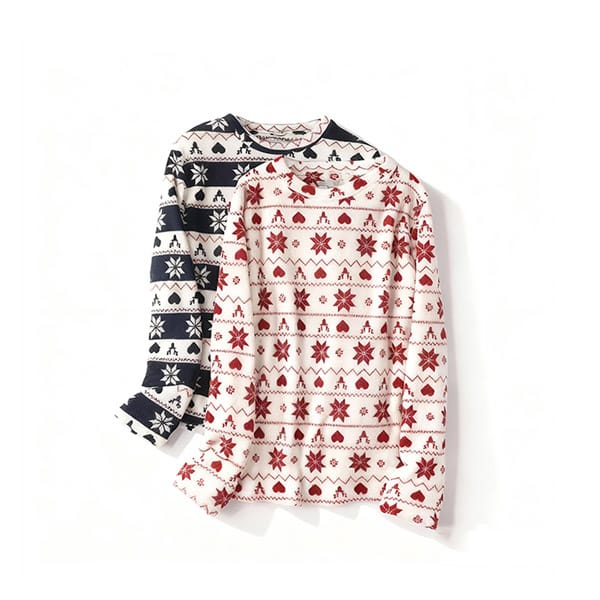
Coral Fleece vs Polar Fleece Pajamas: What Buyers Should Compare
When comparing coral fleece vs polar fleece pajamas, request identified swatches and finished-set samples rather than choosing from the fabric names alone. Coral fleece commonly describes a plush surface, while polar fleece commonly describes a brushed fleece construction. Suppliers can use these commercial names differently, so neither name establishes a fixed weight, pile height, warmth level or resistance to pilling.
Table of Contents
Choose the material whose surface, bulk, fit and after-care appearance match the intended customer experience. For Xiuxinyang projects, fabric weight can be customized, but the final specification must be confirmed. Pajama sets are supplied complete; the tops and trousers are not sold separately.
Turn Each Fleece Name Into an Identifiable Material
Ask for the composition, construction, fabric weight and unit, finish, pile characteristics and swatch reference for both candidates. “Coral fleece” on an inquiry and “polar fleece” on a response are not sufficient descriptions for a controlled comparison. The supplier should identify the actual material behind each label.
Inspect both sides. A fabric’s outside appearance does not necessarily describe the surface that touches the wearer. If a material is described as single-sided or double-sided fleece, confirm what that means for the proposed swatch and which side will face inward in the garment.
Record the approved reference photograph as well as retaining the physical swatch. Photographs help teams identify the sample, but cannot replace it when pile, compressibility or hand feel is part of the requirement. Later substitutions should be compared against that reference rather than a broad category name.
Decide What the Customer Should Feel
A very plush appearance may be the main attraction of a seasonal lounging set. Another collection may need a less bulky silhouette that sits comfortably under a robe or during seated wear. Neither objective is inherently superior; the fabric should follow the intended use rather than the most dramatic swatch photograph.
Write down where bulk would be unwelcome: under the arm, around the waistband, at a cuff or inside a neckline. These areas can become uncomfortable even when the large flat area of the fabric feels soft. Compare the made-up seams and folded edges before approving a material based on touch alone.
Do not treat customers across Asia, Africa or Latin America as one climate segment. Indoor temperatures, seasons, altitude and household heating vary. A winter label does not establish the temperature in which the customer will actually wear the set, so use a specific brief rather than a continental assumption.
Separate Fabric Weight From Thickness and Warmth
Fabric mass per area, commonly expressed in g/m², tells the buyer how much material is present over an area. It is not a direct measurement of thickness or thermal resistance. Two fleece fabrics can have the same mass per area but different pile, density, compression and overall feel.
Xiuxinyang’s ability to customize weight allows the buyer to discuss alternatives; it does not mean any requested weight will reproduce the behavior of another fabric. Ask for samples when changing weight, and review how the change affects drape, seam bulk, coverage and finished dimensions.
Avoid publishing a temperature rating or an assertion that one fleece is warmer by a particular amount without applicable evidence. If thermal performance is central to the product promise, discuss suitable testing with a qualified laboratory. A hand-feel comparison is useful for product development, but it is not a measured insulation result.
Compare the Materials in the Same Garment Shape
An oversized coral fleece set and a closely fitted polar fleece set do not isolate the effect of material. Where practical, use the same size and comparable construction. If the pattern must differ because of the fabrics, document that difference and assess the result as two garment options rather than a pure fabric experiment.
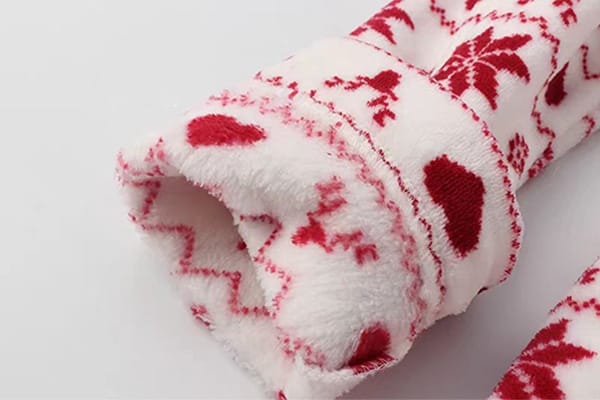
Check movement while sitting, bending and lifting the arms. Review the seat and thigh area of the trousers, the top’s underarm, and any cuff or waistband that combines several layers. These observations help identify whether an uncomfortable result comes from the fabric, the construction or insufficient ease.
The sample should also show the intended trims. A soft body fabric does not resolve a stiff label edge, abrasive seam or restrictive elastic. Review the complete set as the customer will receive it, including which component is paired with each size.
Distinguish Pilling, Shedding and Matting
Pilling concerns the formation of small fiber accumulations on the surface. Shedding concerns loose fibers coming away, while matting concerns changes to the surface structure. Buyers should describe which condition is unacceptable rather than using “anti-pilling” to cover every appearance issue.
For formal surface evaluation, ISO 12945-2:2020 specifies the modified Martindale method for pilling, fuzzing and matting. Confirm applicability, preparation and evaluation conditions with the testing party, and agree your required result. The existence of the method does not establish that either candidate has passed it.
Ask whether the result covers the actual finish and color being proposed. A report for another fabric or an earlier finish may be useful background, but it should not silently become evidence for the current order. For a wider explanation of production checks, see the pajama pilling prevention guide.
Review Appearance After the Agreed Care Process
Examine the surface after laundering as well as before it. Note changes in loft, flattening, loose fibers, color appearance, seam shape and overall dimensions. Keep the care conditions consistent so the candidates are being compared on a common basis.
ISO 6330:2021 describes domestic washing and drying procedures used for textile testing. Select the relevant procedure with the laboratory or testing party rather than citing the standard name without a defined wash and dry combination. Your acceptance conditions must still be specified separately.
Do not infer a care instruction solely from the fabric category. Trims, decoration and construction can also affect appropriate care. Final care information should be supported by the selected material and finished sample, not copied from a different fleece product.
Record the appearance under consistent lighting and describe the change rather than relying only on a photograph. The nap can reflect light differently depending on direction; an apparent shade difference may need physical examination before it is classified as a dyeing issue.
Use a Swatch-to-Set Comparison Sheet
The following worksheet keeps the decision tied to evidence. It does not claim that coral fleece or polar fleece always performs better in a particular row. Complete it for the two actual references being considered.
| Comparison point | What to record for each candidate | Why it affects the choice |
|---|---|---|
| Material identity | Composition, swatch code and finish | Makes the selection reproducible |
| Fabric weight | Value, unit and agreed variation | Prevents an undefined change at ordering |
| Inner and outer surface | Pile, softness and orientation | Connects appearance with skin-side feel |
| Made-up edges | Cuff, waistband and seam bulk | Reveals issues hidden by a flat swatch |
| Movement | Seat, knee, underarm and waist observations | Separates garment fit from surface appeal |
| After-care appearance | Matting, shedding, color and shape observations | Shows whether the selected care routine suits the set |
| Packing recovery | Appearance after representative packing | Tests whether presentation survives handling |
Set the priority of each row before reviewing the samples. Otherwise, the team may choose a favorite surface first and dismiss every later concern as unimportant. A merchandising preference should not quietly overrule a documented fit or care requirement.
Check Color Direction and Cut-Panel Consistency
Raised surfaces can look different when the direction of the pile changes. Ask the supplier how the proposed fabric will be oriented during cutting and how that orientation will be maintained across the top and trousers. Review the actual sample under more than one viewing angle.
For printed or textured fleece, look at joins and component placement as well as the overall print. A repeated motif can become awkward at a center seam or look unbalanced across a complete set. Define the important placement requirements with a sample or clear artwork instruction.
Do not assume an approval in one color settles every appearance question. A darker or lighter shade can make surface change, seams or loose fibers more visible. Select review samples according to the risks of the planned range, and keep the approved shade references identified.
Consider Folding, Packing and Recovery
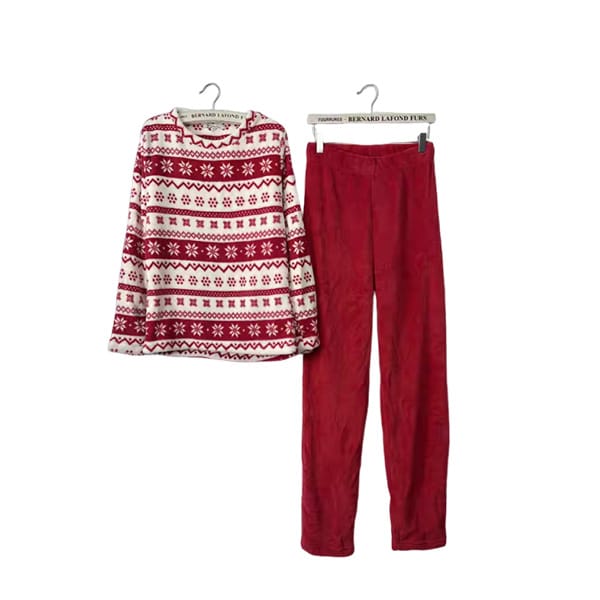
A plush garment may look different immediately after unpacking than it did on a hanging sample. Test the intended fold and packaging with the actual set. Observe whether compression leaves temporary marks, changes the visible pile or makes size identification difficult.
Agree a reasonable method for evaluating unpacked presentation. A comparison is not useful if one sample has just been removed from a compressed pack and the other has been hanging for several days. Record the conditions so the buying team can interpret what it sees.
Do not change packaging only to preserve the appearance of an unrepresentative sample. The retail and logistics teams need a method that can actually be followed for the order. If presentation depends on handling after unpacking, decide whether that is appropriate for the sales channel before approving the fabric.
Write a Material Decision, Not Just a Preference
The final decision should name the chosen reference and explain why it fits the brief. Include the agreed weight, composition, finish, color, component orientation and required checks. List any remaining sample changes separately so “fabric approved” is not mistaken for approval of the whole garment.
Use the coral fleece pajama set page as a starting point for a product discussion, not as proof of an untested performance level. Share the swatch comparison and the customer-use requirement when asking Xiuxinyang to evaluate a custom set.
If neither material meets the requirements, revise the specification rather than forcing a winner. The next step may be a different fleece weight, surface treatment, garment shape or another confirmed material category. Every change should lead back to an identifiable sample.
When reviewing revisions, change one important variable at a time where practical. If weight, pile finish and trouser shape all change together, the team may prefer the result without understanding which change solved the problem. A clear development record is more useful when the same issue appears in another style or during a reorder.
Ask the supplier to label revised samples so they cannot be confused with rejected references. Include the material code and revision date in photographs and comments. A plain note saying “new fleece” is difficult to trace once several similar swatches are on the table, especially when the visible difference is subtle but the hand feel is important.
Conclusion
Coral fleece vs polar fleece pajamas should be decided through identified materials and complete-set samples. Compare the surface customers want with the bulk, care behavior and presentation they will actually experience. Names and weight figures are useful descriptors, but they do not replace that evaluation.
To move the decision forward, send Xiuxinyang your preferred surface reference, intended use and set quantities. Include the fabric weight if confirmed, or state that you need suitable swatch options.
FAQ
Is coral fleece always softer than polar fleece?
No universal ranking is reliable from the names alone. Fiber specification, pile and finishing affect hand feel. Compare the actual references before and after the agreed care process, and include seams and edges rather than judging only a flat swatch.
Can we specify only the desired thickness?
Describe the desired feel and provide a reference, but ask the supplier to translate that request into an identified fabric specification. Thickness, mass per area and warmth are different properties. Confirm the proposed material with a swatch and finished sample.
Does an anti-pilling description mean the fabric will never shed?
No. Pilling and shedding are different concerns. Request information or assessment appropriate to each concern and the actual proposed fabric. Avoid an absolute “never” claim unless there is a defensible basis for the precise conditions being described.
Should cuffs use the same fleece as the body?
That depends on the design and required fit. Review the proposed cuff construction for bulk, recovery and comfort. A different cuff material introduces another material and care interaction that should be assessed in the finished sample.
Can we order the trousers separately to trial a fleece?
Xiuxinyang does not sell the tops and trousers of its pajama sets separately. Discuss swatches and complete-set sample development instead. The final assessment should consider both components because their fit, appearance and care behavior must work together.