Pajama Size Chart: How to Get the Right Fit for Your Brand
A pajama can have the right fabric, the right color and a great design, but if the fit is wrong, customers will notice immediately.
Sleepwear is expected to feel relaxed and comfortable. That does not mean it should simply be made larger.
The difference between a comfortable pajama and an oversized one often comes down to a few centimeters in the right places: chest width, hip measurement, rise, inseam, sleeve length and overall garment length.
For clothing brands, getting those measurements right becomes even more important when developing a collection for different markets. A size chart has to work across multiple sizes while keeping the intended silhouette consistent.
So, how should you build a pajama size chart?
The answer starts with the type of pajama, the target customer and the fit you want to create.

Table of Contents
Pajama Size Chart: Quick Reference
There is no universal pajama size chart because brands use different size standards and fit preferences.
The following is a general adult reference rather than a replacement for your own approved measurement specification.
| Size | Bust / Chest | Waist | Hip |
|---|---|---|---|
| XS | 32–34 in | 25–27 in | 34–36 in |
| S | 34–36 in | 27–29 in | 36–38 in |
| M | 36–38 in | 29–31 in | 38–40 in |
| L | 38–41 in | 31–34 in | 40–43 in |
| XL | 41–44 in | 34–37 in | 43–46 in |
| XXL | 44–47 in | 37–40 in | 46–49 in |
These figures are only a starting point.
A brand targeting the US market may use a different size range from one selling primarily in Europe or Asia. Even within the same market, different brands can define S, M or L differently.
For private label sleepwear, your own size specification should always take priority.
What Measurements Should Be Included in a Pajama Size Chart?
A good size chart should make it easy to understand how the garment is expected to fit.
For pajamas, the most important measurements usually include:
Bust or Chest
Measure around the fullest part of the chest.
This is particularly important for pajama tops, button-up shirts and fitted sleepwear.
If the design is intentionally oversized, the garment measurement will naturally be larger than the body measurement.
Waist
Waist measurement is especially important for pajama pants and shorts.
Elastic waistbands provide some flexibility, but the finished waistband still needs to be comfortable.
Too tight can make a pajama uncomfortable for sleeping.
Too loose can cause the pants to shift during movement.
Hip
Hip measurement matters for pajama bottoms, especially women’s styles.
The garment needs enough room for sitting and moving without creating excessive fabric around the body.
Inseam
Inseam is the distance from the crotch to the bottom of the leg.
This measurement is particularly important for full-length pajama pants.
A few centimeters can make a noticeable difference in how the pants sit around the ankle.
Sleeve Length
Sleeve length should be considered together with shoulder width and armhole construction.
A long sleeve that looks correct on the measurement sheet can still feel uncomfortable if the armhole or upper sleeve is too narrow.
Garment Length
For pajama tops, measure from the approved reference point to the hem.
For nightshirts and long sleepwear, body length becomes even more important.
Body Measurements vs Garment Measurements
One of the most common sources of confusion when developing a size chart is the difference between body measurements and finished garment measurements.
They are not the same thing.
A body size chart describes the person wearing the garment.
A garment specification describes the actual finished product.
For example, a pajama top designed for someone with a 36-inch chest may have a finished chest measurement significantly larger than 36 inches.
That difference is intentional.
It creates ease.
What Is Ease in Pajamas?
Ease is the additional space between the wearer’s body and the finished garment.
Sleepwear generally needs enough ease to allow comfortable movement.
A close-fitting pajama may use relatively little ease.
A relaxed pajama set may use substantially more.
An oversized lounge set may use even more.
This means there is no single “correct” amount of ease.
It depends on the intended fit.
How Much Ease Should Pajamas Have?
There is no universal number because pajama silhouettes vary significantly.
A fitted women’s pajama top may be relatively close to the body.
A classic button-up pajama may have moderate ease.
A relaxed lounge set may be deliberately oversized.
The fabric also matters.
A stretchy jersey pajama can use a different fit strategy from a woven cotton pajama.
Modal with elastane behaves differently again.
When developing a new product, start with the intended silhouette and fabric rather than applying one fixed ease allowance to every style.
Slim, Regular or Relaxed: Define the Fit First
Before building your pajama size chart, decide what “fit” actually means for your collection.
Slim Fit Pajamas
Slim-fit pajamas sit closer to the body.
They can look more polished and contemporary, but they require more accurate grading and careful consideration of stretch.
They are often used in fashion-oriented sleepwear and fitted lounge sets.
Regular Fit Pajamas
Regular fit provides a balance between comfort and shape.
This is a practical direction for many everyday pajama collections.
Relaxed Fit Pajamas
Relaxed pajamas provide additional room throughout the garment.
This is particularly common in traditional sleepwear and lounge-focused collections.
The important thing is consistency.
If the S is relaxed but the M suddenly becomes very oversized, the grading is not working properly.
Pajama Size Grading Matters More Than You Might Think
Once the base size is approved, the pattern needs to be graded into other sizes.
This is where many brands discover that simply increasing every measurement by the same amount does not work.
Bodies do not grow proportionally in exactly the same way.
Chest, waist, hip, sleeve length and body length can all require different grading rules.
A professional size range therefore needs to be developed systematically from an approved base size.
For example, if your M is the base size, the S and L should be developed around that reference rather than independently.
This helps keep the silhouette consistent throughout the collection.
How to Build a Pajama Size Chart for Women
Women’s pajamas generally need particular attention to bust, waist and hip proportions.
For a two-piece set, the top and bottom may also require different sizing considerations.
A customer may have a relatively smaller upper body and fuller hips, for example.
This is one reason some brands offer separates or more flexible sizing rather than relying entirely on a single top-and-bottom size.
For a standard set, however, the pattern should be developed around the intended target customer.
Women’s Pajama Measurements
A typical specification may include:
- Bust
- Waist
- Hip
- Shoulder width
- Sleeve length
- Top length
- Armhole
- Pant waist
- Front rise
- Back rise
- Inseam
- Leg opening
Not every style needs every measurement.
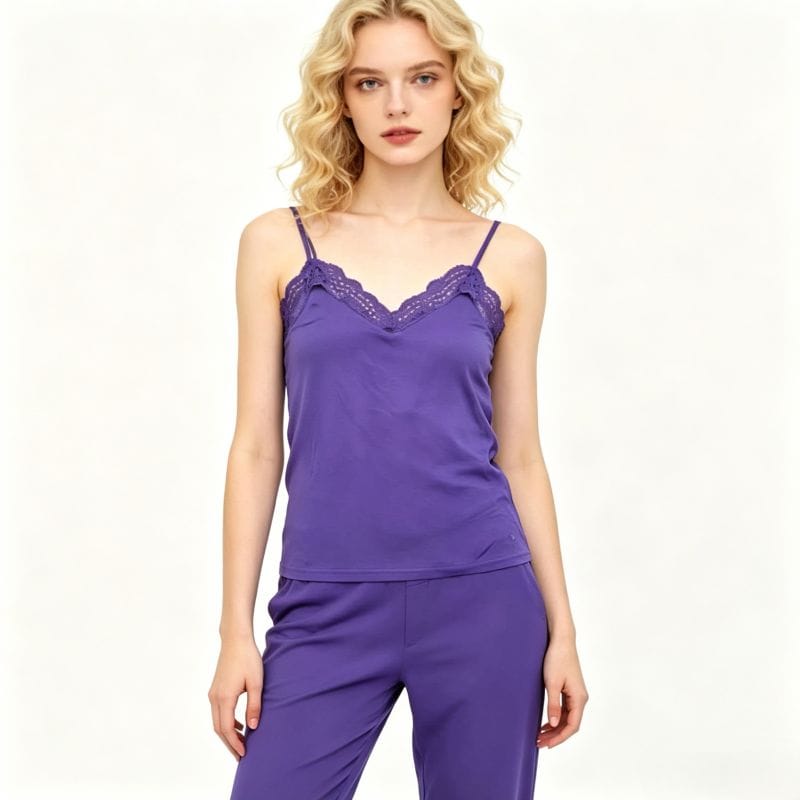
A camisole set will have different requirements from a long-sleeve button-up pajama.
How to Build a Pajama Size Chart for Men
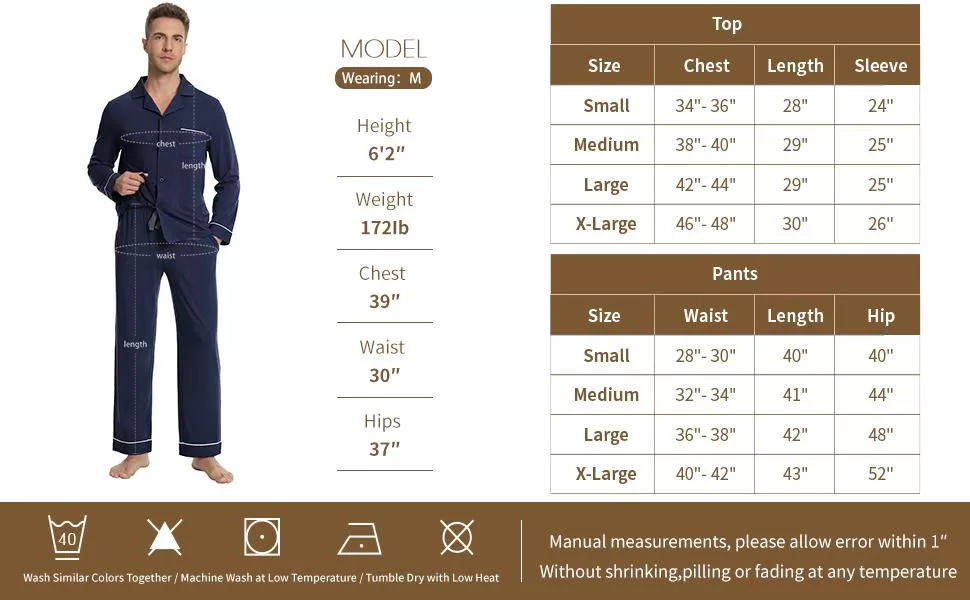
Men’s pajama sizing generally places more emphasis on chest, waist, hip and inseam measurements.
For classic men’s pajamas, the top often has a relatively relaxed fit.
The pants also need enough room through the seat and thigh to remain comfortable when sitting or sleeping.
Men’s Pajama Measurements
Depending on the design, a men’s specification may include:
- Chest
- Waist
- Hip
- Shoulder
- Sleeve length
- Shirt length
- Pant waist
- Rise
- Thigh
- Inseam
- Leg opening
Again, the actual measurement list should reflect the product.
Pajama Shorts Need Different Measurements
Short pajama sets look simple, but the bottom still requires careful measurement.
The most important areas are usually:
waist + hip + rise + inseam + leg opening
The inseam may be relatively short, but that does not make it unimportant.
A very short inseam changes the overall silhouette and can make the shorts feel restrictive if the rise or leg opening is not balanced correctly.
Full-Length Pajama Pants Need More Attention to Rise
Rise is particularly important for pajama pants.
If the rise is too short, the waistband can sit uncomfortably low.
If it is too long, the garment can create excessive fabric around the crotch.
For sleepwear, the goal is usually comfort rather than a sharply tailored trouser fit.
That does not mean the rise can be guessed.
It should be developed together with the waistband, hip, thigh and inseam measurements.
How Fabric Changes Pajama Fit
The same pattern can look completely different when made from different fabrics.
A cotton poplin pajama holds more structure.
A cotton jersey pajama stretches with the body.
A modal pajama can fall much more fluidly.
A fleece pajama creates additional bulk.
This is why fabric approval and pattern development should happen together.
Stretch Fabrics
If the fabric contains elastane, the finished garment may require different measurements from a non-stretch woven version.
The amount of stretch should be measured rather than assumed.
Heavy Fabrics
Winter fleece and other heavy fabrics may require additional consideration around:
- armholes
- cuffs
- waistbands
- collars
- seams
A pattern that works for lightweight cotton may not be ideal for thick fleece.
Should Pajamas Be Loose?
Usually, pajamas should provide enough room for comfortable movement.
But “loose” does not mean the same thing for every product.
A luxury silk pajama may have a fluid but relatively controlled silhouette.
A traditional cotton pajama can have more ease.
A fleece winter pajama may need extra room because of the fabric thickness.
The intended fit should therefore be defined before measurements are finalized.
Instead of telling a manufacturer:
“Make it loose.”
it is much better to provide:
“Relaxed fit with approximately X cm of additional chest ease and Y cm of additional hip ease.”
That gives the production team something measurable to work with.
How to Measure a Pajama Sample Correctly
Once the first sample arrives, do not rely only on trying it on.
Measure the garment flat and compare it with the specification sheet.
Lay the garment on a flat surface without stretching it.
Then measure the approved points consistently.
For example:
Chest
Measure straight across from underarm to underarm and multiply by two if the specification uses a full circumference.
Waist
Measure according to the approved waistband construction.
Elastic waistbands may need to be recorded both relaxed and stretched.
Hip
Measure at the specified distance below the waistband or according to your tech pack.
Inseam
Measure from the crotch point to the bottom hem following the approved measurement method.
Consistency is important.
If different samples are measured using different methods, the numbers become difficult to compare.
What Is the Difference Between US, UK and EU Pajama Sizes?
International sizing is not completely standardized.
A US M, UK M and EU size designation should not automatically be treated as identical.
Brands selling internationally should decide which sizing system will appear on the product and website.
A customer-facing size chart can then provide body measurements in inches and/or centimeters.
For an international brand, it can also be useful to show:
- US size
- UK size
- EU size
- body measurements
- garment measurements where appropriate
The exact conversion should be based on the brand’s approved size standard rather than a generic online chart.
Why One Generic Pajama Size Chart Is Not Enough
A size chart should represent your actual product.
For example, an oversized pajama shirt and a fitted camisole should not necessarily use the same garment measurements simply because both are labelled S.
The label is the same.
The fit is not.
This is especially important for brands that offer multiple sleepwear categories.
Your collection might include:
- classic pajamas
- oversized pajamas
- fitted sleepwear
- lounge sets
- nightshirts
- pajama shorts
- robes
Each category can have its own fit block.
What Should a Brand Include in a Customer-Facing Size Chart?
The website version should be simple.
Customers generally do not need to see every technical measurement used by the factory.
A useful consumer size chart can include:
| Size | Bust | Waist | Hip |
|---|---|---|---|
| XS | 32–34 in | 25–27 in | 34–36 in |
| S | 34–36 in | 27–29 in | 36–38 in |
| M | 36–38 in | 29–31 in | 38–40 in |
| L | 38–41 in | 31–34 in | 40–43 in |
| XL | 41–44 in | 34–37 in | 43–46 in |
Then add a short explanation showing customers where and how to measure.
For more fitted products, additional measurements may be necessary.
For loose-fitting pajamas, a simple body measurement chart may be sufficient if the product description clearly explains the intended fit.
What Should Be Included in a Manufacturer’s Size Specification?
The factory’s technical document should be more detailed.
It may include:
- Base size
- Finished garment measurements
- Tolerances
- Grading increments
- Fabric stretch
- Shrinkage allowance
- Measurement method
- Construction details
- Waistband measurements
- Sleeve measurements
- Pant measurements
This document becomes an important reference during sample approval and bulk production.
What Are Acceptable Measurement Tolerances?
No garment can be produced to exactly the same measurement down to the last millimeter.
Fabric behavior, sewing operations and production processes create small variations.
That is why technical specifications normally include tolerances.
The tolerance should be appropriate to the garment and measurement.
A waist measurement and a long garment length may not use the same tolerance.
The important thing is to define the acceptable range before bulk production rather than deciding after production is complete.
How to Avoid Common Pajama Fit Problems
Several fit problems appear repeatedly during sleepwear development.
The Pajama Top Feels Too Tight
Check the chest, armhole and sleeve measurements.
If the fabric has limited stretch, the issue may become more noticeable.
The Pants Slide Down
Check the waistband construction, elastic recovery, waist measurement and rise.
A waistband that is technically within specification can still feel loose if the elastic recovery is inadequate.
The Pants Feel Tight When Sitting
Look at hip, thigh and rise measurements rather than only the waist.
Sleepwear needs to accommodate movement.
The Sleeves Are Too Long
Check sleeve length together with shoulder width.
A change in shoulder position can alter the effective sleeve length.
The Pajama Looks Too Oversized
The problem may not be the chest measurement alone.
Check shoulder width, body length, sleeve width and overall ease.
Good fit is about proportions.
How Xiuxinyang Handles Pajama Sizing
At Xiuxinyang, pajama sizing can be developed around the brand’s own fit requirements rather than forcing every product into one generic measurement system.
If you already have a tech pack, graded size chart or reference sample, those specifications can be used as the starting point.
If you are developing a new style, the process can begin with the intended customer, garment silhouette and fit.
A first sample then provides an opportunity to review measurements, proportions and overall appearance before moving into bulk production.
This is especially important when a brand is developing several pajama styles at once.
A classic cotton pajama, an oversized lounge set and a fitted modal pajama may all need different fit blocks even when they share the same basic size labels.
You can explore the Xiuxinyang pajama and sleepwear products to see different sleepwear styles.
If you are building a private label collection from scratch, our private label pajama manufacturing guide can also help you understand the wider development process.
FAQ
How do I know what pajama size I need?
Compare your body measurements with the brand’s size chart, particularly your bust or chest, waist and hip. Always check the individual product’s fit description because sizing can vary between styles.
Should pajamas be loose or tight?
Most pajamas are designed with enough ease for comfortable movement. The amount of looseness depends on whether the product is fitted, regular or relaxed.
Are pajama sizes the same as clothing sizes?
Not necessarily. Sleepwear often includes additional ease, so the garment measurements can be larger than those of fitted everyday clothing.
How should pajama pants fit?
Pajama pants should provide enough room through the waist, hip, rise and thigh for comfortable movement without constantly slipping or restricting the wearer.
How do I create a pajama size chart for my clothing brand?
Start with a defined base size, approved body or garment measurements, intended fit and grading rules. Then test the graded samples to make sure the silhouette remains consistent across the size range.
Do men’s and women’s pajamas use the same size chart?
No. Men’s and women’s sleepwear generally use different body proportions and measurement standards, so separate size specifications are normally required.
Final Thoughts
A good pajama size chart is more than a list of XS, S, M, L and XL.
It is a reflection of how your brand wants its products to fit.
Start with the customer and the silhouette. Define the base size, establish the key measurements, determine the amount of ease and then grade the pattern consistently across the size range.
For production, always separate body measurements from finished garment measurements and test the actual fabric before finalizing the fit.
When those details are handled properly, the result is not simply a pajama that technically fits.
It is sleepwear that feels comfortable, moves naturally and looks consistent across the collection.
Developing Custom Pajamas for Your Brand?
If you have a pajama design, reference sample or existing size chart, Xiuxinyang can work with your specifications during sample development and production.
Contact Xiuxinyang to discuss your next sleepwear project.