Best Fabric for Pajamas: Cotton, Modal, Viscose, Velvet or Fleece?
Ask five sleepwear buyers what the best fabric for pajamas is and you may get five different answers.
One will say cotton because customers already understand it.
Another will choose modal for its soft, fluid hand.
A winter sleepwear buyer may prefer coral fleece, while a fashion-focused brand might be looking for velvet. A lightweight summer collection could point in an entirely different direction.
That is because there is no single pajama fabric that works for every product.
The right choice depends on who will wear the pajamas, when they will wear them, how the garment is designed, what price point the brand is targeting, and how the fabric behaves after repeated washing.
For brands developing private label sleepwear, fabric selection is one of the earliest decisions that can either simplify the rest of development or create problems all the way through production.
Here is how the most common pajama fabrics actually compare from a product-development point of view.
Table of Contents
What Makes a Fabric Suitable for Pajamas?
Softness is usually the first thing people notice when touching sleepwear fabric.
It should not be the only thing they check.
A pajama fabric has to perform in conditions that are quite different from many everyday garments. It stays against the skin for long periods, gets washed frequently, and needs to remain comfortable while the wearer moves, sits, sleeps, and changes temperature through the night.
When evaluating the best fabric for pajamas, we normally look at several characteristics together.
Hand Feel
The fabric should feel comfortable against the skin.
This is especially important for sleepwear because rough seams, stiff finishes, or an unpleasant surface are far more noticeable after several hours of wear.
Breathability
Breathability matters for warm climates and customers who dislike feeling overheated at night.
Cotton and a number of regenerated cellulose fabrics are commonly chosen for this reason. Consumer sleepwear guidance also frequently highlights cotton and modal for airflow and comfort.
Drape
Drape describes how a fabric falls around the body.
A fluid women’s lounge set may benefit from a soft modal or viscose fabric, while a structured woven pajama shirt needs a fabric with more body.
Stretch and Recovery
Stretch can improve comfort, but recovery is equally important.
If a fabric stretches easily but does not return to shape, knees, cuffs, waistbands, and necklines can start to look loose after wear.
Shrinkage
Sleepwear is washed often, so dimensional stability matters.
A fabric that changes noticeably after laundering can affect sleeve length, inseam, top length, and overall fit.
Warmth
The fabric for a summer short set and a winter fleece pajama should not be selected using the same criteria.
Season has to be part of the decision.
Durability
A beautifully soft sample is not much use if the fabric pills badly after several washes.
Brands should think beyond the first touch and consider how the fabric will look after customers have actually lived in it.
Cotton Pajamas: The Familiar All-Rounder
Cotton remains one of the most widely used sleepwear fibers for good reason.
Customers understand it, it can be comfortable against the skin, and it is available in a very wide variety of fabric constructions.
But saying you want “cotton pajamas” is still only the beginning of the specification.
Cotton can be turned into:
- jersey
- interlock
- rib
- poplin
- flannel
- waffle knit
- brushed knit
- seersucker
- many other woven and knitted structures
Each produces a different pajama.
A lightweight cotton poplin shirt set can feel crisp and airy. Cotton jersey feels softer and more relaxed. Flannel brings warmth. Waffle adds visible texture.
That is why two products labelled “100% cotton” may have almost nothing in common when you put them side by side.
Where Cotton Works Well
Cotton is a strong option for:
- everyday pajama sets
- lightweight sleepwear
- men’s pajamas
- classic button-front sets
- children’s sleepwear, subject to applicable product requirements
- summer collections
- casual loungewear
What Buyers Should Watch
Shrinkage deserves attention.
Cotton structures can react differently depending on yarn, knitting or weaving method, finishing, and wash conditions.
If finished measurements are important, do not approve a cotton fabric without understanding how it behaves after washing.
Also pay attention to surface finish.
A cotton fabric can feel exceptionally soft because of a finish applied during production, but the hand feel may change after laundering.
Testing the finished garment gives you a much more useful picture than judging a fresh fabric roll alone.

Modal Pajamas: Soft, Fluid and Increasingly Popular
Modal has become a familiar material in modern sleepwear.
Its strongest appeal is usually hand feel.
Compared with many conventional cotton fabrics, modal knits can feel smoother and more fluid, which works especially well for styles designed to fall softly against the body.
Recent sleepwear content and product comparisons continue to place modal prominently alongside premium cotton fabrics, particularly for softness and drape.
For brands developing women’s pajamas or lounge sets, it is easy to understand why.
A good modal blend can make even a relatively simple silhouette feel more refined.
Where Modal Works Well
Modal is commonly considered for:
- women’s pajama sets
- soft lounge sets
- nightshirts
- lightweight robes
- relaxed tops
- stretch sleepwear
- premium-feel basics
Does Modal Need Spandex?
Not always.
But many commercially produced modal pajama fabrics include a small amount of elastane or spandex to add stretch and improve recovery.
The exact blend should depend on the garment.
A very loose silhouette may not need the same stretch as a close-fitting lounge set.
Do not select a blend purely because it is commonly used elsewhere.
Look at what the garment actually needs to do.
What Buyers Should Watch
Modal can be very soft, but softness should not distract from dimensional stability.
Fabric construction, weight, finishing, and washing all influence performance.
If a modal pajama is designed with a very fluid silhouette, even moderate shrinkage can noticeably change proportions.
Sampling and wash testing are therefore important.
Cotton vs Modal: Which Is Better for Pajamas?
This is one of the most useful comparisons for brands because the two fabrics can occupy similar sleepwear categories while creating a noticeably different product.
| Factor | Cotton | Modal |
|---|---|---|
| Hand feel | Soft to crisp depending on construction | Typically smooth and fluid |
| Drape | Varies widely | Usually more fluid |
| Familiarity | Very high | Increasingly familiar |
| Breathability | Generally good | Often suitable for lightweight sleepwear |
| Structure | Can range from firm to relaxed | Usually softer and less structured |
| Stretch | Depends on construction/blend | Commonly blended with elastane |
| Typical positioning | Everyday to premium | Often soft/premium loungewear |
Neither is automatically better.
If you want a traditional woven button-front pajama with a slightly crisp appearance, cotton may be the better starting point.
If you want a soft knit set that drapes around the body, modal may fit the design better.
The decision should come from the intended product—not from which fiber sounds more premium.
Cotton-Modal Blends Can Be a Useful Middle Ground
Sometimes a brand wants the familiarity of cotton but a softer, more fluid feel.
That is where blended fabrics can become interesting.
Cotton-modal blends are commonly used in sleepwear because they can combine characteristics of both fibers. Current pajama manufacturing guides continue to list cotton-modal blends among common sleepwear fabric options.
The exact result depends on the blend ratio and construction.
A blend with more cotton may retain more of cotton’s familiar hand and body.
A higher modal proportion may make the fabric feel smoother and more fluid.
Again, the fiber percentage is not enough information on its own.
Always look at the finished fabric.
Viscose Pajamas: Excellent Drape, but Know What You Are Buying
Viscose is another common material in lightweight pajamas and loungewear.
It belongs to the regenerated cellulose fiber family and is often chosen because it can produce a soft, flowing fabric.
That makes it especially useful when a design depends on movement.
Think of loose pajama pants, relaxed shirts, wide-leg lounge bottoms, night dresses, or softly draped sets.
Where Viscose Works Well
Viscose can suit:
- women’s sleepwear
- flowing pajama pants
- robes
- nightdresses
- lightweight lounge sets
- summer sleepwear
Viscose vs Modal
The two names are sometimes treated casually as if they mean almost the same thing.
From a sourcing point of view, that is not useful.
Modal is part of the broader rayon/regenerated cellulose family, but the fibers and resulting fabrics can differ in strength, stability, finishing, and performance.
Recent technical sleepwear comparisons also highlight measurable differences in shrinkage behavior between modal and other regenerated cellulose fabrics.
For buyers, the practical lesson is straightforward:
Do not buy based on the fiber name alone.
Ask for the actual fabric specification and test the fabric you intend to use.
Fleece Pajamas: Warmth Changes the Design Rules
Fleece is a completely different proposition from cotton jersey or modal.
You are no longer trying to create a lightweight draped garment.
The product is built around warmth and softness.
That makes fleece well suited to:
- winter pajama sets
- cold-weather homewear
- children’s winter sleepwear where applicable
- robes
- holiday collections
- cozy lounge sets
Fabric Weight Matters More
A fleece that feels luxuriously thick as a fabric swatch can become bulky once several layers meet at a seam.
Collars, cuffs, pocket edges, and waistbands can all become thicker than expected.
The pattern and construction need to account for that.
Watch the Surface
For brushed or pile fabrics, check:
- shedding
- pilling
- pile consistency
- surface appearance
- wash recovery
A pajama that looks fluffy and rich before the first wash should still look presentable afterward.
Think About Seasonality
Fleece tends to have a narrower selling window than year-round lightweight sleepwear.
That makes timing more important.
Winter and holiday programs should be planned early enough to leave room for sample revisions and shipping.
Coral Fleece Pajamas: Softness With a Strong Seasonal Identity
Coral fleece is widely associated with plush winter pajamas and homewear.
It can feel very soft, photograph well, and create an obvious cozy proposition for customers.
It also has some practical design consequences.
Because the fabric is thick and has pile, very small construction details may not show clearly.
Fine piping, tiny embroidery, or delicate seam work that looks good on jersey may not produce the same result on coral fleece.
Instead, the product often benefits from simpler shapes and details that can visually compete with the fabric.
When developing coral fleece pajamas, check:
- GSM
- pile height
- shedding
- color consistency
- seam bulk
- washing behavior
Do not judge it only by how fluffy the initial sample feels.
Velvet Pajamas: A Fashion Fabric, Not Just a Warm Fabric
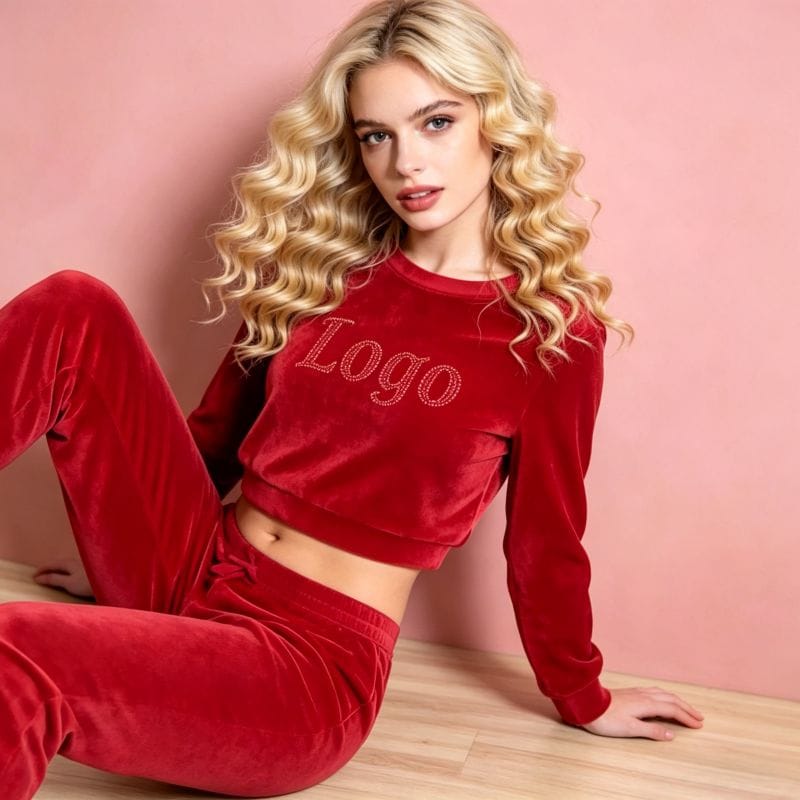
Velvet is often chosen because of appearance rather than pure functionality.
It reflects light differently depending on pile direction, giving the garment a richer and more fashion-oriented surface.
That makes velvet pajamas particularly suitable for:
- holiday collections
- gift-oriented sleepwear
- premium winter sets
- fashion loungewear
- lounge-to-party crossover products
Cutting Direction Matters
Velvet has a nap.
If garment panels are cut in inconsistent directions, color can appear different even when they come from the same fabric.
This makes cutting control important.
Stretch Velvet Needs Different Handling
Some sleepwear uses knitted stretch velvet rather than traditional woven velvet.
That changes how the fabric behaves during cutting, sewing, and fitting.
Stretch velvet may provide more comfort but can also move during construction.
Do Not Overcomplicate the Style
Velvet already provides visual interest.
Often the strongest designs let the fabric do the work rather than adding too many decorative elements.
What About Bamboo Pajama Fabric?
Bamboo-related pajama fabrics have become increasingly visible in sleepwear marketing.
The terminology needs some care.
Many products marketed as “bamboo pajamas” are actually made from regenerated cellulose fibers such as bamboo viscose rather than fabric made directly from mechanically processed bamboo fiber.
This distinction matters for brands because fiber-content and environmental claims should be accurate.
From a product perspective, bamboo viscose fabrics are often chosen for softness and drape, putting them in a similar conversation to modal and other regenerated cellulose sleepwear fabrics.
Recent 2026 sleepwear manufacturing content continues to compare bamboo viscose and modal specifically because brands are evaluating both for soft, lightweight pajamas.
If you are developing a bamboo-related sleepwear program, pay particular attention to:
- correct fiber labeling
- shrinkage
- fabric stability
- pilling
- weight
- blend composition
- substantiation of sustainability claims
Avoid using marketing language that goes beyond what the material documentation supports.
Which Pajama Fabric Is Best for Hot Weather?
For warm-weather pajamas, most brands look for some combination of:
- low fabric weight
- good airflow
- comfortable moisture handling
- non-clingy hand feel
- soft surface
Lightweight cotton, modal, viscose, and certain other breathable or regenerated-cellulose fabrics are often used for this purpose. Consumer sleepwear guidance also regularly points toward cotton, modal, bamboo-derived viscose, and linen for people concerned about overheating.
But construction matters as much as fiber.
A heavy cotton fabric may feel warmer than a lightweight modal knit.
A densely knitted fabric may behave differently from an open, airy construction even when the fiber content is the same.
So when a buyer asks us for a “summer fabric,” the more useful discussion is about:
fiber + GSM + construction + fit.
Not fiber alone.
Which Pajama Fabric Is Best for Winter?
Winter sleepwear usually moves in the opposite direction.
The product should retain more warmth and often has a softer, cozier surface.
Common directions include:
- fleece
- coral fleece
- flannel
- heavier cotton knits
- brushed fabrics
- velvet
Flannel remains a classic winter pajama option and continues to appear prominently in current sleepwear fabric guides and consumer product testing.
The right option depends on the customer.
Someone buying premium traditional pajamas may prefer cotton flannel.
A mass-market holiday family pajama collection might use fleece.
A fashion brand may choose velvet.
“Winter” describes the season, not the fabric specification.
Knit or Woven Fabric for Pajamas?
This is another decision that changes the personality of the garment.
Knit Pajamas
Knits generally offer more natural stretch and a softer, more casual appearance.
They are commonly used for:
- modal sets
- jersey pajamas
- T-shirt pajama sets
- lounge sets
- stretch sleepwear
Woven Pajamas
Woven fabrics tend to create a more structured silhouette.
Classic button-front pajama shirts are often made this way.
Common examples include:
- cotton poplin
- flannel
- seersucker
- lightweight woven viscose
If your reference style has a crisp collar, clean piping, and tailored appearance, switching it to a very soft knit can completely change the product.
Start with the silhouette you want and select the fabric structure accordingly.
GSM Is Useful, but It Is Not a Quality Score
Buyers often ask:
“What GSM should pajamas be?”
There is no universal answer.
GSM simply describes fabric weight per square meter.
It does not directly tell you whether the fabric is good.
A beautifully made lightweight summer pajama may have a low GSM because that is exactly what the product needs.
A thick winter pajama needs something completely different.
The best way to use GSM is as a control specification.
Once you have approved a fabric, its weight becomes one useful reference for ensuring future production stays close to the approved standard.
Do not use GSM as a ranking system where higher automatically means better.
Shrinkage Should Be Checked Before Finalizing the Pattern
One of the most expensive mistakes in pajama production is finalizing measurements around an untested fabric.
Imagine a pair of pajama pants that is perfect before washing.
Then the inseam shortens noticeably after the first wash.
The sewing may be flawless.
The measurements may have matched the original specification perfectly.
The actual problem began earlier—the fabric behavior was not properly accounted for.
This is why fabric and pattern development should not be treated as separate tasks.
Before bulk production, it is useful to understand how the selected fabric reacts to the intended care method.
If necessary, measurements can then be adjusted with that behavior in mind.
Check Pilling Before You Fall in Love With Softness
Very soft knits are attractive during sourcing because buyers notice the hand immediately.
Pilling often appears later.
It develops through friction and wear, particularly in areas such as:
- inner thighs
- underarms
- sides of the body
- sleeves
- areas rubbing against bedding
A fabric that looks excellent on day one can lose its premium appearance surprisingly quickly if surface durability is weak.
For repeat-order programs, that matters because customer reviews eventually reveal what a swatch cannot.
When comparing sleepwear fabrics, ask your supplier how pilling performance is evaluated and include appropriate testing where the product or market requires it.
Color Can Change the Way the Same Fabric Feels
Something buyers sometimes notice during sampling is that two colors in the “same fabric” do not feel exactly the same.
This can happen because dyeing and finishing processes influence the surface.
Dark shades and light shades may also behave differently during production.
For collections with several colors, do not automatically assume that approving one color means every other color can be ignored.
At minimum, compare the bulk colors against the approved standard and check whether any significant differences have appeared.
Printed Pajamas Need Fabric and Print to Be Chosen Together
If the collection includes an all-over print, the fabric decision cannot be separated from the printing method.
Some fabrics accept certain printing processes better than others.
Stretch can also change how a print looks when worn.
For printed pajamas, discuss:
- fiber composition
- base color
- print method
- artwork scale
- repeat size
- colorfastness
- hand feel
- stretch distortion
- washing
A beautiful digital file is only the beginning.
The real product is the artwork after it has been printed, sewn, worn, and washed.
The Best Fabric Also Has to Work Commercially
There is a point in development where the most luxurious fabric may not be the right fabric.
This is not necessarily about choosing something cheaper.
It is about matching the material to the product’s actual market position.
If your retail price cannot support the fabric cost, the collection may be difficult to scale.
If the fabric has an unusually high production minimum compared with your order, inventory risk increases.
If the material is available only seasonally, repeat orders may become difficult.
For private label brands, a good pajama fabric needs to work across four areas:
customer experience
design
manufacturing
commercial reality
Ignoring any one of them creates problems later.
A Practical Pajama Fabric Comparison
For buyers at the early sourcing stage, this is a useful way to think about the main options:
| Fabric | Feel | Drape | Warmth | Best Suited To |
|---|---|---|---|---|
| Cotton Jersey | Soft, familiar | Medium | Light–medium | Everyday pajamas |
| Cotton Poplin | Crisp, smooth | Structured | Light | Classic shirt sets |
| Modal | Very soft, smooth | Fluid | Light | Women’s sleepwear and loungewear |
| Viscose | Soft | Very fluid | Light | Flowing sleepwear |
| Cotton-Modal | Soft, balanced | Medium-fluid | Light | Versatile premium basics |
| Waffle Knit | Textured | Medium | Medium | Lounge sets and transitional wear |
| Fleece | Plush | Low | High | Winter pajamas |
| Coral Fleece | Very plush | Low | High | Cozy winter and holiday sleepwear |
| Velvet | Soft, rich surface | Medium | Medium-high | Fashion and holiday pajamas |
| Flannel | Brushed, cozy | Structured | High | Traditional winter pajamas |
Use this as a starting point rather than a final specification.
Two fabrics in the same category can still perform very differently.
What Should You Ask a Fabric Supplier or Pajama Manufacturer?
Instead of asking only:
“Do you have modal?”
try asking:
What modal constructions do you normally use for pajamas?
What GSM options are available?
Does the fabric contain elastane?
What is the expected shrinkage?
How does it perform after washing?
Can I see a swatch or finished sample?
Is the fabric normally stocked or produced to order?
What colors are available?
Can it support the printing method required for my artwork?
Those questions usually get you closer to a production-ready decision.
How Xiuxinyang Approaches Pajama Fabric Selection
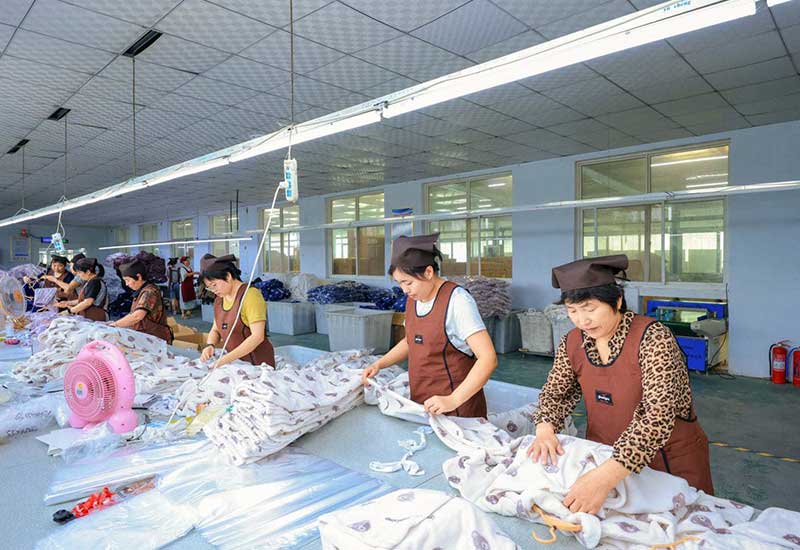
At Xiuxinyang, fabric selection begins with the garment rather than a generic list of materials.
A buyer may know exactly what fabric they want, or they may come with a reference garment and describe the feel, appearance, season, and price position they are trying to achieve.
From there, the discussion can narrow toward fabrics that suit the actual design.
For some projects, that means lightweight cotton.
For others, a modal or viscose blend may create the drape the style needs.
Winter pajamas can call for fleece or plush fabrics, while a seasonal fashion collection may point toward velvet.
The important part is making the fabric decision early enough that sampling, fit, shrinkage, construction, and costing can all be developed around it.
If you are currently planning a custom sleepwear collection, you can also read our Private Label Pajamas Guide for a broader look at the development process.
You can view additional sleepwear and loungewear styles on the Xiuxinyang Products page.
FAQ About Pajama Fabrics
What is the best fabric for pajamas?
There is no single best fabric for every pajama. Cotton is versatile and familiar, modal offers a soft and fluid feel, viscose works well for draped styles, while fleece and coral fleece are better suited to colder seasons.
Is cotton or modal better for pajamas?
Cotton often works well when you want a familiar, breathable or more structured product. Modal is particularly useful when softness and fluid drape are priorities. The better option depends on the style and customer.
What fabric is best for summer pajamas?
Lightweight cotton, modal and viscose fabrics are common choices for warm-weather sleepwear. Fabric weight and construction should be considered alongside fiber composition.
What fabric is best for winter pajamas?
Fleece, coral fleece, flannel, heavier cotton knits and velvet can all work for winter sleepwear depending on the product’s design and market position.
Why does GSM matter for pajama fabric?
GSM helps describe fabric weight. It is useful for maintaining product consistency and comparing similar constructions, but a higher GSM does not automatically mean better quality.
Conclusion
Choosing the best fabric for pajamas is less about finding one material that wins every comparison and more about matching the material to the product.
Cotton gives brands enormous versatility.
Modal works especially well when softness and drape are important.
Viscose can create lightweight, flowing silhouettes.
Fleece and coral fleece make sense when warmth is the main selling point.
Velvet can turn sleepwear into a more fashion-driven seasonal product.
The mistake is choosing a fabric because the fiber name sounds good and only later trying to make the design work around it.
Start with the customer and garment.
Then look at fiber, construction, weight, stretch, shrinkage, surface performance, wash behavior, cost, and availability together.
That process gives you a much better chance of developing pajamas that still feel right long after the sample has left the factory.
Need Help Choosing Fabric for Your Pajama Collection?
If you are developing pajamas, sleepwear, or loungewear and are unsure which fabric direction fits your design, Xiuxinyang can review your product requirements and help narrow the options.
Send us your reference style, tech pack, target market, season, preferred hand feel, size range, and estimated order requirements.
Contact Xiuxinyang to discuss fabric sourcing, sampling, and production for your next sleepwear collection.