Custom Pajama Manufacturer Guide: Fabric, Fit, and Production Checklist for Apparel Brands
Table of Contents
Choosing a custom pajama manufacturer is not only a sourcing decision. For sleepwear, loungewear, robes, fleece sets, and relaxed home clothing, the manufacturer influences fit consistency, hand feel, wash performance, packaging presentation, and the speed at which a brand can move from concept to repeat production. A strong custom pajama manufacturer helps translate sketches, reference samples, size charts, and fabric preferences into products that customers want to wear often, not just buy once.
This guide is written for apparel founders, sourcing managers, private label teams, and e-commerce brands that need a practical way to evaluate a custom pajama manufacturer before placing a production order. It focuses on the details that matter most in real development work: fabric choice, stretch recovery, pattern balance, trims, sampling, inspection, labeling, packaging, and communication. If you are preparing your first pajama line or improving an existing homewear program, the checklist below can help you ask better questions and reduce avoidable production risk.
Why Pajama Manufacturing Needs a Different Evaluation Method
Pajamas look simple from a distance, but they are highly sensitive products. A T-shirt can survive a slightly firm neck rib or a heavier seam. Pajamas are judged differently because the wearer expects softness, quiet construction, breathable comfort, and easy movement across sitting, sleeping, lounging, and washing. A custom pajama manufacturer must therefore understand both apparel production and comfort psychology.
The right custom pajama manufacturer should be able to discuss fabric weight, shrinkage, brushing, pilling, colorfastness, elastic comfort, seam placement, and size grading without waiting for problems to appear in bulk production. For brands, this is important because customer complaints in sleepwear often come from small details: waistbands that roll, cuffs that stretch out, fabric that feels too warm, prints that fade, or sleeves that twist after washing.
Before comparing factories, define the product role clearly. A winter fleece pajama set, a lightweight ribbed lounge set, a lace camisole pajama set, and a children’s pajama line all need different fabric standards and fit priorities. A good custom pajama manufacturer will not treat them as the same item with different artwork.
Start With Search Intent: What Are You Really Sourcing?
Many buyers search for a custom pajama manufacturer when they actually need one of several different solutions. Some need full OEM production from an approved tech pack. Some need ODM support with fabric and pattern recommendations. Some need private label sleepwear with custom labels, hangtags, and packaging. Others need a development partner that can turn a reference sample into a production-ready garment.
Clarifying the sourcing model early prevents confusion. If you already have patterns, grading rules, artwork, and bill of materials, your custom pajama manufacturer should focus on precision, costing structure, sample accuracy, and quality control. If you only have mood boards and target customers, your custom pajama manufacturer should be able to guide fabric selection, silhouette development, trim options, and sample rounds.
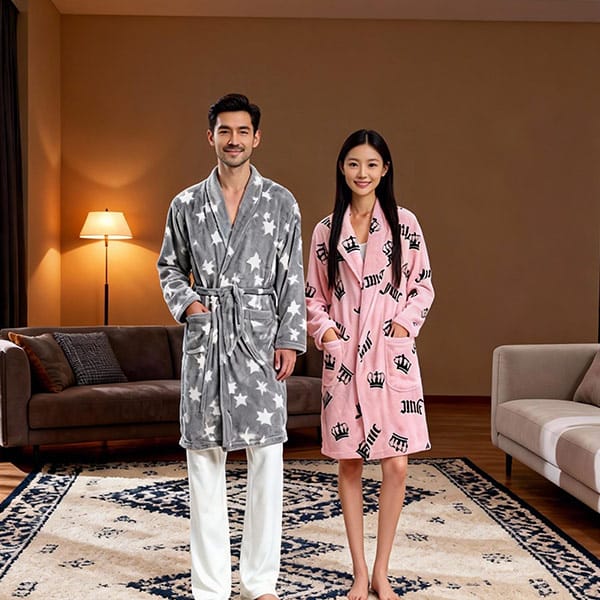
For Xiuxinyang’s type of product range, this often includes coral fleece pajamas, waffle-knit pajama sets, ribbed lounge sets, strappy camisole and pants sets, robes, men’s pajama sets, women’s three-piece pajama sets, and children’s homewear. A custom pajama manufacturer with broad homewear experience can help brands build a coordinated line instead of treating each SKU as a separate experiment.
Fabric Selection: The First Place Quality Is Won or Lost
Fabric is the foundation of every pajama program. A custom pajama manufacturer should be able to explain why a fabric is suitable for the season, target market, silhouette, and care expectation. The same design can feel premium or disappointing depending on yarn, knit structure, finishing, stretch, and weight.
For warm homewear, coral fleece and brushed fabrics are valued for softness, insulation, and plush hand feel. For year-round pajamas, cotton blends, modal blends, rib knits, waffle knits, and lightweight jersey can offer better breathability. For camisole sets or fashion sleepwear, stretch, drape, and surface smoothness may matter more than thermal comfort. A custom pajama manufacturer should not recommend fabric only by appearance; they should connect fabric behavior to the customer’s wearing situation.
Ask for fabric details beyond color and composition. Useful questions include: What is the fabric weight? How much shrinkage is expected after washing? Does the fabric pill easily? How does the fabric recover after stretching? Is the surface brushed, embossed, ribbed, waffle-textured, or printed? Can the same fabric be used across men’s, women’s, and children’s styles without creating fit or care issues?
If your brand has chemical safety or textile testing requirements, discuss them before sampling. Standards such as OEKO-TEX Standard 100 are often referenced in textile safety conversations, and ISO publishes quality management frameworks such as ISO 9001. Do not assume a custom pajama manufacturer can meet a specific standard unless the requirement is documented and confirmed for your order.
Fabric Questions to Ask Before Sampling
| Decision Area | What to Ask | Why It Matters |
|---|---|---|
| Hand feel | Is the softness from fiber, brushing, finishing, or all three? | Softness should survive normal washing as much as possible. |
| Weight | What GSM range is recommended for the season? | Too light can feel cheap; too heavy can feel uncomfortable. |
| Stretch | How much stretch and recovery does the fabric have? | Pajamas need movement without bagging at knees, elbows, or waist. |
| Shrinkage | What shrinkage allowance should be built into the pattern? | Incorrect allowance can ruin size consistency after washing. |
| Surface | Will brushing, ribbing, waffle texture, or printing change fit? | Surface treatments affect drape, warmth, and seam behavior. |

Fit Development: Comfort Is Engineered, Not Guessed
A reliable custom pajama manufacturer should treat fit as a technical process. Pajamas are relaxed garments, but relaxed does not mean shapeless. Good fit allows movement while keeping the garment balanced on the body. Shoulder slope, armhole depth, inseam length, rise, waistband tension, cuff width, and robe belt placement all affect comfort.
For women’s pajama sets, buyers often focus on neckline shape, sleeve proportion, pants drape, and whether the garment feels flattering without being restrictive. For men’s pajama sets, brands may prioritize shoulder width, waistband comfort, and durable seam construction. For children’s pajamas, movement, safety-minded design, easy care, and consistent sizing become especially important. A custom pajama manufacturer should be able to adapt fit logic across these segments.
One common mistake is approving a sample based only on how it looks on a hanger. A custom pajama manufacturer should encourage fit checks on the body or on an appropriate form. Sit, bend, raise arms, walk, and check waist pressure. If the garment is intended for sleep, pay attention to hard trims, bulky seams, and tight cuffs. These small elements can turn a visually attractive pajama into a product customers avoid wearing.
Brands should also define the target fit language. Is the set oversized, easy, regular, slim, cropped, tall-friendly, petite-friendly, or maternity-adaptable? A custom pajama manufacturer cannot grade accurately if the base fit is vague. Provide body measurements, finished garment measurements, and tolerance rules whenever possible.
Tech Packs and Reference Samples: Give the Factory a Clear Starting Point
A custom pajama manufacturer can develop from different starting points, but clearer inputs lead to cleaner sampling. The best tech packs include flat sketches, size charts, fabric specifications, trim details, stitch instructions, artwork placements, label positions, packaging requirements, and care label content. If you do not have a full tech pack, send a reference sample and explain what should be copied, changed, or avoided.
A common sourcing problem is that brands send a reference garment and assume the custom pajama manufacturer will know which details matter. That is risky. If you like the sleeve shape but not the fabric, say so. If you like the waistband softness but need a different rise, say so. If you want the same silhouette but a different print scale, document it. Clear comments save sampling time.
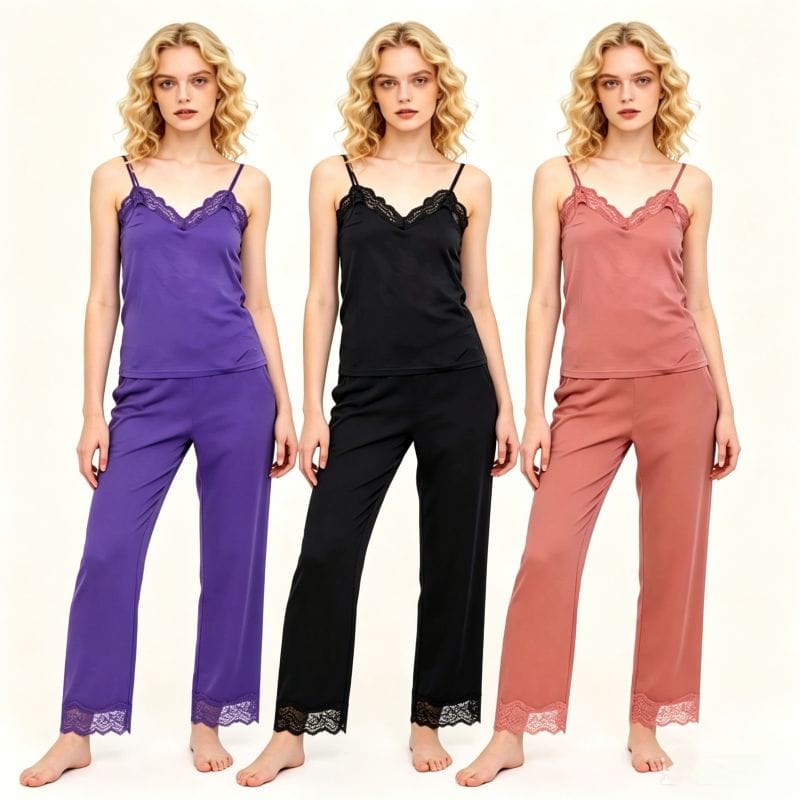
For printed pajamas, include artwork files, repeat dimensions, color references, placement instructions, and any restrictions related to pattern matching. For lace-trimmed pajamas, specify lace width, softness, stretch, placement, and whether the lace contacts the skin. For fleece pajamas, clarify pile height, thickness, brushing, and whether cuffs should be self-fabric or rib. A custom pajama manufacturer can make better decisions when the design intent is visible.
Sampling: How to Review More Than Appearance
Sampling is where assumptions become visible. A custom pajama manufacturer should provide samples that allow you to review construction, fit, fabric behavior, and finishing quality. Do not rush from first sample to bulk production unless the item is simple and the sample is genuinely production-ready.
Review the sample after steaming, wearing, and washing if possible. Check whether seams twist, hems ripple, elastic rolls, buttons pull, drawstrings move smoothly, and labels irritate the skin. For pajama pants, sit and bend to test back rise and waistband pressure. For robes, check belt loop height and overlap. For camisole sets, test strap comfort and neckline stability. A custom pajama manufacturer should welcome detailed feedback because it prevents larger problems later.
Keep comments organized. Use a sample review sheet with columns for issue, location, requested correction, priority, and photo reference. When sending corrections, separate subjective preferences from technical requirements. For example, “make the pants more elegant” is vague; “reduce leg opening by 2 cm and add 1 cm to inseam on size M” gives the custom pajama manufacturer a measurable instruction.
Quality Control: What to Confirm Before Bulk Production
Quality control should not begin after bulk production is finished. A custom pajama manufacturer should discuss quality checkpoints from raw material inspection through cutting, sewing, finishing, packing, and final inspection. Pajamas need special attention because comfort defects can be hard to see in photos but obvious to the wearer.
Before production, confirm measurement tolerances, fabric approval process, color approval process, trim approval, print or embroidery approval, and packaging standards. Decide how defects will be classified. Loose threads, stains, skipped stitches, uneven hems, poor elastic recovery, incorrect labels, and shade variation should all have clear handling rules. A custom pajama manufacturer with mature production management will be able to explain these checkpoints without improvising.
Many apparel teams use inspection sampling concepts when evaluating finished goods. If your company follows a specific AQL approach, define it in the purchase order and inspection plan. General explanations of acceptance sampling are available through resources such as acceptance sampling, but your own requirements should be confirmed with the factory and inspection partner before production begins.
Practical QC Checklist for Pajama Orders
- Confirm approved fabric, color, weight, and hand feel before cutting.
- Check finished measurements against the approved size chart and tolerances.
- Review seam strength, stitch density, thread color, and loose thread control.
- Test waistband comfort, drawstring function, button security, and cuff recovery.
- Inspect print placement, embroidery position, lace trim, labels, and packaging.
- Wash-test samples when shrinkage, pilling, or colorfastness could affect customer experience.
Customization Options That Actually Matter to Brand Buyers
Customization should support brand positioning, not add complexity for its own sake. A custom pajama manufacturer may offer fabric development, print design, embroidery, hot-fix decoration, lace trim, rib cuffs, contrast piping, labels, hangtags, polybags, gift boxes, and other packaging solutions. The question is which options help your customer understand and remember the brand.
For premium loungewear, soft labels, refined stitching, controlled drape, and tasteful packaging may matter more than heavy decoration. For seasonal pajama programs, print clarity, color consistency, and delivery planning may be the key priorities. For children’s sleepwear, practical care, fit consistency, and safety-conscious trims should come before decorative complexity. A custom pajama manufacturer should help you choose options that match the product role.
Private label buyers should also consider repeatability. A beautiful trim that is hard to source may delay reorders. A print process that looks good on one fabric may not work on another. A custom pajama manufacturer with strong material and process control can help build a customization system that remains practical across multiple seasons.
Communication: The Hidden Difference Between Smooth and Stressful Orders
Even a capable custom pajama manufacturer can struggle if communication is unclear. The best projects have a shared timeline, confirmed responsibilities, written approvals, and organized feedback. Brands should know when fabric is sourced, when sampling begins, when comments are due, when bulk materials are ordered, when production starts, and when final inspection happens.
Ask how the factory manages communication between merchandising, technical, production, and quality teams. If every question goes through one person without internal coordination, details can be lost. A custom pajama manufacturer with a structured team can usually respond more accurately because technical and production staff are involved before decisions become urgent.
Good communication also means knowing what cannot be promised. Be cautious if a supplier agrees to every request without discussing fabric lead time, sample revisions, testing, production capacity, or packaging availability. A trustworthy custom pajama manufacturer will explain trade-offs clearly. That honesty is useful because it helps brands plan launches more realistically.
How to Compare Manufacturers Without Focusing Only on Unit Cost
Cost matters, but choosing a custom pajama manufacturer only by the lowest quote can create hidden expenses. Poor sampling, inconsistent sizing, delayed trims, unclear packaging, and weak inspection can cost more than the difference between two quotes. For pajama and loungewear orders, the better question is total reliability.
Compare manufacturers using a balanced scorecard. Look at product experience, fabric sourcing ability, sample accuracy, communication speed, customization options, quality control process, packaging support, delivery planning, and willingness to document details. A custom pajama manufacturer that provides clear answers before the order is more likely to handle issues professionally during production.
Brands should also request relevant product examples. If you are developing fleece family pajamas, ask about fleece sets, robes, and children’s homewear. If you are developing women’s fashion sleepwear, ask about camisole sets, lace trims, elastic comfort, and lightweight fabrics. A custom pajama manufacturer with matching experience can shorten the learning curve.
Common Mistakes Brands Should Avoid
The first mistake is starting with an unclear product brief. A custom pajama manufacturer can offer guidance, but the brand should still define target customer, season, fabric direction, fit preference, size range, packaging level, and launch timeline. Without these basics, sampling becomes guesswork.
The second mistake is approving fabric only by photo. Pajama fabric must be touched, stretched, washed, and compared under real conditions. A custom pajama manufacturer can send swatches, but the brand must review them carefully. Color and texture on a screen are not enough.
The third mistake is ignoring measurement tolerance until final inspection. Pajamas may look relaxed, but inconsistent sizing can increase returns and reduce customer trust. Approve a clear size chart early and make sure the custom pajama manufacturer understands which measurements are critical.
The fourth mistake is treating packaging as an afterthought. Labels, care information, folding method, hangtags, barcode placement, and carton marks affect receiving, retail presentation, and customer unboxing. A custom pajama manufacturer that supports packaging early can prevent last-minute delays.
Questions to Ask Before You Place an Order
- What pajama, robe, loungewear, or homewear categories do you produce most often?
- Can you recommend fabrics based on season, target customer, and care expectations?
- How do you handle pattern development, grading, and measurement tolerances?
- How many sample rounds are typically needed before production approval?
- What quality checks happen before cutting, during sewing, and before packing?
- Can you support custom labels, hangtags, packaging, embroidery, printing, or decorative processes?
- How do you document approvals for fabric, color, trims, and final samples?
- What information do you need from us to quote accurately?
These questions help reveal whether a custom pajama manufacturer is simply quoting a garment or truly managing a development process. The best answers will be specific, practical, and tied to your product type.
Why Xiuxinyang Is Relevant for Custom Pajama and Homewear Programs
Xiuxinyang focuses on custom apparel, comfortable home clothes, women’s clothing, men’s clothing, children’s wear, and OEM/ODM service support. For brands developing pajama and loungewear lines, this product range is useful because a collection may include more than one category: fleece pajamas, robes, ribbed sets, camisole sets, casual lounge pieces, and seasonal homewear.
A custom pajama manufacturer with integrated design, development, production, finishing, and packaging support can help brands keep the collection consistent. Instead of sourcing each style separately, buyers can coordinate fabric direction, fit standards, label placement, and packaging presentation across the line. That is especially valuable for private label brands that need a coherent customer experience.
When you speak with any custom pajama manufacturer, including Xiuxinyang, bring clear references and ask direct questions. The more precise your brief, the easier it is to evaluate whether the factory is the right fit for your timeline, product type, and quality expectations.
Final Checklist: How to Choose the Right Partner
A good custom pajama manufacturer should do more than sew garments. The right partner helps you make better fabric decisions, refine fit, control sampling, document approvals, manage quality, and prepare packaging in a way that supports your brand. That practical support is what turns a pajama concept into a repeatable product line.
Before committing to production, review the manufacturer against this final checklist: relevant pajama experience, fabric knowledge, clear sampling process, technical fit support, documented quality control, customization capability, packaging support, realistic communication, and willingness to work from your brand requirements. If a custom pajama manufacturer can answer these areas clearly, you have a stronger foundation for a smooth order.
For apparel brands, the goal is not only to find a supplier. The goal is to build a pajama and loungewear program that customers trust after repeated wear and washing. Choosing the right custom pajama manufacturer is one of the most important steps toward that outcome.