Sustainable fashion is becoming the mainstream of manufacturing
Consumers, brands, and manufacturers are working together to drive green transformation, bringing new growth opportunities to the apparel manufacturing industry.
Sustainable development is no longer just an added bonus in the fashion industry, but has become an irreversible mainstream trend across the entire apparel supply chain. Manufacturers who fail to adapt quickly to environmental policies, the circular economy, carbon reduction, and social responsibility may be at a disadvantage in future competition.
According to market research reports, the global apparel market reached approximately US$1.77 trillion in 2024 and is projected to grow to approximately US$2.26 trillion by 2030, with a compound annual growth rate of 4.2%.
Within this growth, sub-sectors such as green production, eco-friendly fabrics, and recycling are growing at an even faster pace. For example, an advanced apparel manufacturing market report points out that future manufacturing will emphasize elements such as “recycling and organic materials,” “water reduction,” and “transparent supply chains.”
Key trends in manufacturing include:
The increasing use of environmentally friendly fabrics: Shifting from traditional cotton and polyester to recycled polyester, natural dyes, and organic cotton, which reduces environmental impact.
Upgraded energy-saving and waste-reducing processes: Smart equipment can precisely control fabric cutting, reduce edge waste, and simultaneously reduce energy consumption.
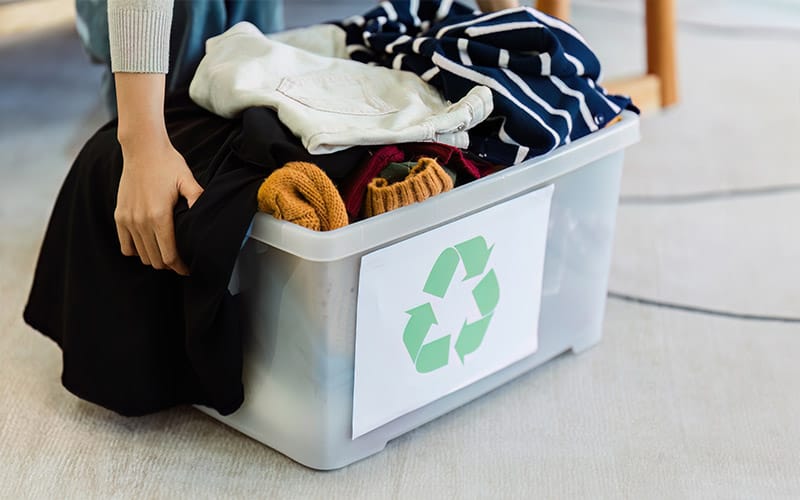
Circular Supply Chains and “Production-Recycling” Systems: Apparel manufacturers are beginning to establish closed-loop systems encompassing product recycling, material reprocessing, and remanufacturing.
Enhanced Social Responsibility and Certification: Markets in Europe, America, and Japan are increasingly demanding disclosure of factory social responsibility, workplace environment, and carbon emission data.
For example, “Zero-Waste Fashion” utilizes optimized pattern cutting, maximizes material utilization, and reduces waste generation.
Manufacturing companies that integrate this concept with smart manufacturing will achieve a win-win situation in terms of both environmental protection and cost control. For knitwear companies, combining a corporate culture centered on “customer focus,” “quality focus,” and “employee focus” can integrate “green manufacturing,” “improved employee benefits,” and “long-term customer service” into their sustainable development strategies.
From the perspective of brand-manufacturer collaboration, brands are increasingly using “green labels” as a gateway to the European, American, and Japanese markets; manufacturers who proactively secure environmental certifications (such as BSCI, OEKO-TEX, GOTS, etc.), carbon footprint control, and transparent supply chain tracking systems will gain greater negotiating power. Manufacturers can also differentiate themselves by highlighting “environmentally friendly production,” “social responsibility,” and “employee training and optimized work environment,” thereby enhancing customer trust.
The future growth logic for manufacturers may not solely rely on “quantitative expansion,” but rather on “qualitative upgrading”: including improved production flexibility, accelerated green transformation, and enhanced supply chain resilience. For export-oriented companies, green manufacturing capabilities, certifications, and global service capabilities will become crucial barriers to entry for new markets and securing orders from major brands.
In summary, green manufacturing is transitioning from a fringe trend to industry mainstream. Manufacturers must implement sustainable development across the entire chain, from “brand public relations” to production, supply chain management, and employee development. Only in this way can they secure a stable position in the global apparel industry’s competitive landscape.
Suggested internal links
External references
For broader sourcing, labeling, and retail preparation, buyers can also review these independent industry resources before finalizing production requirements.
Commercial details that affect production
Many production delays begin with commercial details that were not confirmed early enough. MOQ, fabric availability, custom dyeing, artwork approval, packaging, carton marks, and barcode requirements should be discussed before bulk dates are promised. A Sustainable fashion is becoming the mainstream of manufacturing project can look simple, but small late decisions often create real pressure for the sample room and production line.
Buyers should also ask how repeat orders will be handled. If the product is expected to become a core style, fabric continuity, color records, label storage, and measurement history matter as much as the first shipment.
Quality control points worth confirming
Before shipment, the inspection standard should match the approved sample and the way the product will be sold. A Sustainable fashion is becoming the mainstream of manufacturing shipment should be checked for measurement accuracy, shade consistency, fabric defects, stitching, label accuracy, packing, and carton information. If ecommerce is the main channel, folded appearance and SKU labeling deserve extra attention.
Good quality control is not only a final inspection. It starts when the buyer approves fabric, trims, measurements, artwork, and packaging. Each approval becomes a reference point for the final goods.
How to keep future orders consistent
For brands planning repeat production, consistency is a business asset. Keep records of approved fabric, color references, measurement specs, sample photos, label artwork, packaging instructions, and inspection reports. When the next Sustainable fashion is becoming the mainstream of manufacturing order begins, these records reduce back-and-forth communication and protect the original fit standard.
This is especially useful when a product moves from a small test order into a larger seasonal buy. The more clearly the first order is documented, the easier it is to scale without losing the details customers liked.