
Manufacturing Opportunities Driven by Product Differentiation and Multi-Scene Wearing Trends
From loungewear and sportswear to children’s custom clothing, the demand for high-quality and diversified production is growing rapidly.
In recent years, consumers’ lifestyles have become more diverse: working from home, the fitness craze, spending time with family, sports and leisure, and social outings all overlap, causing clothing demand to shift from traditional “single-purpose” to “multi-purpose and multi-scenario.” Manufacturers who can capitalize on this trend and provide high-quality, multi-style, small-batch, and rapid-change production capabilities will reap vast opportunities.
According to 2022 US household clothing spending data, American households spend approximately $162 per person per month on clothing, averaging about $1,945 per year.
This changing consumer habit is also driving manufacturers towards “customization,” “rapid response,” and “small-batch, multi-style” production. For knitwear manufacturers, this means that loungewear, sportswear, children’s wear, and high-end custom series will become key growth areas.
Manufacturing should focus on the following core directions:
Flexible production capabilities: Equipment and process layout should support rapid switching between different styles, lengths, and shapes (such as short squares, short trapezoids, ovals, and long pointed shapes).
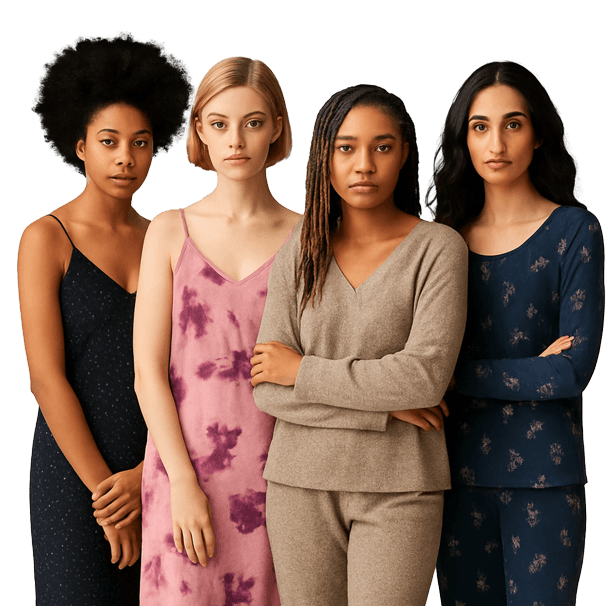
Fabric and Functional Innovation: The demand for sportswear and loungewear increasingly emphasizes fabric feel, functionality (such as moisture-wicking, antibacterial properties, and skin-friendly comfort), and environmental friendliness.
Short Lead Times and Agile Supply Chain: Brands are responding to market changes more quickly, requiring manufacturers to have the ability to rapidly change lines, quickly sample products, and handle short minimum order quantities.
Growth in Children’s Wear and Parent-Child Collections: With the upgrading of family consumption, the demand for children’s wear and matching parent-child products is strong. Manufacturers can leverage this by offering value-added services such as children’s sizing, printing, and rhinestones.
High-End Customization and Brand Collaboration: Manufacturers can utilize smart manufacturing and automated equipment to create high-end custom collections, meeting brands’ needs for differentiation and added value.
Your company already possesses production capabilities covering multiple styles (such as loungewear, sportswear, children’s wear, and custom collections) and different lengths and shapes, laying the foundation for gaining an advantage in this trend. We recommend further emphasizing the four keywords “rich styles,” “diverse shapes,” “rapid response,” and “high quality,” and highlighting in your website and marketing materials that you not only have mass production capabilities but also the flexibility to respond to diverse needs, helping brands capture consumer trends. Overall, the trend of multi-scenario dressing is redefining the landscape of apparel manufacturing demand. Manufacturers who can adapt to this trend and provide customized, flexible, and high-quality services will become the preferred partners for brand collaborations.
Suggested internal links
External references
For broader sourcing, labeling, and retail preparation, buyers can also review these independent industry resources before finalizing production requirements.
Commercial details that affect production
Many production delays begin with commercial details that were not confirmed early enough. MOQ, fabric availability, custom dyeing, artwork approval, packaging, carton marks, and barcode requirements should be discussed before bulk dates are promised. A Manufacturing Opportunities Driven by Product Differentiation and Multi-Scene Wearing Trends project can look simple, but small late decisions often create real pressure for the sample room and production line.
Buyers should also ask how repeat orders will be handled. If the product is expected to become a core style, fabric continuity, color records, label storage, and measurement history matter as much as the first shipment.
Quality control points worth confirming
Before shipment, the inspection standard should match the approved sample and the way the product will be sold. A Manufacturing Opportunities Driven by Product Differentiation and Multi-Scene Wearing Trends shipment should be checked for measurement accuracy, shade consistency, fabric defects, stitching, label accuracy, packing, and carton information. If ecommerce is the main channel, folded appearance and SKU labeling deserve extra attention.
Good quality control is not only a final inspection. It starts when the buyer approves fabric, trims, measurements, artwork, and packaging. Each approval becomes a reference point for the final goods.
How to keep future orders consistent
For brands planning repeat production, consistency is a business asset. Keep records of approved fabric, color references, measurement specs, sample photos, label artwork, packaging instructions, and inspection reports. When the next Manufacturing Opportunities Driven by Product Differentiation and Multi-Scene Wearing Trends order begins, these records reduce back-and-forth communication and protect the original fit standard.
This is especially useful when a product moves from a small test order into a larger seasonal buy. The more clearly the first order is documented, the easier it is to scale without losing the details customers liked.
Practical notes for the buying team
Before confirming a Manufacturing Opportunities Driven by Product Differentiation and Multi-Scene Wearing Trends order, align design, purchasing, merchandising, and logistics around the same approval file. The file should show the final sample, size chart, fabric reference, label artwork, packaging method, carton details, and delivery plan. This keeps the order practical instead of only visually attractive.
When those records are clear, the factory can quote more accurately, the buyer can compare options more fairly, and the final shipment has a better chance of matching the approved standard.