Loungewear Sets for Travel: Test Bag Folds and Wearing Comfort
Table of Contents
Loungewear sets for travel are often described with attractive promises about comfort, easy packing and a polished appearance. Buyers need to translate those promises into a realistic development brief. A long seated journey creates different fit demands from a standing photograph, while time inside a bag can reveal folds that a freshly finished sample does not show. This guide helps private label teams evaluate the intended routine and support product descriptions with observations from the actual outfit rather than assumptions about a fiber name.
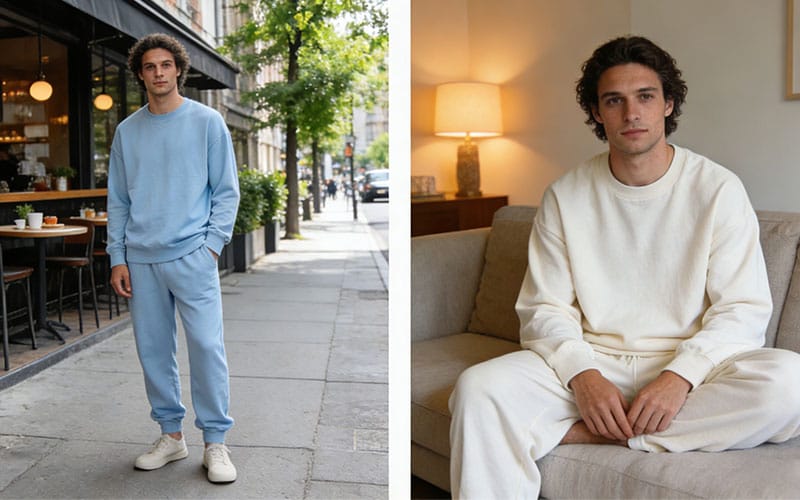
Start with the relevant Xiuxinyang product or service reference, then confirm the proposed materials and construction for your order.
Define the journey and customer routine
Describe the intended use in concrete terms, such as a change of clothes packed for a short trip or an outfit worn during seated transport. Identify the climate, layering and footwear context without assuming one set suits every destination. Ask the supplier to confirm which existing style or development route fits the brief. Loungewear sets for travel need a specific customer problem to solve. A broad travel label is too vague to guide pattern, material, pocket and packing decisions consistently.
Review seated comfort with the complete outfit
Have the intended participant sit in a normal position, reach forwards and stand again. Observe waist pressure, rise behavior, knee restriction and the way the top settles over the waistband. Record the sample size and relevant body dimensions. A loose-looking garment may still restrict the seat or press at a seam. Ask for corrections linked to the observed area. Keep the full outfit in the review because the interaction between top and bottom can change coverage and comfort during sitting.
Inspect pockets without promising security
If the design includes pockets, review their position and access while standing and seated. Check whether the pocket bag pulls the side seam or becomes bulky under the top. Discuss any intended fastening as a separate construction decision and confirm feasibility. Do not describe a pocket as secure for valuables merely because it exists or closes in a sample. For the proposed travel outfits, record the actual functional check and use precise product wording that matches the approved construction.

Choose the fabric from the intended use evidence
Compare actual materials for drape, surface, opacity and contact comfort in the proposed garment. Request composition, construction, weight and finish. A fiber description does not establish resistance to creasing, all-day comfort or suitability for every temperature. Review the sample with the intended underlayers and movement. If a measurable performance claim matters commercially, agree an appropriate test and acceptance criteria. Keep material selection connected to the customer's routine instead of relying on an unqualified premium or travel-ready description.
Build a realistic bag-fold comparison
Fold the complete outfit as the intended customer might pack it and use a defined bag or package. Record the fold sequence, trial duration and relevant conditions. Include an unpacked comparison sample if available. Inspect where waistbands, pocket seams and decorative features create pressure. Loungewear sets for travel should be reviewed as complete garments rather than a loose swatch briefly crumpled in the hand. The trial is useful when the buyer can reproduce it and understand what the observation represents.
Observe appearance before applying a recovery treatment
Photograph the outfit immediately after unpacking and after an agreed resting period under consistent light. Record folds, distortion and any surface marks. If the intended customer is expected to steam, wash or otherwise treat the garment, confirm that the action is appropriate and consistent with the care instructions. Keep the initial condition visible in the record. Avoid claiming wrinkle-free performance because a sample looks smooth after unrecorded pressing that a traveler may not be able to perform.
Review care information alongside travel messaging
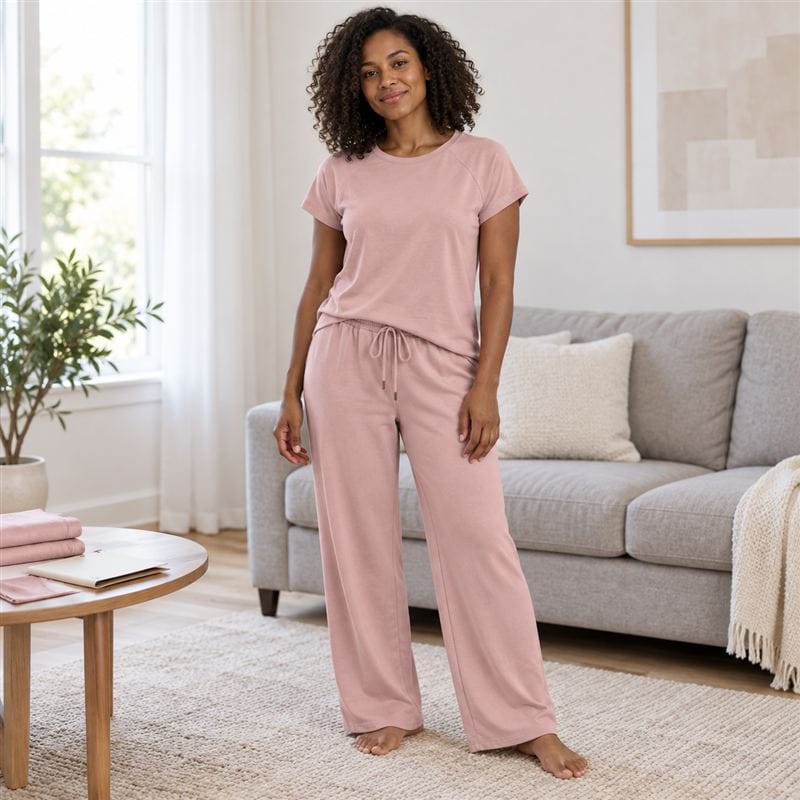
Check the proposed care routine on the assembled outfit and connect findings with the selected material and trims. Confirm destination-market labeling with the responsible party. If the retail copy promises easy care, explain internally which observed or tested characteristic supports the wording. Do not extend a limited sample observation into a claim that the garment can tolerate any wash or drying method. Keep the approved instructions with the product description so merchandising and production communicate the same customer experience.
Release a claim and specification together
Record the approved material, fit, pocket construction, bag trial and care reference in one revision. Write the proposed product claims beside the evidence used to support them and ask the responsible buyer to approve the wording. For loungewear sets for travel, a factual description of the design is often more useful than an absolute promise. Recheck relevant observations after a material or construction substitution. The commercial product story should follow the reviewed garment, while unresolved performance questions remain open until there is evidence.
A practical decision example
Compare one change at a time
Suppose a buying team wants to describe a lounge outfit as easy to pack. Fold one complete sample into the intended bag arrangement, record the conditions and compare its unpacking appearance with a reference. Review the outfit immediately and after resting, then decide what wording the observations can support. If the team also wants a wrinkle-resistance claim, agree a suitable evaluation instead of treating the informal bag trial as a universal test. Repeat the seated fit check in the final material. This hypothetical process separates practical development observations from stronger marketing claims and avoids promising that every journey, packing method or wearer will produce the same result.
Decision table
| Customer task | Review | Evidence |
|---|---|---|
| Seated journey | Waist, rise and knee movement | Fit comments and dimensions |
| Bag packing | Defined complete-outfit fold | Trial conditions |
| Unpacking | Immediate and rested appearance | Comparable photographs |
| Retail claim | Wording versus actual observations | Approved product description |
Make the approval reference usable on the production floor
Prepare an approval reference that a cutter, sewing supervisor and inspector can all interpret. Include the style code, revision date, front and back technical drawings, the fabric reference and the component list. Give each measurement a clear start and end point. State whether the garment is relaxed, gently extended or measured after a defined care procedure. Keep aesthetic approval separate from dimensional and workmanship approval so a good color match cannot conceal an unresolved construction issue. File a photograph of the approved reference with the written comments.
When several garments form one retail unit, review the unit as well as each component. Check that the agreed sizes are paired, the colors coordinate and the customer receives the intended number of pieces. Ask the packing team to use the same style and revision identifiers as the purchase order. Keep one retained complete set for later comparison. If production proposes a material or trim replacement, ask for a documented review of its effect on appearance, fit, care and cost before accepting the substitution.
Compare the relevant product range and development context with your intended customer and order. Confirm any requested material, size or construction option before treating it as available.
References for the review
Use the relevant primary resources when framing market and test questions: FTC textile guidance, FTC care guidance, AATCC methods, ISO care symbols. Confirm the applicable scope and methods with the responsible specialist for the actual product and destination.
Discuss the proposed order
For your loungewear sets for travel project, send the design reference, intended customer, destination market, complete-unit quantity and size breakdown. Include the specific decisions described above and identify any material or construction that still needs confirmation. Review Xiuxinyang OEM/ODM services and contact the team with your loungewear sets for travel brief to discuss the appropriate sampling and order requirements.
Frequently asked questions
What makes loungewear sets for travel suitable for a project?
Start with the customer's intended journey and routine, then review fit, material, pockets and packing against that use. Confirm the proposed development with the supplier. A travel label alone does not establish suitability.
How should bag folds be tested?
Use the actual complete outfit, a defined folding method and documented conditions. Compare appearance immediately after unpacking and after an agreed rest. Keep the trial reproducible and distinguish it from any formal performance test.
Can a fabric be called wrinkle free after one trial?
An informal sample trial does not justify an unlimited claim. Agree appropriate testing where a measurable claim is required and use wording that matches the evidence. Record any treatment applied before the comparison.
Are pockets automatically suitable for valuables?
No. Review actual construction, access and any fastening, then describe those features accurately. Avoid a security promise that has not been established. Pocket placement should also be checked for comfort and garment distortion while seated.
What should the supplier receive?
Provide the intended travel routine, outfit reference, target customer, material preference, pocket requirements and care expectations. Add quantities, size breakdown and packing concept, and identify any claim that requires evidence before approval.