

Unisex Pajama Pants: Specify the Trouser Component in a Complete Set
Table of Contents
A search for unisex pajama pants may lead a buyer to a complete pajama set rather than a separately supplied trouser. That distinction matters for the quotation, sampling and packing plan. Buyers can specify the trouser component in detail while still ordering the approved complete retail unit. This guide explains how to communicate waist, rise and leg requirements, preserve the matching top's approval and confirm the actual supply model with Xiuxinyang before assuming that individual components can be purchased independently.
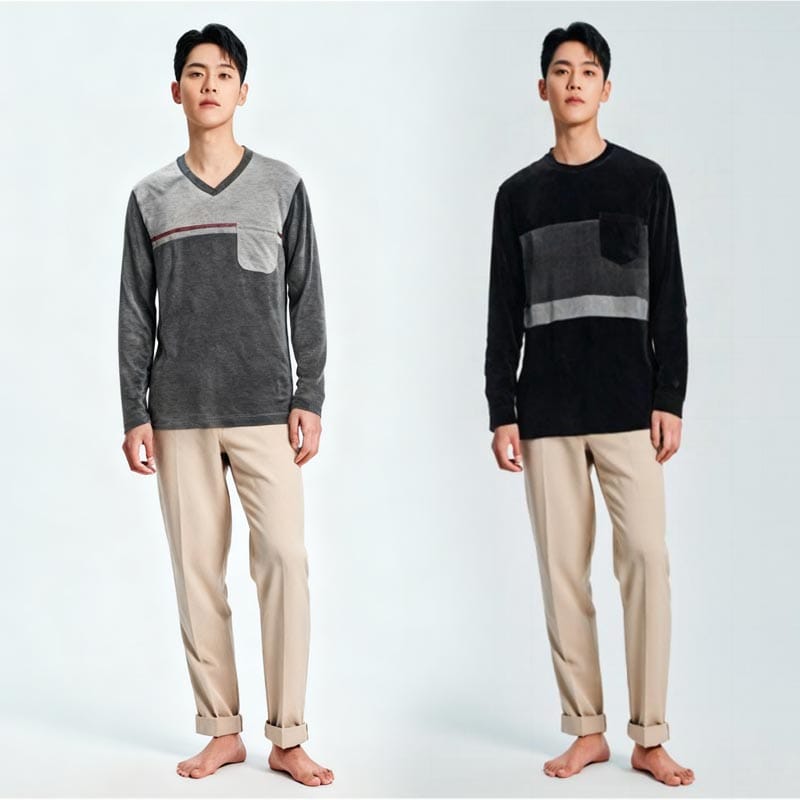
Start with the relevant Xiuxinyang product or service reference, then confirm the proposed materials and construction for your order.
Confirm what the supplier is offering
Identify the actual product and ask whether the quotation covers a complete top-and-trouser set. Where the product information specifies complete sets, preserve that unit in the inquiry and discuss any alternative separately. Do not interpret a detailed trouser specification as permission to split the product. Unisex pajama pants can be the focus of the technical discussion without becoming the commercial order unit. Keep the complete garment contents visible in the quote request and final purchase order.
Define the intended customer range precisely
Explain which customers the buyer intends to serve and what fit approach the product uses. Unisex is a positioning term, not a substitute for body references and garment measurements. Different body shapes can require different rise, seat and thigh allowances even at a similar waist size. Review the intended fit participants and ask the supplier to confirm the pattern development. Avoid claiming a universal fit. Record the approved customer context alongside the measurement chart so production knows what was evaluated.
Keep waist, rise and seat decisions connected
Specify finished measurements with clear landmarks and review the trousers in standing and seated positions. Observe waistband drop, front tension and seat restriction before changing isolated dimensions. A larger relaxed waist may not resolve a rise issue, while extra seat room can alter the intended silhouette. For unisex pajama pants, document which fit problem each correction addresses. Keep body measurements separate from garment measurements and use the same method when comparing revised samples.

Review leg shape and length in the intended context
Show the intended leg silhouette and record how length is measured. Review movement with the approved footwear or barefoot context and observe whether the hem catches or drags. If different length options are proposed, ask the supplier to confirm development and order implications. Keep those versions distinct rather than hiding them under one generic size label. A trouser component can be technically varied, but each variation must remain connected to a confirmed complete-set pairing and commercial unit.
Approve the waistband and pockets as actual constructions
Request the elastic, drawcord and pocket references where the design includes them. Inspect the joined waist and pocket areas inside and outside, then review sitting and walking. Do not infer adjustment or carrying performance from a decorative cord or a pocket outline. Unisex pajama pants need their functional details confirmed in the sample. If a component changes, compare its effect on fit, inner comfort and care behavior before treating it as equivalent to the originally approved construction.
Check how the trousers coordinate with the top
Wear the complete outfit and review top length, waistband overlap and movement. Compare the shade, texture and decorative relationship of both pieces. The trouser may fit independently while creating an awkward combination with its matching top. Keep the component decisions connected through the retail style code. Where the supplier's offering uses complete sets, confirm the top-and-trouser size pairing and avoid leaving the packing team to infer it from separate measurement charts or informal buyer messages.
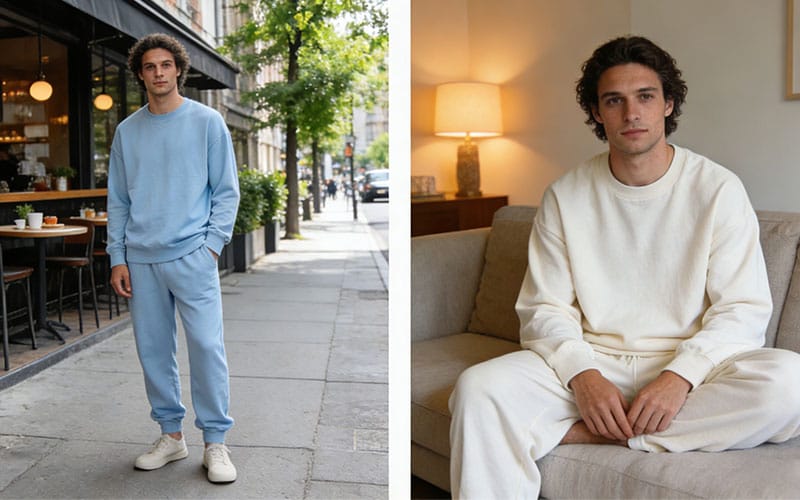
Compare the complete set after care
Use the proposed customer procedure on a complete sample and compare both garments after consistent resting. Record relevant dimensions and the relationship between the pieces. A change in the top can alter coverage even when the trousers remain suitable. Keep the test specimen identifiable and agree formal testing where a measurable requirement is needed. Unisex pajama pants should not acquire unsupported dimensional or fit guarantees simply because the broader set has a familiar material description.
Use a quotation and packing record with clear units
State complete-set quantities, approved size pairings, material references and packing requirements. Ask the supplier to identify exclusions and any requested variation that remains unconfirmed. A per-trouser estimate cannot be compared directly with a complete-set quote. Reconcile the final order and packing list using the confirmed retail unit. For repeat orders, refresh the trouser and top references together whenever a material, length or size change is proposed, preserving one coherent specification for the garments the customer will receive.
A practical decision example
Compare one change at a time
A buyer requests a revised trouser rise while retaining the original matching top. The supplier should receive the complete-set style code, the specific trouser correction and the unchanged top reference, followed by a review of the revised complete outfit. The quotation still needs to state the confirmed complete unit. If the buyer instead wants trousers alone, that is a separate supply request requiring explicit feasibility and commercial confirmation. This hypothetical example prevents a technical component change from becoming an accidental change to the order unit. It does not imply that standalone trousers are available or that a single unisex pattern will fit every intended wearer.
Decision table
| Record | Technical purpose | Commercial check |
|---|---|---|
| Trouser chart | Waist, rise and leg approval | Linked to complete-set code |
| Top reference | Preserve matching garment | Approved size pairing |
| Variation | Describe specific correction | Supplier confirms feasibility |
| Quote unit | State included garments | Complete-set quantity and packing |
Connect the fit review to the intended wearing routine
Evaluate the garment during sitting, walking and reaching rather than approving it from a front photograph alone. Record the participant's body dimensions, the sample size, the underlayers and the activities used. Different customers can share a waist measurement while needing different seat, thigh or rise allowances. A size label cannot communicate those differences to the pattern maker. Use observable comments such as a side seam pulling forward or a back waistband dropping when seated, then connect each comment to the relevant measurement or pattern area.
Agree which correction is being tested in the next sample and keep unrelated changes controlled. Review comfort together with the intended visual proportion, pocket behavior and complete outfit coordination. If a new fabric is introduced, repeat the relevant movement checks because a familiar pattern can behave differently in another weight or construction. Keep the written fit decision with the sample revision. That record gives merchandising and quality teams a common reference when they compare production garments or respond to a later request for a repeat order.
Compare the relevant product range and development context with your intended customer and order. Confirm any requested material, size or construction option before treating it as available.
References for the review
Use the relevant primary resources when framing market and test questions: FTC textile guidance, FTC care guidance, AATCC methods, ISO care symbols. Confirm the applicable scope and methods with the responsible specialist for the actual product and destination.
Discuss the proposed order
For your unisex pajama pants project, send the design reference, intended customer, destination market, complete-unit quantity and size breakdown. Include the specific decisions described above and identify any material or construction that still needs confirmation. Review Xiuxinyang OEM/ODM services and contact the team with your unisex pajama pants brief to discuss the appropriate sampling and order requirements.
Frequently asked questions
Can unisex pajama pants be ordered separately?
Confirm the actual supply model with the supplier. Where a product is offered as a complete pajama set, do not assume the trouser component is available independently. A separate request needs explicit feasibility and commercial confirmation.
Does unisex mean one fit suits everyone?
No. Define the intended customer range, body references and approved fit approach. Review suitable participants and record the result. The positioning term cannot replace measurements or justify a universal-fit claim.
Can the trousers be changed while keeping the top?
A proposed component revision can be discussed, subject to supplier confirmation. Identify the complete-set code and the specific correction, then review the full outfit so fit and visual coordination remain suitable.
Why check both garments after care?
The customer receives the complete unit and the pieces may change differently. Compare dimensions and the top-to-waist relationship after the intended procedure. Keep the sample and approved pairing identifiable.
How should quotations be compared?
Match the included garments, material, size pairing and packing unit. A per-trouser figure and a complete-set quote describe different scope. Ask the supplier to state the confirmed unit and any exclusions clearly.

