
Men’s Cotton Loungewear: Specify Waist Elastic and Drawcord Comfort
Table of Contents
For men's cotton loungewear, the waistband often shapes the customer's comfort more directly than a general softness claim. Elastic tension, casing width, drawcord routing and the rise interact when the wearer sits or moves. A buyer should confirm the proposed cotton material and construction with the supplier, then review the complete waist assembly on an actual garment. This guide explains how to specify that assembly and distinguish an elastic issue from a pattern issue before production is released.

Start with the relevant Xiuxinyang product or service reference, then confirm the proposed materials and construction for your order.
Confirm the cotton material and intended fit
Request the actual composition, construction, weight and finish for the proposed material, and confirm availability for the project. Do not infer cotton content from a product photograph or a pale color. Explain whether the trousers should sit at the natural waist or another intended position and how much visual ease is required. Men's cotton loungewear can use different constructions, so keep the selected swatch with the pattern reference. The waistband decision should follow the actual garment rather than an assumed universal cotton behavior.
Describe elastic beyond its relaxed length
Identify the proposed elastic reference, width, construction and attachment approach. Record how any extension requirement will be measured and agree the evaluation method where needed. A relaxed waist dimension does not describe the force experienced by the wearer or the way the elastic recovers. Ask for a sewn waist trial in the chosen fabric. Compare comfort, stability and appearance together, avoiding an instruction simply to make the elastic stronger when the buyer has not defined the desired result.
Approve casing width and internal bulk
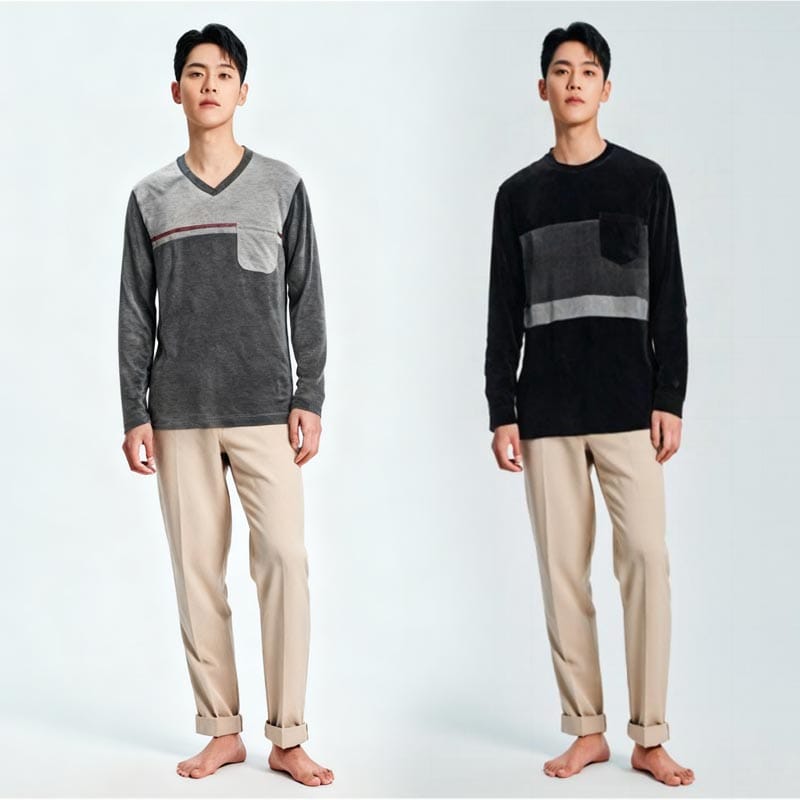
Inspect the elastic inside the actual proposed casing and check whether it lies flat, rolls or bunches. Review seam allowances and any attachment that helps hold its position. The casing must suit both the elastic and the selected fabric thickness. For men's cotton loungewear, inspect the inside join where several layers meet and observe whether it presses into the body while seated. Keep the approved construction detail with the sample rather than relying only on the outer waistband photograph.
Specify the drawcord route and usable ends
If a drawcord is proposed, show its entry, exit and routing on a drawing. Confirm the material, finished ends and the intended usable length with the supplier. Review whether it moves smoothly through the casing and whether the exits distort the waist. Inspect ordinary tying and untying in the worn garment. Keep functional and decorative drawcords distinguishable in the specification. A decorative cord should not be assumed to provide the same adjustment as a confirmed functional construction.
Use seated fit to separate waist and rise issues
Have the participant sit, lean forwards and stand again while wearing the complete outfit. Record waist pressure, rolling and any drop at the back. Compare the rise, seat and upper-thigh behavior before changing elastic tension. A restrictive pattern can pull on an otherwise suitable waistband. Men's cotton loungewear needs a whole-garment diagnosis, since reducing elastic pressure may improve one sensation while allowing the trousers to slip. Ask for a targeted correction linked to the observed movement and intended wearing position.
Check laundering effects on the joined waist assembly
Use the proposed care routine on the complete trousers and compare the rested waistband with the reference. Observe elastic position, casing shape, drawcord function and relevant dimensions. Identify the procedure and specimen in the record. The body fabric, elastic and cord can respond differently, so a fabric-only check cannot describe the assembled waist. If the buyer needs a quantified recovery or dimensional requirement, agree the method and acceptance criteria instead of copying an arbitrary number from another garment.
Coordinate the waistband with the matching top
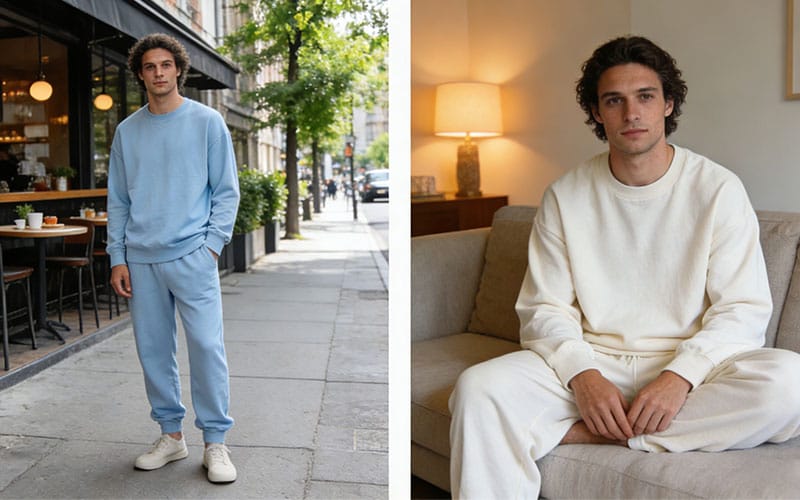
Review how the top overlaps the waist while standing, sitting and reaching. Check whether the hem catches on the casing, exposes the drawcord unexpectedly or adds visual bulk. Decide whether the cord is intended to be visible in the retail presentation. Keep those aesthetic decisions with the functional construction. If the top or trouser rise changes, repeat the complete-outfit review. A good waistband in isolation can still create an unsuitable combination when layered under the selected top.
Keep the approved component references in the order
Record the elastic, cord, casing construction and pattern revision together. Ask the supplier to identify any proposed replacement before it is used. For men's cotton loungewear repeat orders, compare new components and material with the retained complete sample, especially if the elastic source or body construction changes. Confirm the complete-set quantity, size pairing and packing details. The final instruction should let the sample room and inspector reproduce the approved comfort and appearance references without guessing from a size label.
A practical decision example
Compare one change at a time
Suppose a participant reports waist pressure when seated even though the relaxed waist measurement matches the chart. Inspect the elastic assembly, then observe whether the rise and seat pull the waistband downwards. If the pattern is creating tension, ask for a correction there before weakening the elastic. If the pattern behaves as intended, compare a confirmed alternative elastic in the same casing and repeat the movement check. Keep the top and participant consistent. After the care trial, update the approved references. This hypothetical case demonstrates why the buyer should not diagnose comfort from one flat measurement. It does not establish a universal elastic force, cotton construction or waistband dimension.
Decision table
| Component | Review | Reference |
|---|---|---|
| Elastic | Comfort, extension and recovery | Approved component and method |
| Casing | Flatness, rolling and inner bulk | Sewn construction |
| Drawcord | Route and ordinary adjustment | Material and finished ends |
| Pattern | Seated rise and waist behavior | Fit comments and revision |
Connect the fit review to the intended wearing routine
Evaluate the garment during sitting, walking and reaching rather than approving it from a front photograph alone. Record the participant's body dimensions, the sample size, the underlayers and the activities used. Different customers can share a waist measurement while needing different seat, thigh or rise allowances. A size label cannot communicate those differences to the pattern maker. Use observable comments such as a side seam pulling forward or a back waistband dropping when seated, then connect each comment to the relevant measurement or pattern area.
Agree which correction is being tested in the next sample and keep unrelated changes controlled. Review comfort together with the intended visual proportion, pocket behavior and complete outfit coordination. If a new fabric is introduced, repeat the relevant movement checks because a familiar pattern can behave differently in another weight or construction. Keep the written fit decision with the sample revision. That record gives merchandising and quality teams a common reference when they compare production garments or respond to a later request for a repeat order.
Compare the relevant product range and development context with your intended customer and order. Confirm any requested material, size or construction option before treating it as available.
References for the review
Use the relevant primary resources when framing market and test questions: FTC textile guidance, FTC care guidance, AATCC methods, ISO care symbols. Confirm the applicable scope and methods with the responsible specialist for the actual product and destination.
Discuss the proposed order
For your men's cotton loungewear project, send the design reference, intended customer, destination market, complete-unit quantity and size breakdown. Include the specific decisions described above and identify any material or construction that still needs confirmation. Review Xiuxinyang OEM/ODM services and contact the team with your men's cotton loungewear brief to discuss the appropriate sampling and order requirements.
Frequently asked questions
Does men’s cotton loungewear need a drawcord?
The design and intended adjustment determine that choice. Confirm a functional or decorative role and review the construction with the supplier. A drawcord is not a substitute for a suitable pattern and elastic assembly.
Why is the relaxed waist measurement insufficient?
It does not describe elastic force, recovery, casing behavior or seated fit. Review the sewn assembly and complete garment during movement, then record the relevant component and pattern decisions.
How can waistband rolling be investigated?
Inspect the elastic and casing combination, inner bulk and the pattern during sitting. Compare before and after care where relevant. Ask for a targeted correction rather than assuming every rolling issue needs wider elastic.
Can the cotton content be inferred from an image?
No. Request the actual composition and material reference and confirm availability for the project. Images in a development guide can illustrate garment structure without proving fiber content or performance.
What should the final approval include?
Include elastic and cord references, casing construction, pattern revision, movement observations and the agreed care check. Connect those decisions to complete-set quantities and sizes, and require review before components are substituted.

