Polyester Spandex Pajamas: Approve Stretch, Opacity and Finish
Table of Contents
Polyester spandex pajamas can be made in many constructions and finishes, so a blend description is only a starting point for buying decisions. Two materials with similar fiber percentages may differ in drape, opacity, surface feel and recovery. Buyers should define the intended garment experience and test the actual fabric and construction together. This guide focuses on sample observations that help distinguish a suitable development from an attractive swatch, without assuming a particular blend guarantees comfort or performance.
Start with the relevant Xiuxinyang product or service reference, then confirm the proposed materials and construction for your order.
Complete the material description before comparing options
Request the exact composition, knit construction, weight and finish for each candidate. Identify whether the face is smooth, peached or otherwise treated and inspect the reverse as well. Keep the supplier's material code with the swatch. A percentage description does not reveal how tightly the fabric is constructed or how it will behave in a loose garment. Compare options on the same information basis so a quotation for polyester spandex pajamas does not quietly substitute a different texture or weight.
Define stretch in the directions the garment uses
Observe extension and recovery in the relevant directions and request an agreed method where a measured requirement is needed. Review the body fabric and sewn seams together. A fabric can extend comfortably while a seam limits dressing or movement. Explain the intended fit and ease so stretch is not used as an excuse for an undersized pattern. Keep the test context and sample reference. A single hand pull is useful for initial comparison but does not establish a durable performance claim.
Check opacity in the intended fit and color
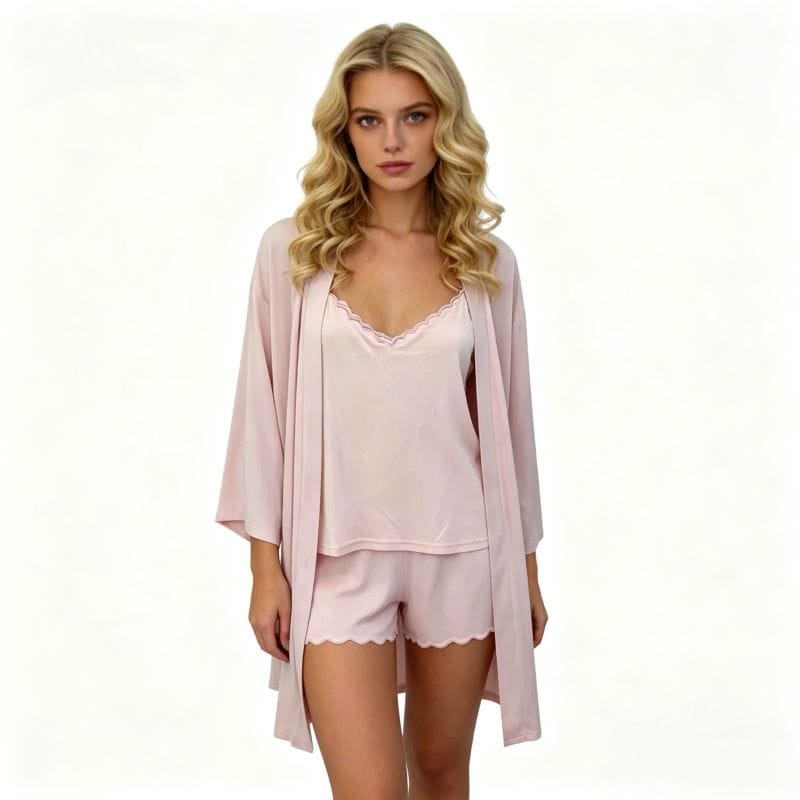
Review the fabric and garment under consistent lighting with the intended underlayers. Observe the areas that extend during sitting and reaching, since a relaxed swatch may conceal transparency under strain. Compare the actual proposed colors rather than assuming all shades behave identically. For polyester spandex pajamas, keep the opacity decision connected to the target silhouette and use. If coverage is inadequate, review fabric construction, color and fit as separate possible changes instead of automatically increasing weight without sampling.
Approve the surface finish with a physical reference
Compare face texture, softness and visual appearance on the selected fabric and finished sample. If a peached surface is intended, keep a clear reference that the buyer and supplier can both use. Review it after the proposed care routine for changes in feel or appearance. Ask for a test plan if a specific durability claim is important. Avoid translating a pleasing first touch into statements such as irritation free, permanently soft or suitable for every skin type without evidence.
Inspect seams during dressing and movement
Wear the polyester spandex pajamas and observe neckline, underarm, crotch and waistband behavior. Look for broken stitches, visible opening at seams, puckering and restrictive joins. Examine the inside finish for comfort and bulk. Ask the sample room to identify the stitch and thread combination used in the approved sample. If a change is proposed, compare a sewn trial under the relevant extension and care conditions. The selected construction should work with the material rather than relying on the fabric's stretch alone.
Review elastic and trim as separate materials
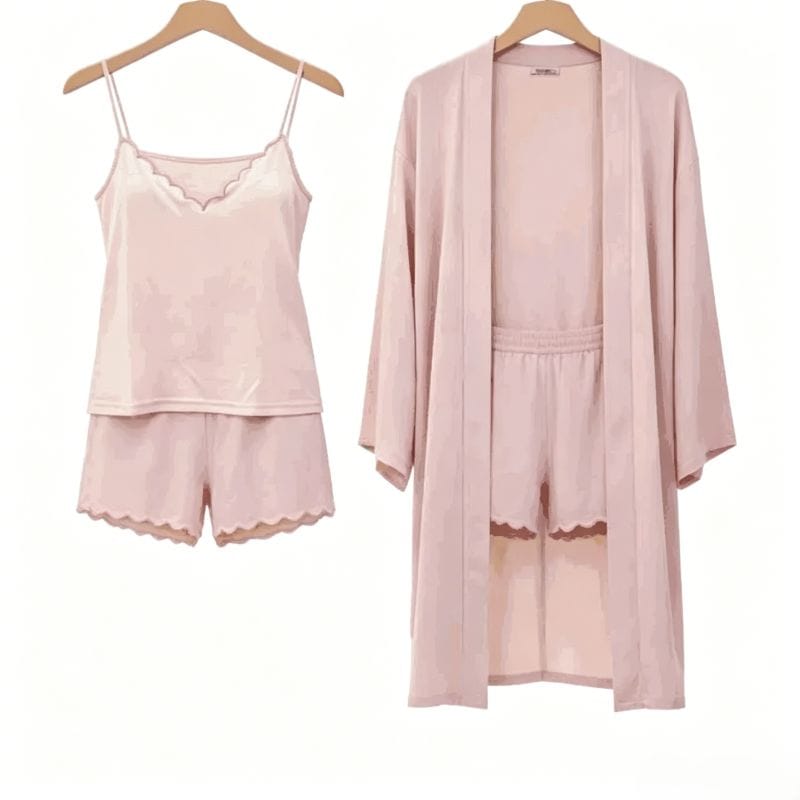
Where the design includes lace, binding, straps or waist elastic, compare those materials with the body fabric. Observe whether they recover differently, create gathers or limit the opening. Approve their shades in the assembled outfit and note any intended contrast. Keep component references in the bill of materials. A supplier's statement that the body contains spandex does not describe the behavior of a decorative edge or fastening, and those smaller components can determine the finished garment's comfort and shape.
Compare complete samples after the intended care routine
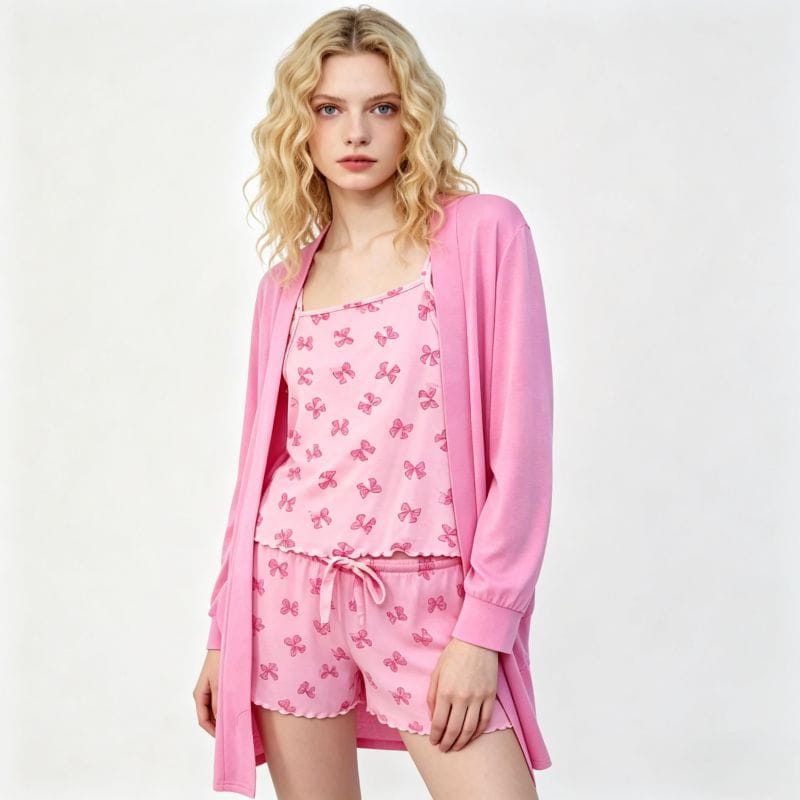
Record the procedure and compare rested samples for dimensions, seam appearance, opacity and surface finish. Review all pieces of a retail unit together. If the top and bottom use different constructions, check how their proportions and shade relationship change. Keep tested specimens identifiable and connect observations to the proposed care instructions. Polyester spandex pajamas should be approved as a complete product, with any measurable claims supported by an agreed evaluation rather than inferred from generic descriptions of the fibers.
Control substitution in the final order record
Include the material code, composition, construction, weight and finish in the approved specification. Identify which trim and seam references belong to that material. Ask the supplier to disclose any proposed replacement before production relies on it. For a repeat order, compare the new material and sample with retained references, especially for opacity and surface feel. A similar composition is not automatically an equivalent substitute. Keep the buyer's technical and commercial decisions attached to the same revision and complete-unit description.
A practical decision example
Compare one change at a time
Consider two proposed jersey swatches with the same stated blend. One feels softer initially, while the other provides the preferred coverage when stretched over the intended fit. Request garment trials in the relevant design rather than choosing from touch alone. Compare movement, seam behavior, surface appearance after care and the buyer's coverage requirement. Record which tradeoff the buyer accepts. If the softer material is revised, keep its new reference distinct from the original. This hypothetical comparison demonstrates why fiber percentages cannot settle the purchase decision. It does not imply that one finish is always better, nor does it establish a universal opacity or recovery requirement for every pajama customer.
Decision table
| Property | Review context | Approval reference |
|---|---|---|
| Stretch | Relevant directions and sewn joins | Agreed evaluation and sample |
| Opacity | Worn fit and proposed colors | Consistent lighting observations |
| Surface | Before and after care | Selected finish swatch |
| Substitution | New material versus retained sample | Written revision decision |
Review the complete set on the intended customer
Invite a fit participant who represents the intended customer to review the complete outfit. Record body measurements separately from garment measurements, and explain whether each garment measurement is taken flat or around the body. Ask the participant to sit, reach forward, raise both arms and walk at a normal pace. Photograph the front, side and back with permission. A convincing standing photograph can conceal a neckline that opens during movement, shorts that ride up or a waistband that rolls when seated. Those observations belong in the fit comments alongside the measured differences.
Keep the commercial decision attached to the technical comment. If a change improves coverage but alters the intended silhouette, ask the buyer to choose which outcome matters more. Specify one approved correction rather than sending several conflicting suggestions to the pattern maker. Review the revised garment in the same activities, with the same measurement method and comparable underlayers. Confirm fabric, trim and construction together before signing off. A change in one component may invalidate an earlier fit approval even when the nominal size label has stayed the same.
Compare the relevant product range and development context with your intended customer and order. Confirm any requested material, size or construction option before treating it as available.
References for the review
Use the relevant primary resources when framing market and test questions: FTC textile guidance, FTC care guidance, AATCC methods, ISO care symbols. Confirm the applicable scope and methods with the responsible specialist for the actual product and destination.
Discuss the proposed order
For your polyester spandex pajamas project, send the design reference, intended customer, destination market, complete-unit quantity and size breakdown. Include the specific decisions described above and identify any material or construction that still needs confirmation. Review Xiuxinyang OEM/ODM services and contact the team with your polyester spandex pajamas brief to discuss the appropriate sampling and order requirements.
Frequently asked questions
Do polyester spandex pajamas always have the same stretch?
No. Knit construction, yarn, finish and the actual material specification influence behavior. Compare the selected fabric and garment using an agreed method. Fiber percentages alone do not establish extension or recovery.
How can opacity be checked?
Review the actual proposed colors on the intended fit under consistent lighting and with appropriate underlayers. Observe areas that extend during movement. Keep those conditions in the approval record so later samples can be compared meaningfully.
Does a peached finish guarantee lasting softness?
A finish describes an initial material characteristic, not a lifetime guarantee. Compare the selected sample after the intended care routine and agree testing where a measurable durability claim is required. Avoid unsupported skin or comfort promises.
Why test seams when the fabric stretches?
A seam can limit extension, distort or break even when the body fabric extends. Review the proposed stitch and thread in the actual material during relevant movement and care checks, then keep the approved construction reference.
What should be confirmed before ordering?
Confirm the material code, composition, construction, weight, finish and trim combination. Add the intended fit, complete-set quantity, size breakdown, destination market and packing needs. Ask the supplier to identify any detail still requiring sample approval.