Pajama Bulk Order Checklist: When Is an Order Ready for Production?
A pajama bulk order checklist should answer one decision: can this exact set move into production without the factory having to guess? Release the order only when the product reference, material, size pairing, quantity breakdown and packing instructions agree. An attractive sample is not enough if its measurements or fabric differ from the documents that production will follow.
Table of Contents
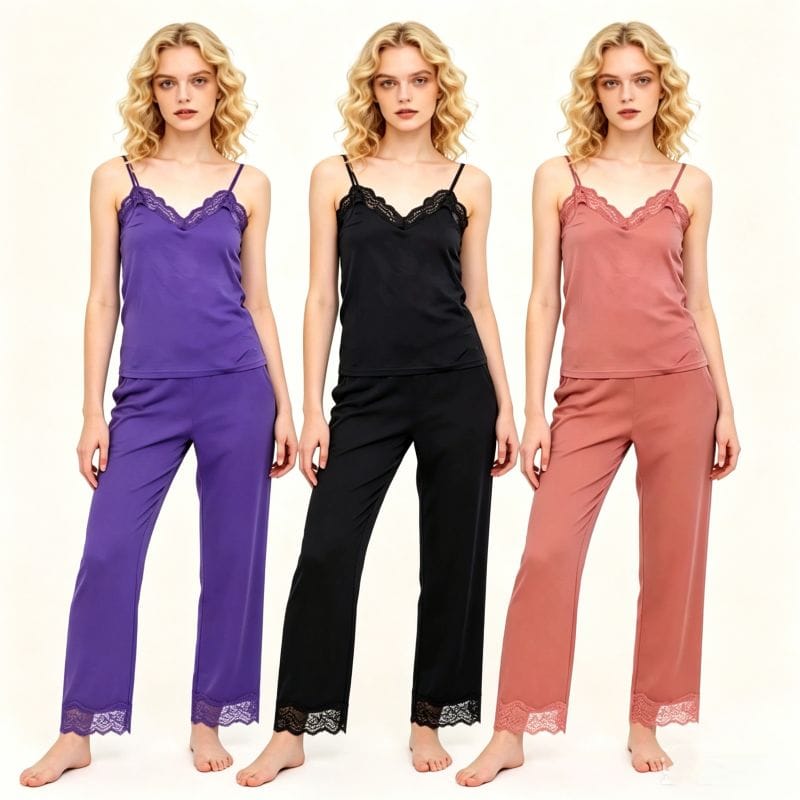
This checklist is for buyers who have already selected a style and are approaching bulk approval. It separates decisions that must be closed before cutting from checks that can happen later. For Xiuxinyang orders, the purchasing unit is the complete pajama set: tops and trousers are not sold separately.
Establish One Current Product Reference
Begin with a small approval file that identifies the style, revision date and person authorized to release production. Include the technical specification, material references, sample comments and packing instructions. Mark older versions as superseded rather than leaving several similarly named files in the same folder.
The physical sample and written specification need a clear relationship. A sample may demonstrate the approved fit while a later document changes a label position. Record that exception explicitly. Otherwise, one team can follow the sample while another follows a drawing, and both can believe they are working correctly.
Do not use a message such as “same as the last sample” without naming that sample. Record its reference, date and remaining changes. If there is no fully approved sample, list what each reference proves and which issues remain open. Our pre-production sample checklist covers the sample review itself; the release decision here concerns the whole order.
Freeze the Complete-Set Quantity Matrix
Write order quantities as complete sets by style, color and size. A total quantity alone does not tell production how many matching tops and trousers belong in each combination. The purchasing document, production worksheet and packing instructions should reconcile to the same total.
For an illustrative two-color order, a buyer might require a different size distribution in each color. Copying one distribution across both colors without approval changes the assortment even though the total set count remains correct. Make the required matrix part of the signed specification, not an informal attachment that can be overlooked.
Also define the top-to-trouser pairing. If your label calls a set “M,” specify the approved measurements of both components and the labels that appear on them. Do not assume a familiar size letter has identical dimensions across markets. Resolve pairing questions before preparing labels or mixed-size cartons.
Approve the Fabric Reference, Not Just the Fabric Name
Terms such as jersey, cotton and fleece describe different aspects of a material. Jersey describes a construction; cotton describes a fiber; fleece describes a fabric category and surface treatment. The production reference should identify the selected composition, construction, finish, color and weight, with an agreed tolerance where appropriate.
Xiuxinyang can customize fabric weight. That flexibility does not make the weight an optional field at production release: the selected value and its unit must still be agreed. A gram figure without a unit may refer to fabric mass per area or an item weight, and those are not interchangeable. Use the approved swatch to resolve what the number means.
Ask whether the swatch, sample and bulk fabric use the same material reference. If the factory proposes a substitute, review it as a change, not as an administrative update. A similar color or hand feel does not establish equivalent stretch, opacity or after-wash behavior. Approval should identify the replacement and the checks needed before it is used.
Close Fit and Wash-Performance Decisions Together
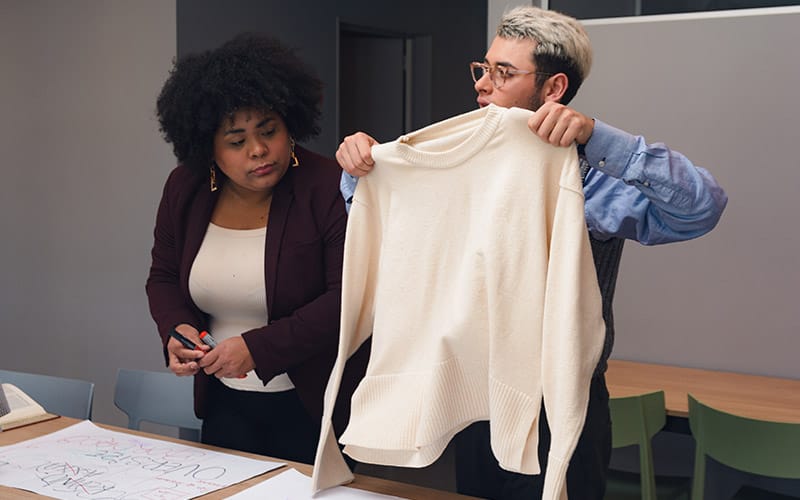
Check the agreed measurement points for both garments, including the method of measuring the waistband. A relaxed waist measurement and a stretched waist measurement answer different questions. State whether the sample is measured flat, how seams are aligned, and which areas are critical for the intended fit.
Review the set after the agreed washing and drying procedure as well as before washing. The question is not merely whether each garment changes size, but whether the top and trousers still function as a coordinated set. Differences in fabric, trims or construction can create a mismatch that was not obvious at initial fitting.
If a laboratory procedure is required, identify it precisely. ISO 6330:2021 specifies domestic washing and drying procedures for textile testing; it does not supply your product’s acceptance limits. Agree the procedure, relevant measurements and limits with the testing party. This is a suggested verification route, not a claim that a Xiuxinyang order has passed that test.
Use the pajama size grading guide when the uncertainty concerns the size range rather than a single sample. A good fit in the development size should not be treated as approval of every other size.
Use a Release-Gate Table
An approval table works best when it points to evidence and records the consequence of an unresolved item. Avoid a column of unchecked promises such as “quality confirmed.” The table below is a suggested order-control tool, not an industry certification or a universal inspection standard.
| Decision | Evidence to record | Hold production when |
|---|---|---|
| Product identity | Style reference and current specification revision | Sample and specification describe different products |
| Material | Approved swatch and final composition, finish and weight | A substitute material has not been reviewed |
| Set quantities | Color-size matrix expressed in complete sets | Component totals or size pairing do not reconcile |
| Fit | Measurement sheet and approval of relevant sizes | A critical measurement or tolerance is unresolved |
| Labels | Approved artwork and placement reference | Composition or size information is still changing |
| Packing | Set packing and carton allocation instructions | Warehouse requirements cannot be followed reliably |
| Exceptions | Written list with an owner and closure condition | An exception affects cutting, materials or product identity |
Treat “conditional approval” carefully. It can be useful for an item that is genuinely independent of cutting, but should not become a way to conceal an unresolved fabric or fit decision. Write exactly what activity may proceed and what remains on hold.
Make Label and Packing Approval Operational
Review actual artwork rather than the names of the required labels. A line reading “care label included” does not establish its text, language, dimensions, placement or relationship to the approved fabric. Buyers should confirm destination-specific requirements with their relevant advisers; a sample label from another order is not proof of compliance for this one.
Then pack a complete set according to the intended method. Check that the top and trousers remain together, the size can be identified without unnecessary handling, and any barcode refers to the correct sellable unit. A clear retail presentation can still create a warehouse problem if the outer carton describes only a style name and hides the size distribution.
Define whether cartons contain a single variant or a planned assortment, and how that information is shown. If different distributors require different packing, separate those instructions by destination. The pajama packaging guide can support this review, but the final instruction should be specific to the actual order.
Decide How Quality Decisions Will Be Escalated
Name the person who can accept a deviation and the person who communicates that decision to production. A sales conversation, an inspector’s observation and a buyer’s approval are different records. Do not allow a comment to become an approval simply because it appears in the same message thread.
Agree how defects will be described. A photograph should identify the style, component, location and relevant reference, and should include scale when size matters. “Bad sewing” is less useful than a clear description of the seam and its departure from the approved construction. This makes a response possible without repeated clarification.
If acceptance sampling is part of the agreement, document the sampling plan and defect definitions separately. Do not copy a numeric inspection setting from an unrelated product. The factory and inspector need to know what evidence triggers rework, additional checks or a hold, not just that the buyer expects “good quality.”
Keep Cutting Approval Separate From Shipping Approval
Releasing an order for production does not mean approving the finished shipment. Cutting approval concerns the agreed inputs and specification; shipping approval concerns the goods actually made, their quantities, packing and any outstanding inspection issues.
Create a separate final-review point. Reconcile finished sets against the ordered matrix, identify any approved quantity deviations, and check that the packing list reflects the cartons rather than an earlier production estimate. The person receiving the shipment needs a usable record of what is inside it.
Ask for a timeline built around these decision points rather than one unexplained completion date. The supplier should identify which approvals or materials the plan depends on. This is not a request for an unsupported delivery promise; it is a way to make dependencies visible early enough for the buyer to act.
Handle Late Changes as Controlled Revisions
A change after approval should state what is changing, which quantities it affects and whether any work has already used the old version. Ask for the consequences before giving final authorization. A small-looking alteration to a label, waistband or fabric finish can affect more than the line item that first prompted it.
For example, an illustrative buyer might revise the trouser length after reviewing a larger fit sample. The team should identify which sizes require a revised pattern, whether cutting has begun, and which sample or measurement sheet now governs the order. Simply uploading a new chart does not answer those questions.
Keep the original approval and the revision record. Overwriting the old document removes the evidence needed to explain why different production stages used different instructions. Once the revision is accepted, clearly distribute the current version and withdraw the old one from active use.
Before release, ask a colleague who did not prepare the file to locate the governing sample, quantity matrix and material reference. This simple handover exercise can reveal missing attachments or conflicting filenames that the original author no longer notices. The colleague should be able to identify the current instruction without reconstructing a long message history.
Keep an exception register with the decision, owner, affected styles and closure evidence. When an exception is closed, record the actual approval rather than merely changing its status to complete. This is particularly useful when purchasing, design and warehouse teams are in different locations and cannot inspect the same physical sample together.
Conclusion
The useful outcome of a pajama bulk order checklist is a clear release decision, not a longer document. Product identity, material, fit, set quantities and packing should tell the same story. Hold unresolved decisions that could change the goods, and reserve a separate approval for the finished shipment.
To discuss a Xiuxinyang order, send the current set specification and remaining approval questions. Include the color-size matrix and any requested fabric-weight customization so the review starts from the actual purchasing requirement.
FAQ
Can we approve bulk production before the final packaging artwork is ready?
Only after agreeing which activities can proceed without it. Packaging may affect labels, barcodes, folding or carton allocation, so do not assume it is independent of production. Record the unresolved item, responsible person and point beyond which work must stop without approval.
Should one person approve both the top and the trousers?
Different specialists can review each component, but one final record should approve the complete set and resolve conflicting comments. A top approval and a trouser approval from different revisions do not create an approved set.
Does a fabric test report approve the finished pajamas?
No. A fabric report addresses its stated specimen and test conditions. Finished garments also require checks of construction, dimensions, trims, labels and packing. Confirm whether the tested material is the material used for the order and whether additional garment checks are needed.
What should happen when the approved swatch is unavailable?
Request a proposed replacement with its composition, construction, weight and finish. Compare it against the original requirement, determine which sample checks must be repeated, and approve or reject the change explicitly. Do not silently replace the reference in the order file.
Can a buyer order replacement trousers instead of complete sets?
Xiuxinyang’s set programs do not sell tops or trousers separately. Plan the purchase and any proposed follow-up requirement around complete sets, and discuss the situation before assuming a separate-component order is available.