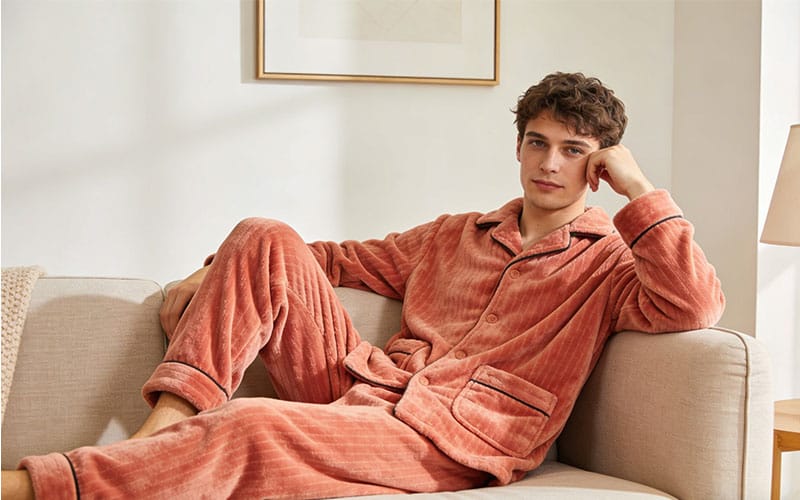
Private Label Pajamas: A Practical Guide for Brands Starting a Sleepwear Line
There is a big difference between finding a pair of pajamas you like and developing a pajama collection that can actually be produced, reordered, and sold under your own brand.
A style may look straightforward on a mood board: a relaxed shirt, matching pants, contrast piping, a soft fabric, and your logo on the label. Once development begins, however, every one of those choices becomes a specification.
How relaxed should the fit be? How much does the fabric shrink? Should the waistband use exposed or enclosed elastic? Will the piping stay flat after washing? Does the print repeat work across multiple sizes? Where should the care label sit so that it does not irritate the wearer?
These are the details behind successful private label pajamas.
For brands entering sleepwear, the smartest approach is not to rush toward the largest possible collection. It is to get the fundamentals right first: customer, fabric, fit, sizing, samples, branding, quality standards, and production planning.
This guide walks through those decisions from a buyer’s point of view and explains what is worth discussing with a manufacturer before your pajamas reach bulk production.
Table of Contents
What Does Private Label Mean in Pajama Manufacturing?
Private label can mean different things depending on the supplier.
At the simplest level, you may select an existing pajama style, change the color, add your own woven label and care label, and use custom packaging.
At the other end of the spectrum, you can develop a completely original product using your own tech pack, measurements, fabric, print, trims, labels, and packaging.
Both can be considered private label pajamas, but the amount of development work is very different.
For a new brand, modifying a proven silhouette may be a sensible way to test the market without introducing too many variables at once.
An established sleepwear brand may need much more control over fit, construction, fabric hand feel, proprietary prints, or signature details.
The important question is not whether one approach is more “professional” than another.
It is whether the manufacturing model gives your brand enough control over the parts of the product your customer will actually notice.
Define the Pajama Customer Before Choosing the Pajama
One of the easiest ways to make product development unnecessarily difficult is to start by collecting styles without first deciding who you are designing for.
“Women’s pajamas” is still a very broad category.
A customer buying a lightweight summer set may have completely different expectations from someone buying plush winter sleepwear. A boutique lifestyle brand may want loose silhouettes and subtle neutral colors, while a family sleepwear brand may care more about coordinated prints and children’s sizing.
Before contacting a private label pajama manufacturer, get clear on a few basics:
Who is going to wear the product?
When will they wear it?
What climate and season is it designed for?
What price position is the brand aiming for?
Does the customer primarily care about softness, warmth, breathability, appearance, easy care, or a combination of these?
It sounds obvious, but these answers affect almost every later decision.
A pajama fabric cannot really be judged as “good” or “bad” without knowing the type of product it is supposed to become.
Keep the First Collection Manageable
Sleepwear lends itself to collections.
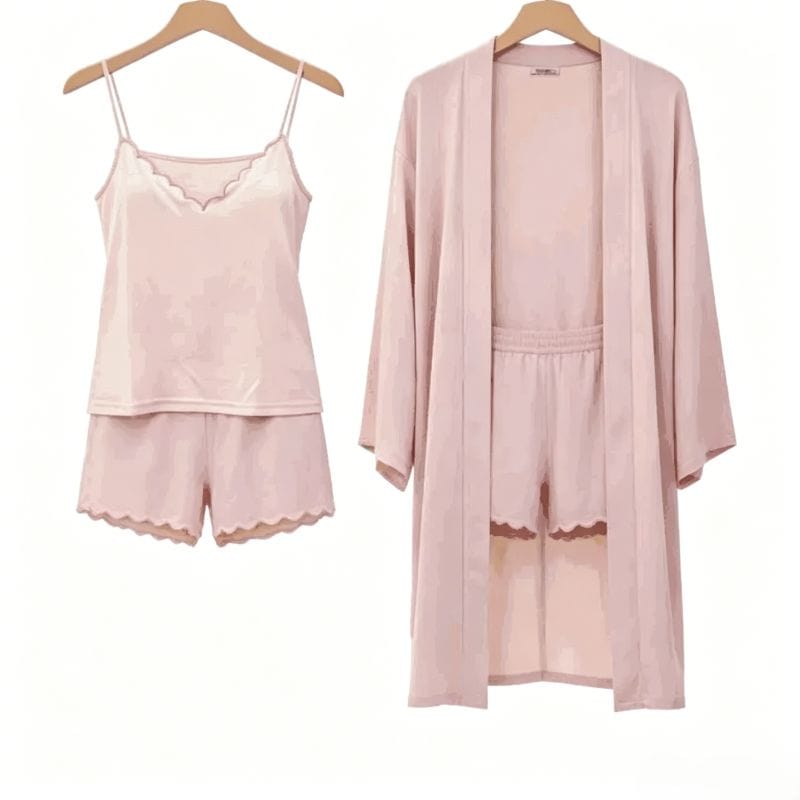
Once you have one pajama set, it is easy to imagine adding shorts, robes, nightshirts, men’s versions, children’s versions, several prints, and perhaps a matching eye mask.
That is where a simple launch can become complicated very quickly.
Every new style, color, print, and size creates another SKU to manage. It can also increase fabric purchasing complexity, sample rounds, trim requirements, packaging variations, and inventory risk.
A focused first collection is often easier to execute well.
For example, a brand might begin with:
- one long pajama set
- one short pajama set
- two or three coordinated colors
- one core fabric
- a consistent size range
That is enough to establish a visual identity without asking the production team to manage dozens of variables before the product has even been tested in the market.
After the first season, real sales data can help decide where to expand.
Maybe customers want more colors but not more silhouettes. Maybe the short set sells much faster than the long set. Maybe one size range is consistently understocked.
Those are much better signals for product expansion than guesswork.
Fabric Is Where a Pajama Collection Really Begins
For most garments, fabric matters.
For sleepwear, it is especially difficult to hide a poor fabric choice because the garment may stay against the skin for eight hours at a time.
That is why fabric selection should go beyond choosing something that feels soft when you first touch a swatch.
Cotton
Cotton is familiar, comfortable, and versatile, which makes it a natural starting point for many private label pajamas.
But “100% cotton” tells you surprisingly little about how the finished garment will behave.
A lightweight cotton jersey, interlock knit, brushed cotton, poplin, and waffle knit can all feel and perform very differently.
When comparing cotton options, look at the construction, weight, surface feel, shrinkage, opacity, drape, and recovery—not just the fiber content.
Modal
Modal is frequently chosen for sleepwear when a brand wants a softer, smoother hand feel and more fluid drape.
It can work especially well for relaxed women’s pajama sets and loungewear.
The key is to test the actual fabric rather than making decisions based on fiber name alone. Different blends and constructions can produce noticeably different results.
Viscose
Viscose and viscose blends can create light, flowing sleepwear with an attractive drape.
If the design depends on that fluid appearance, the fabric can be a good match.
Wash behavior and dimensional stability are still worth checking during sampling, particularly for styles where finished measurements are important.
Waffle Knit
Waffle fabric brings texture to a collection without relying on a print.
It works particularly well for relaxed loungewear, robes, transitional-season pajamas, and styles that are meant to look good beyond the bedroom.
Because knitted textures can change after washing, it is worth checking shrinkage before approving final measurements.
Fleece and Coral Fleece
For winter sleepwear, fleece gives brands another set of variables to consider: warmth, pile, weight, shedding, seam bulk, and recovery after washing.
A thick fabric can feel luxurious in the hand but become cumbersome around cuffs, collars, or multi-layer seams if the garment was not designed around it.
Velvet
Velvet creates a completely different product character.
It can work well for holiday collections, richer winter palettes, and more fashion-driven sleepwear.
The trade-off is that cutting and sewing require more attention because pile direction and fabric movement can affect how the finished garment looks.
There is no single “best fabric for pajamas.”
There is only the fabric that best suits the product you are trying to make.
Ask for More Than a Fabric Composition
If a supplier tells you a fabric is “95% viscose, 5% spandex,” you still do not know enough to approve it.
Two fabrics with the same composition may differ in weight, stretch, recovery, finishing, softness, opacity, and wash performance.
For private label sleepwear, it is useful to discuss:
- fiber composition
- fabric construction
- weight or GSM
- usable width
- stretch direction
- recovery
- shrinkage
- color options
- finishing
- print compatibility
Whenever possible, review physical swatches or samples before committing to bulk fabric.
Screens are useful for choosing a direction. They are much less useful for judging hand feel.
Good Pajama Fit Is About Movement, Not Just Appearance
Pajamas are not worn like tailored jackets.
People sit cross-legged in them. They curl up on the sofa. They sleep on their side. They bend their knees, raise their arms, and move around under bedding.
That changes how fit should be evaluated.
A pajama set can look perfectly fine on a standing model and still feel restrictive once someone tries to sleep in it.
During fitting, pay close attention to:
- shoulder movement
- armhole comfort
- sleeve length
- chest ease
- hip ease
- rise
- thigh width
- waistband tension
- inseam
- cuff opening
The waistband deserves particular attention.
If it is too tight, customers notice immediately. If the elastic has poor recovery, the pants may feel fine during the first wear and loose after repeated use.
A successful pajama fit usually feels easy without looking shapeless.
That balance should be established during development rather than left for the sewing floor to interpret.
Turn “Relaxed Fit” Into Actual Measurements
Words such as “relaxed,” “oversized,” “slim,” and “regular” are useful when describing a design, but they are not manufacturing specifications.
If you send three factories a note that says “make the pants slightly loose,” you may get three different interpretations.
Measurements remove that uncertainty.
A proper specification can define points such as:
- chest width
- body length
- shoulder width
- sleeve length
- waist
- hip
- front rise
- back rise
- thigh
- inseam
- leg opening
It should also include acceptable tolerances.
Once a sample has the fit you want, keep that approved measurement set as part of the production reference.
This becomes especially valuable when you reorder the style several months later.
Give Your Manufacturer a Useful Tech Pack
Factories work best when there is something concrete to work from.
A tech pack does not have to look beautiful. It needs to be clear.
For custom private label pajamas, it may contain:
- front and back technical drawings
- measurements
- construction notes
- seam details
- fabric information
- color references
- artwork
- print scale
- trim specifications
- buttons
- elastic
- piping
- labels
- packaging instructions
If you are a smaller brand without a finished tech pack, you can still start the conversation with sketches, reference garments, photographs, measurements, fabric ideas, and written notes.
Just recognize that these references need to become more precise as the project progresses.
A Pinterest image can explain the mood you want.
It cannot tell a production line what the finished chest width should be.
Treat Sampling as Development, Not as a Formality
The sample is where the design stops being theoretical.
This is when you find out whether the fabric and pattern actually work together.
Maybe the top is too short once the fabric relaxes. Maybe the collar does not sit correctly. Maybe the elastic feels stronger than expected. Maybe contrast piping makes the seam too stiff. Maybe the print looks much larger on a finished garment than it did on the artwork file.
Those are normal development discoveries.
What matters is how they are recorded and corrected.
When commenting on a sample, avoid vague feedback wherever possible.
Instead of:
“Make the sleeves a little longer.”
A comment such as:
“Add 2 cm to finished sleeve length.”
is much easier to execute consistently.
Instead of:
“The waistband feels tight.”
you can compare the relaxed and stretched waist measurements and agree on a revised elastic specification.
Sampling becomes much more efficient when comments move from opinion to measurement.
Wash the Sample Before You Approve It
This sounds simple, but it is one of the most useful checks a sleepwear brand can make.
The customer will not wear the pajama only once.
Wash the sample according to the intended care instructions and look again.
Has the length changed?
Did the side seams twist?
Did the fabric surface change?
Did the print fade?
Did the elastic recover?
Did the piping stay flat?
Does the garment still fit the way you intended?
A pajama that looks excellent straight off the sample table but performs poorly after laundering is not ready for production.
Pre-production testing is usually much cheaper than dealing with complaints after the collection reaches customers.
Build Sizing Around Your Market
A size label is not a measurement standard.
One brand’s Medium can fit like another brand’s Small or Large.
That is why copying a generic size chart from the internet is a risky shortcut.
Your size range should reflect your customer, product category, intended ease, and target market.
Once the base pattern is approved, sizes need to be graded.
This does not mean simply adding the same number of centimeters to every measurement.
Shoulders, neckline, sleeve length, rise, hip, waist, and inseam all behave differently as sizing changes.
If the collection covers a broad range, reviewing more than one size before bulk production can help uncover grading problems that would never appear in the base sample.
Your Branding Should Feel Like Part of the Garment
Private label is not simply sewing somebody else’s name into a neck label.
The better collections treat branding as part of the product.
Depending on the style and sales channel, this might include:
- woven brand labels
- printed labels
- care labels
- size labels
- embroidery
- logo prints
- branded buttons
- hangtags
- belly bands
- stickers
- custom bags
- gift boxes
Not every product needs all of these.
In fact, over-branding can make a simple sleepwear collection feel less refined.
The goal is consistency.
If the product is positioned as minimal and premium, the label, hangtag, typography, colors, and packaging should tell the same story.
If it is a playful family pajama collection, the packaging may reasonably be much more expressive.
Branding decisions should be made early enough that they can be included in sampling and costing rather than added as an afterthought once production has started.
Prints Need Production Thinking Too
A print that works as artwork does not automatically work on a garment.
Scale matters.
Repeat matters.
Placement matters.
The fabric matters.
A tiny all-over print behaves differently from a large engineered motif. A digital print may make sense for one design while another is better suited to a different process.
For printed private label pajamas, review the artwork on the actual fabric whenever possible.
Also think about what happens at seams.
If the product uses stripes, checks, or directional motifs, customers may notice alignment. If the fabric stretches, the print appearance may change when worn.
For matching family pajamas, consistency across adult and children’s sizes becomes another consideration. A print scale that looks balanced on an adult shirt can overwhelm a toddler’s garment.
These are exactly the kinds of issues that are easier to solve during development than during final inspection.
MOQ Depends on What You Are Asking the Factory to Make
Brands often open a conversation with one question:
“What is your MOQ?”
It is understandable, particularly when managing cash flow.
But MOQ is rarely independent of the product specification.
A style using an available fabric and standard trims may be relatively straightforward to produce.
A project that requires custom-dyed fabric, an exclusive all-over print, custom buttons, several colorways, broad sizing, and special packaging creates a very different sourcing situation.
That is why a more useful conversation is:
“Here is the product we want to make. What is the practical production quantity for this specification?”
If the number is higher than expected, ask what is driving it.
Sometimes simplifying the number of colors or using an available fabric can make the first run easier to manage without changing the core design.
Do Not Compare Quotations Until the Specifications Match
It is tempting to line up several unit prices and choose the cheapest.
The problem is that apparel quotations are only comparable when suppliers are pricing the same garment.
If one private label pajama manufacturer is using a lighter fabric, a different elastic, standard packaging, and simpler construction, its price naturally looks better.
Before comparing factories, check whether the quotation is based on the same:
- fabric
- weight
- trims
- measurements
- construction
- decoration
- labels
- packaging
- quantity
A lower price is valuable only if the product still meets the standard your customer expects.
Saving a small amount per set is rarely a good trade if the waistband fails, the fabric feels noticeably cheaper, or measurements become inconsistent.
Quality Control Starts Before the Final Inspection
Final inspection is important, but it cannot fix every production problem.
By the time finished garments are packed, fabric has already been cut and sewn.
A more sensible quality process follows the product through production.
Before cutting, important materials can be checked against what was approved.
During sewing, construction and workmanship can be monitored.
Finished garments can then be checked for issues such as:
- measurement deviations
- skipped stitches
- loose threads
- uneven seams
- stains
- holes
- incorrect labels
- print problems
- shade differences
- packaging errors
The strongest reference point is the approved sample together with the agreed measurements and workmanship requirements.
“Make it good quality” is too subjective.
An approved garment gives both buyer and manufacturer something physical to compare against.
Children’s Pajamas Need Extra Attention
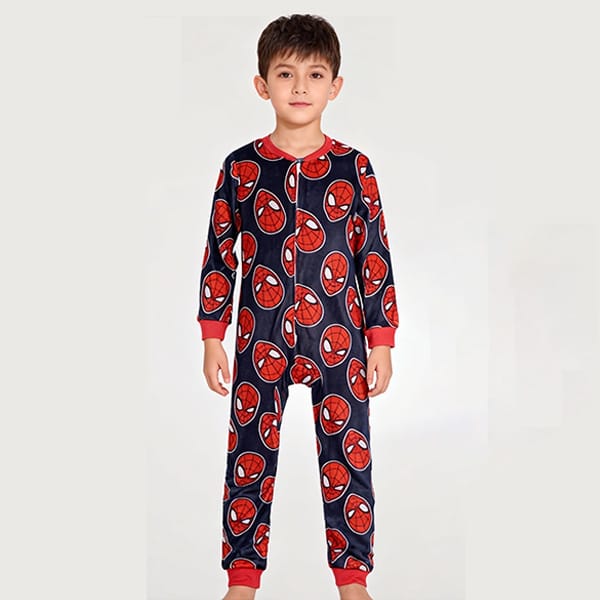
If your collection includes children’s sleepwear, do not simply scale down an adult pajama.
Children’s products can be subject to different safety, labeling, sizing, and flammability requirements depending on where they are sold.
For the U.S. market, brands should review applicable children’s sleepwear requirements through the U.S. Consumer Product Safety Commission.
Other countries and regions may apply different requirements.
The destination market should therefore be discussed before production rather than after the garments have already been made.
The same principle applies to textile labeling and other market-specific compliance requirements.
Know where the product is going before deciding what standards need to be considered.
Packaging Is Part of Production Planning
Packaging seems easy until thousands of garments need to be repacked because one detail was overlooked.
Before production is complete, decide how each pajama set should be:
folded
labeled
bagged
stickered
barcoded
packed into cartons
If the order is going to a retailer, warehouse, distributor, marketplace fulfillment center, or 3PL, check whether they have their own carton and barcode requirements.
For ecommerce brands, think about the customer’s experience when the package arrives.
Sleepwear is often bought as a gift, which means presentation may matter more than it does for a basic commodity garment.
You do not necessarily need expensive packaging.
You do need packaging that fits the brand and works with your fulfillment process.
Seasonal Pajamas Have Less Room for Production Delays
Christmas pajamas are an obvious example.
A core black pajama set arriving three weeks late may still be sellable.
A Christmas collection arriving after the peak holiday shopping period is a very different problem.
For seasonal private label pajamas, work backward from the date the products actually need to be available for sale—not the date you hope the factory finishes sewing.
Allow time for:
design
fabric sourcing
sampling
sample revisions
approval
bulk production
inspection
shipping
customs
warehouse receiving
fulfillment preparation
The earlier stages are where you want flexibility.
If a sample needs another revision, you should be able to make it without choosing between fixing the product and missing the launch.
What Should You Send When Contacting a Pajama Manufacturer?
A useful first inquiry does not need to be long.
It just needs enough information for the manufacturer to understand what you are trying to make.
For example:
Product: Women’s long-sleeve pajama set
Market: United States
Sizes: XS–XXL
Fabric: Soft jersey; open to recommendations
Colors: Three
Branding: Woven label, care label and hangtag
Packaging: Individual packaging with barcode
Design: Tech pack available
Quantity: Estimated quantity per color provided
Launch: Required warehouse date provided
That gives a manufacturer much more to work with than:
“Hi, I want custom pajamas. Please send price.”
If you do not know every specification yet, that is fine.
Say which areas are still open.
A capable manufacturer should be able to discuss options without pretending every decision has already been made.
Questions Worth Asking Before You Place an Order
When talking to a potential private label pajama manufacturer, concentrate on questions that reveal how the factory works rather than questions that can be answered with a simple yes.
Ask what pajama fabrics they regularly work with.
Ask how they handle sample comments.
Ask what happens when bulk fabric behaves differently from the sample fabric.
Ask how measurements are checked during production.
Ask how custom labels and packaging are managed.
Ask what information they need before they can give you an accurate quotation.
Ask how repeat orders are controlled against the original approved sample.
Good sourcing conversations tend to become specific very quickly.
If every answer is simply “yes, we can do it,” you still know very little about how your product will actually be managed.
Common Mistakes That Make Pajama Development Harder
Most production problems do not begin at the sewing machine.
They begin with unclear decisions.
Choosing a Fabric Only Because It Feels Soft
Hand feel matters, but so do shrinkage, recovery, stability, opacity, and washing performance.
Approving the Fit From Photos
Photos can show proportion.
They cannot tell you how the waistband feels or whether the rise is comfortable when sitting.
Launching Too Many SKUs
Every extra print, color, style, and size makes forecasting and production more complicated.
Leaving Labels and Packaging Until the End
These items need sourcing and approval too.
Changing the Design After Bulk Materials Are Ordered
Late changes are almost always more expensive than early changes.
Choosing a Factory Only by Unit Price
The cheapest quotation does not necessarily produce the lowest total cost if quality problems, delays, rework, or inconsistent sizing follow.
Working With Xiuxinyang on Private Label Pajamas
At Xiuxinyang, we work with brands looking to develop custom pajamas, sleepwear, loungewear, and related apparel collections.
A pajama project may begin with a finished tech pack, a reference garment, or simply a clear design direction that still needs development.
From there, the focus is on turning the idea into something that can actually be manufactured consistently—choosing appropriate materials, developing samples, refining construction and fit, confirming branding details, and preparing the approved design for bulk production.
For buyers, that communication matters.
A good manufacturing relationship is not about saying yes to every request. It is about identifying practical issues early enough to solve them before they become production problems.
You can view more of our current apparel categories on the Xiuxinyang Products page.
FAQ About Private Label Pajamas
What are private label pajamas?
Private label pajamas are sleepwear produced by a manufacturer and sold under your own brand. Depending on the project, you may customize the style, fabric, colors, fit, labels, prints, trims, and packaging.
Do I need a tech pack to manufacture custom pajamas?
A tech pack is the clearest way to communicate a custom design, but early development can also begin with reference garments, sketches, measurements, photographs, and written specifications. The information should become more detailed before bulk production.
What fabric is best for private label pajamas?
It depends on the customer and season. Cotton, modal, viscose, waffle knit, fleece, velvet, and blended fabrics can all work well for different types of sleepwear. The right choice should balance comfort, appearance, wash performance, climate, and product positioning.
How do I know whether a pajama sample is ready for production?
Check more than appearance. Review measurements, fit, movement, seams, fabric behavior, elastic, trims, prints, labels, and packaging. Washing the sample before final approval can also reveal problems that are difficult to see when the garment is new.
Can private label pajamas include custom labels and packaging?
Yes. Depending on the project, branding can include woven or printed labels, care labels, size labels, hangtags, embroidery, printed logos, stickers, bags, sleeves, or boxes.
Conclusion
A good pajama collection often looks simple when it is finished.
Getting it to that point takes a surprising amount of detail.
Fabric has to work with the silhouette. The fit has to remain comfortable when the wearer moves and sleeps. Measurements have to translate across sizes. Labels, prints, trims, and packaging all need to arrive at the right stage of production. And the approved sample needs to be clear enough that bulk garments can be compared against it.
That is the real work behind private label pajamas.
For a new brand, there is no need to solve everything in the first collection. Start with a clear customer, a manageable range, and products you can execute well. Once those styles are selling, expanding into new fabrics, prints, seasonal collections, or additional categories becomes much easier.
Developing a Private Label Pajama Collection?
If you are preparing a new pajama, sleepwear, or loungewear line, Xiuxinyang can work with you from early product development through sampling and bulk manufacturing.
Send us your tech pack, reference style, fabric ideas, size range, branding requirements, and estimated order quantity. We can review the project with you and discuss a practical production approach based on the product you actually want to make.
Contact Xiuxinyang to discuss your next sleepwear collection.