2026 Loungewear Trends Buyers Can Actually Turn Into Sellable Products
Buyers do not need loungewear trends as abstract inspiration only. They need to know which ideas can become sellable products with realistic fabric, fit, photography, packaging, and reorder planning.
This article reviews loungewear trends from the buyer’s side, focusing on what can move from mood board to sample, then from sample to a customer-ready private label launch.
The Trend-to-Product Problem Buyers Need to Solve
The practical buyer problem behind this topic is choosing trends that can become sellable products. That problem should guide the product brief, sample review, quality checks, packaging decisions, and final supplier communication.
Summary of 2026 Loungewear Trends & Sourcing Matrix
To help e-commerce buyers, store owners, and product developers quickly evaluate upcoming product opportunities, the following matrix breaks down the top five market trends by target audience, ideal fabric types, and core manufacturing considerations:
| Trend Category | Target Audience | Recommended Fabrics | Key Sourcing & Quality Focus |
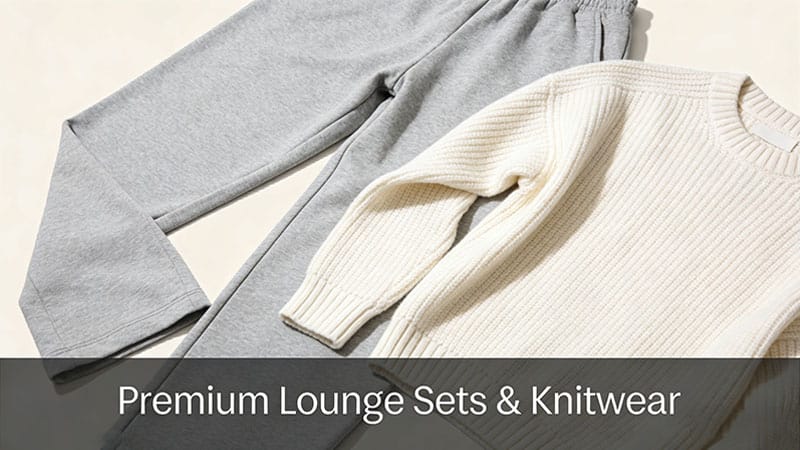
| 1. Ribbed Knit Lounge Sets | Gen Z & Millennials (Work-from-Home & Errands) | Cotton-Spandex Blends, Modal Rib Knit | High elastic recovery to prevent waistband and cuff sagging after washing. |
| 2. Aesthetic Satin & Silk Robes | Gift Buyers, Brides, Luxury-Seeking Consumers | High-Density Polyester Satin, Mulberry Silk | Low MOQ support for custom monograms, woven labels, and delicate embroidery. |
| 3. Oversized Organic Cotton Pajamas | Eco-Conscious Shoppers & Classic Sleepwear Lovers | 100% Organic Cotton, Bamboo-Cotton Blends | Verification of international compliance certifications like OEKO-TEX Standard 100. |
| 4. Couples & Family Matching Sets | Families, Couples, Digital Content Creators | Cozy Flannel (Winter), Lightweight Poplin/Modal (Summer) | Comprehensive size grading from infant apparel to inclusive adult sizing options. |
| 5. Chic Plus-Size Loungewear | Inclusive Sizing Seekers & Underserved Markets | Micro-Modal, Bamboo Jersey | Advanced pattern-development and draping precision for unrestrictive comfort. |
1. Ribbed Knit Lounge Sets: The Ultimate “Work-from-Home & Errand” Outfit
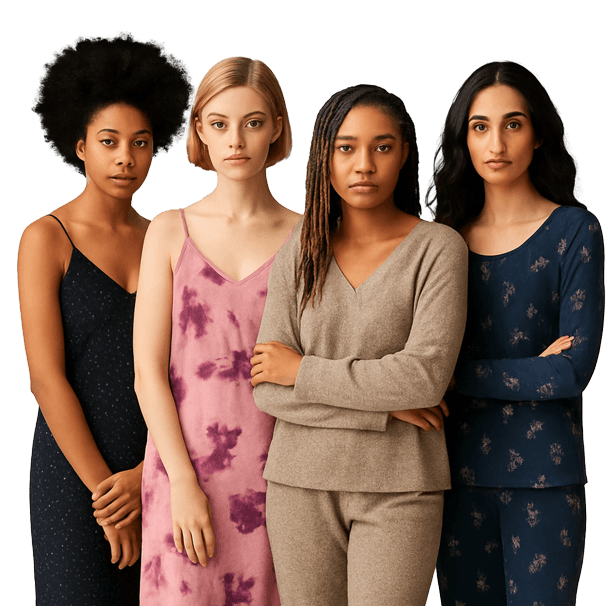
The boundary between traditional sleepwear and casual everyday streetwear has virtually disappeared. Ribbed knit two-piece sets have exploded in popularity across social media platforms like TikTok and Instagram because they deliver a polished, put-together aesthetic without sacrificing the soft comfort of traditional pajamas.
Consumers love these sets because they transition effortlessly from a morning virtual meeting to running afternoon errands. For a deeper look at how production facilities handle multi-piece coordinating garments, check out our insights on Custom Homewear Clothes.
- Target Audience: Gen Z and Millennials seeking effortless, versatile everyday wear.
- Recommended Fabrics: Cotton-spandex blends or modal rib knit for optimal stretch, breathability, and soft recovery.
- Sourcing & Manufacturing Tip: Pay close attention to elastic recovery during production. Partnering with a specialized custom pajama manufacturer ensures that waistbands and cuffs retain their structural shape after repeated washing, directly protecting your brand from high customer return rates.
2. Aesthetic Satin & Silk Sleep Robes: High-Margin Gifting Essentials
Satin and silk-like robes remain a perennial powerhouse in the global apparel market, driven heavily by bridal parties, holiday gift shoppers, and everyday self-care routines. Because of their luxurious drape and visual appeal on camera, they allow digital retailers to command significantly higher profit margins compared to basic cotton items.
- Target Audience: Gift buyers, brides-to-be, and consumers seeking affordable everyday luxury.
- Recommended Fabrics: High-density polyester satin or genuine mulberry silk, depending on your brand’s target pricing tier.
- Sourcing & Manufacturing Tip: Custom branding elements—such as personalized monograms, embroidery, or custom woven labels—are major selling points for robes. Ensure your chosen private label supplier accommodates low minimum order quantities (MOQs) for specialized finishes. To explore specific design layouts and fabric choices for robe lines, read our detailed Custom Robe Manufacturer Sourcing Guide.
3. Oversized Organic Cotton Pajamas: The Sustainable Choice
Sustainability is no longer a secondary selling point or a passing marketing fad; it has become a primary purchasing driver for modern, conscious shoppers. Classic button-down oversized cotton pajama sets crafted from eco-friendly textiles are dominating organic and clean-lifestyle apparel niches across Shopify and Amazon.
- Target Audience: Environmentally conscious shoppers and lovers of classic, timeless sleepwear.
- Recommended Fabrics: 100% certified organic cotton, bamboo-cotton blends, or washed muslin.
- Sourcing & Manufacturing Tip: When marketing eco-friendly products, supply chain authenticity matters. Always request international textile certifications (such as OEKO-TEX Standard 100) from your apparel manufacturer to support your legal compliance and digital marketing claims.
4. Couples & Family Matching Pajama Sets: Evergreen Holiday Hits
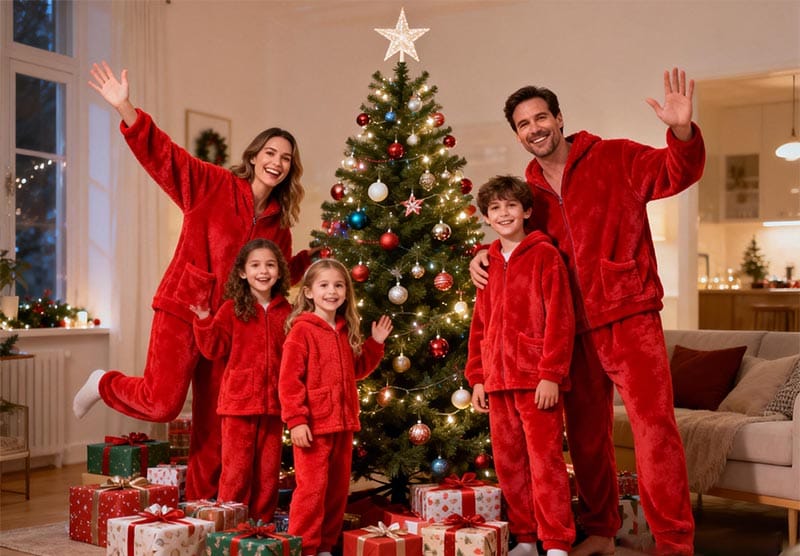
While holiday seasons—particularly Q4 winter holidays—see explosive sales for family matching sets, this trend has successfully expanded into a year-round sales driver for birthdays, anniversaries, and viral social media content creation.
- Target Audience: Young families, couples, and digital content creators.
- Recommended Fabrics: Cozy flannel or brushed cotton for winter lines; lightweight poplin or cotton-modal blends for summer collections.
- Sourcing & Manufacturing Tip: Size grading accuracy is absolutely vital for matching collections. Always collaborate with a custom loungewear manufacturer capable of providing comprehensive size matrices ranging from infant and kids sizes up to inclusive adult fittings. For a complete blueprint on coordinating family styles, review our specialized Family Matching Pajamas Manufacturer Sourcing Guide.
5. Chic Plus-Size Loungewear: An Underserved, High-Demand Market
Many scaling e-commerce brands miss out on substantial revenue streams by neglecting inclusive sizing in their initial collections. Stylish, well-engineered plus-size loungewear exhibits high search demand paired with remarkably low market competition relative to standard sizing blocks.
- Target Audience: Consumers seeking flattering, comfortable, and inclusive sleepwear options.
- Recommended Fabrics: Draping textiles like micro-modal, bamboo jersey, or soft modal blends that gracefully flatter diverse body shapes.
- Sourcing & Manufacturing Tip: Verify that your production partner possesses advanced pattern-development capabilities. Proper grading ensures plus-size garments offer an exceptional drape and unrestrictive comfort without sacrificing style.
FAQ
Q1: What is the difference between OEM and ODM manufacturing for loungewear?
- OEM (Original Equipment Manufacturer): Production is executed strictly according to your provided tech packs, design sketches, size specs, and fabric choices. This approach is ideal for established brands with proprietary design assets.
- ODM (Original Design Manufacturer): The manufacturing partner provides pre-designed seasonal collections, ready-made pattern blocks, and fabric swatches that you can customize with your own private label and colorways. This is ideal for startups looking to accelerate time-to-market.
Q2: How do you ensure consistent quality across bulk loungewear production?
Reliable manufacturing facilities utilize a rigorous multi-stage quality control process. This typically includes inspecting raw fabrics for shrinkage and color fastness before cutting, conducting in-line sewing checks to monitor sizing consistency, and performing final inspections of finished garments prior to custom packaging and export.
Q3: What custom private label options are available for sleepwear and robes?
Brands can fully customize their inventory with bespoke woven neck labels, care labels, swing tags, branded buttons, custom elastic waistbands, embroidery, and private-label packaging bags or boxes designed to elevate the unboxing experience for end consumers.
How XXY Apparel Supports Your Brand Growth
Identifying a market trend is only the first step toward building a successful seasonal collection. Turning that trend into a profitable, high-quality inventory batch requires a stable, transparent, and experienced supply chain partner.
At XXY Apparel, we provide comprehensive OEM/ODM and private label manufacturing solutions built specifically for global apparel brands, wholesalers, and online retailers:
- Flexible Customization: Tailored fabric sourcing, custom color matching, bespoke grading, and advanced printing or embroidery aligned perfectly with your brand identity.
- Rigorous Multi-Stage Quality Control: Systematic inspection processes spanning raw material checks, in-line sewing oversight, and final packaging reviews to safeguard your market reputation.
- Balanced MOQs & Reliable Lead Times: Structured production capacity designed to help growing brands scale seamlessly without inventory bottlenecks.
To discover our full manufacturing capabilities, browse our core production services under OEM/ODM Services.
Ready to Launch Your Next Best-Selling Collection?
Do not let your competitors capture your target audience and market share first. Contact XXY Apparel Today to speak directly with our product development specialists, request free fabric swatches, or secure a competitive production quote for your upcoming custom designs!
Trends Only Matter When They Can Be Sourced Reliably
The most useful 2026 loungewear trends are not just attractive styles. E-commerce buyers need trends that can be sampled, photographed, produced, packed, and reordered without creating excessive risk.
Before following a trend, buyers should ask whether the fabric is stable, whether the size range is realistic, whether the style photographs clearly, and whether the supplier can repeat the product after the first launch.
This makes 2026 loungewear trends a sourcing question as much as a merchandising question. The best trend choices connect customer demand with production readiness.
| Trend | Sourcing Check | Risk |
|---|---|---|
| Soft sets | Fabric hand feel and recovery | Weak repeat wear |
| Wide legs | Drape and inseam | Fit complaints |
| Robes | Fabric weight and packing | Shipping bulk |
This section is intentionally specific to 2026 loungewear trends, so the page no longer reads like a generic supplier article with the product name swapped in. The buying logic, risk points, and approval criteria are tied to the actual garment category.
Trend Selection Must Survive Sourcing Reality
loungewear trends should be reviewed through the exact use case behind the product, not as a generic apparel item. The buyer should define the wearer, selling season, expected care routine, size range, and packaging format before asking the supplier for a final production recommendation.
For loungewear trends, the first approval point is material behavior. The brand should ask how the fabric reacts to washing, stretching, folding, steaming, and repeated wear. This matters because homewear customers judge the product after several uses, not only when the sample first arrives.
The second approval point for loungewear trends is fit evidence. A size chart alone is not enough; the sample should be checked on body or form, then reviewed while sitting, walking, bending, and raising the arms. If the item includes a waistband, strap, robe belt, cuff, or wide leg, that detail needs a separate comfort check.
The third approval point for loungewear trends is production repeatability. Buyers should keep records of fabric references, trim choices, approved measurements, label files, sample photos, packaging artwork, and inspection comments. A supplier that can reproduce these details is more valuable than one that only sends an attractive first sample.
The best loungewear trends are not only visually attractive. They must be realistic to sample, photograph, produce, pack, ship, and reorder.
For e-commerce buyers, loungewear trends should be tested against product-page photography, size range, fabric availability, and return risk.
A trend that cannot be produced consistently is a merchandising liability. This is why 2026 loungewear trends should be evaluated alongside supplier capability.
A practical brief for loungewear trends should name the non-negotiable details and the flexible details. Non-negotiable items may include fabric composition, size tolerance, label content, color standard, or packaging dimensions. Flexible items may include minor trim choices, fold method, carton quantity, or secondary colorways.
When comparing suppliers for loungewear trends, buyers should ask each factory to respond to the same specification. That makes the comparison more useful and reduces the risk of choosing a supplier because one quote quietly excluded packaging, testing, size grading, or extra sample work.
The final approval for loungewear trends should happen only after the brand has confirmed the production sample, measurements, materials, trims, labels, packaging, and quality-control plan. This gives the supplier a clear target and gives the buyer a defensible record if there is a production issue later.
Turning Loungewear Trends Into Buyable SKUs
For e-commerce sourcing, loungewear trends should be reviewed with the sales channel in mind. A product sold through a brand site, marketplace listing, boutique retailer, hotel program, or seasonal campaign may need different packaging, size communication, photography samples, and reorder timing.
The product page also depends on decisions made during loungewear trends development. Fabric hand feel, garment measurements, care instructions, color names, fit notes, and packaging details become the information that customers or B2B buyers see later. If these details are vague during sourcing, the final sales page is usually vague too.
A supplier working on loungewear trends should help the buyer create a clean approval trail. That trail should include the approved sample, material record, color standard, trim list, size chart, label files, packaging artwork, and inspection notes. This is useful for production, but it is also useful for merchandising and customer service.
For marketplace or direct-to-consumer selling, loungewear trends needs stronger consistency because customers compare product photos, size charts, reviews, and delivery experience. A small measurement change or fabric substitution can create returns, even if the garment still looks similar in the factory.
The buyer should ask how the supplier protects loungewear trends during reorders. If fabric lots change, if a trim becomes unavailable, or if packaging needs a new supplier, the factory should flag that change before production. Silent substitutions are one of the easiest ways to damage product consistency.
Quality control for loungewear trends should include product-specific checkpoints instead of only a generic final inspection. The inspector should know which measurements matter most, which trims are sensitive, which packaging details must match, and which visible defects would affect the brand’s sales channel.
When the sourcing team documents these points, loungewear trends becomes easier to improve over time. The brand can compare customer feedback against the approved sample, update the next brief, and keep the supplier focused on the details that actually influenced returns, reviews, or reorder demand.
This channel-focused view makes loungewear trends different from a generic garment sourcing article. It connects production decisions with how the product will be sold, described, photographed, packed, and repeated.
How Buyers Can Turn Loungewear Trends Into a Sourcing Brief
A useful trend brief should translate loungewear trends into concrete product choices. Instead of collecting mood images only, buyers should write down the intended wearer, fabric direction, silhouette, size range, color family, trim limits, packaging style, and photo-sample deadline.
For Xiuxinyang buyers, loungewear trends are easier to act on when each trend is linked to a manufacturing question. If soft tailoring is important, the supplier needs to know the preferred drape and seam finish. If matching sets are important, the supplier needs to control color, shrinkage, and top-bottom fit.
The safest way to use loungewear trends is to separate visual inspiration from production risk. Some loungewear trends look strong online but become difficult when fabric supply, grading, packing volume, or repeat orders are considered. A trend should support the selling plan, not distract from it.
A buyer can also compare loungewear trends by how clearly each one can be explained on a product page. Loungewear trends with obvious comfort benefits, easy fit communication, and repeatable fabric choices usually create cleaner launches than ideas that depend only on styling.
Before approving a new capsule, the sourcing team should rank loungewear trends by sample feasibility, photo impact, size-range flexibility, care instructions, and reorder stability. This keeps loungewear trends connected to commercial execution instead of treating them as isolated design references.
When the same process is repeated season after season, loungewear trends become a practical planning tool. The brand can keep the strongest loungewear trends, drop weak ideas early, and brief Xiuxinyang with enough detail to develop samples that are realistic for production.
Final Checks Before Selecting 2026 Loungewear Directions
Before a buyer turns loungewear trends into samples, the team should confirm whether each direction has a clear fabric path, a realistic size plan, and a product-page story that shoppers can understand quickly. Loungewear trends should also be checked against packaging, care labels, color consistency, and reorder planning.
This final review keeps loungewear trends practical. It helps the buyer choose loungewear trends that can move from concept to sampling, from sampling to production, and from production to repeatable private label selling without losing the original comfort promise.